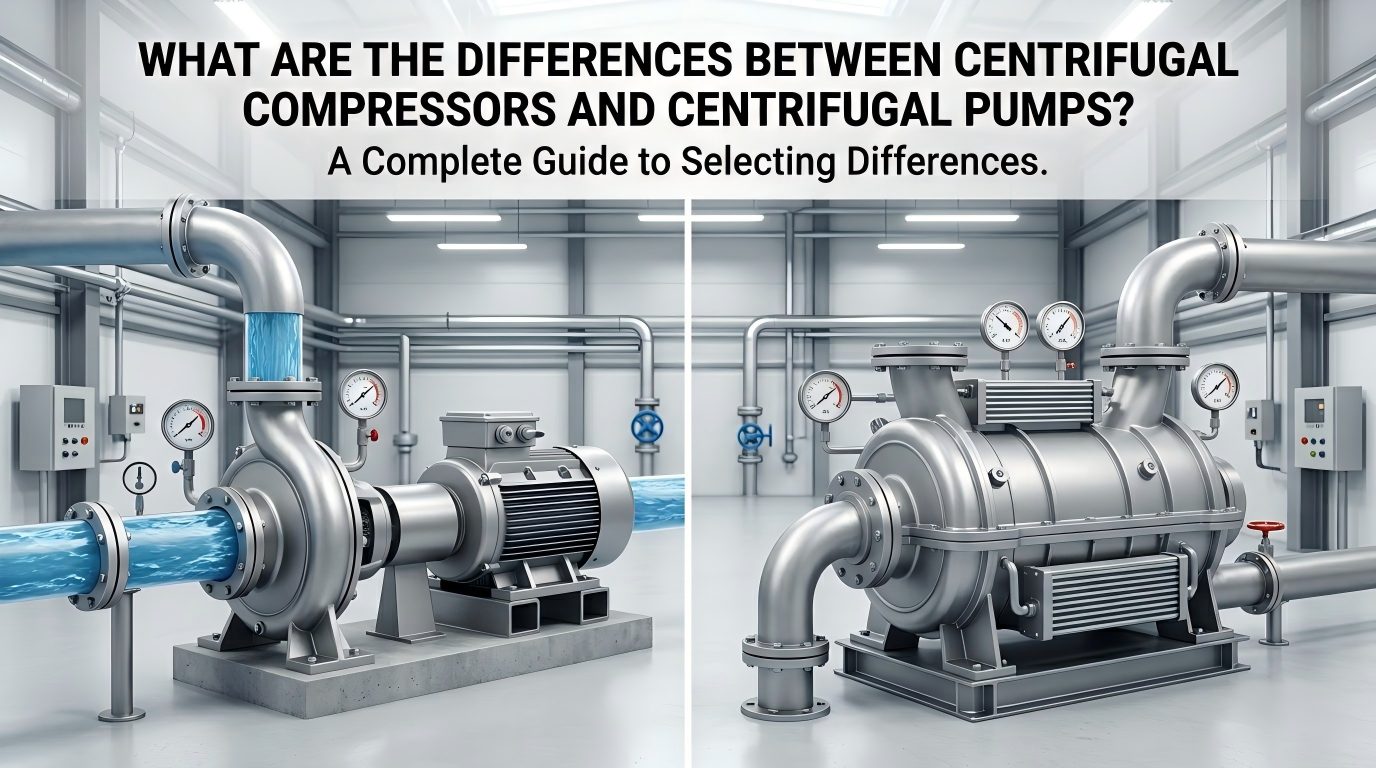
Centrifugal pumps and centrifugal compressors play vital roles. With powerful fluid conveying and pressurization capabilities, they have become core equipment in factories, large‑scale facilities, and even daily life. However, due to their similar appearances and highly overlapping core principles, many engineering purchasers or beginners often feel confused in practical applications.
Basic Equipment Definitions
To clearly distinguish between the two types of equipment, first master their basic definitions and core functions to clarify their positioning from the root.
1. What is a centrifugal compressor?
A centrifugal compressor, also often referred to as a vane compressor or radial compressor, is a dynamic pressurization fluid machine. Its core operating logic is dynamic energy conversion. It relies on high‑speed rotation of the rotor and impeller to drive continuous gas flow, converting the mechanical energy generated by impeller rotation into kinetic energy and pressure energy of the gas, ultimately achieving gas pressurization and compression. It is the core equipment for industrial high‑pressure gas supply.
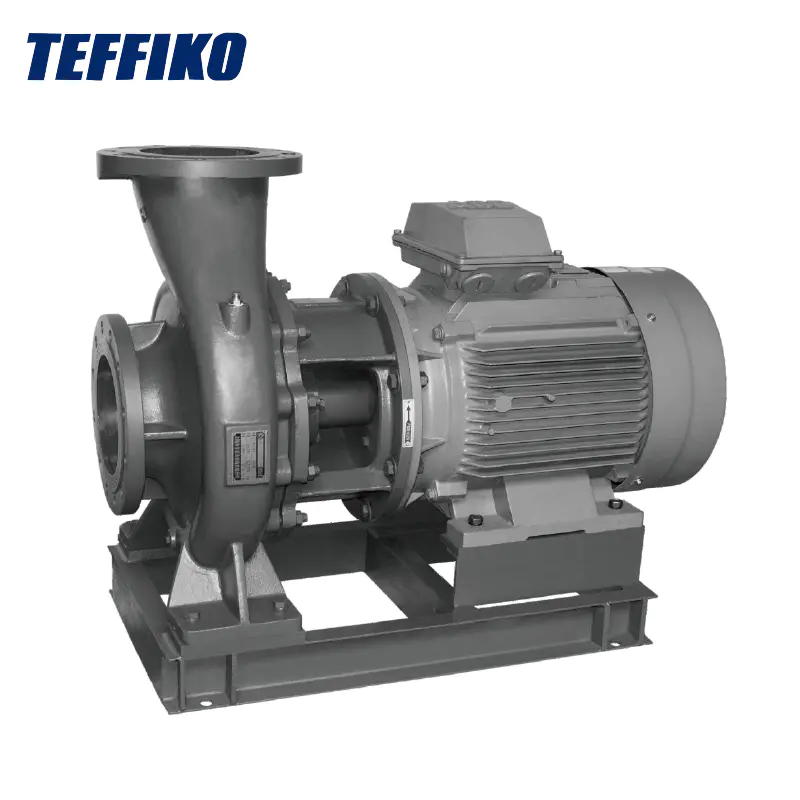
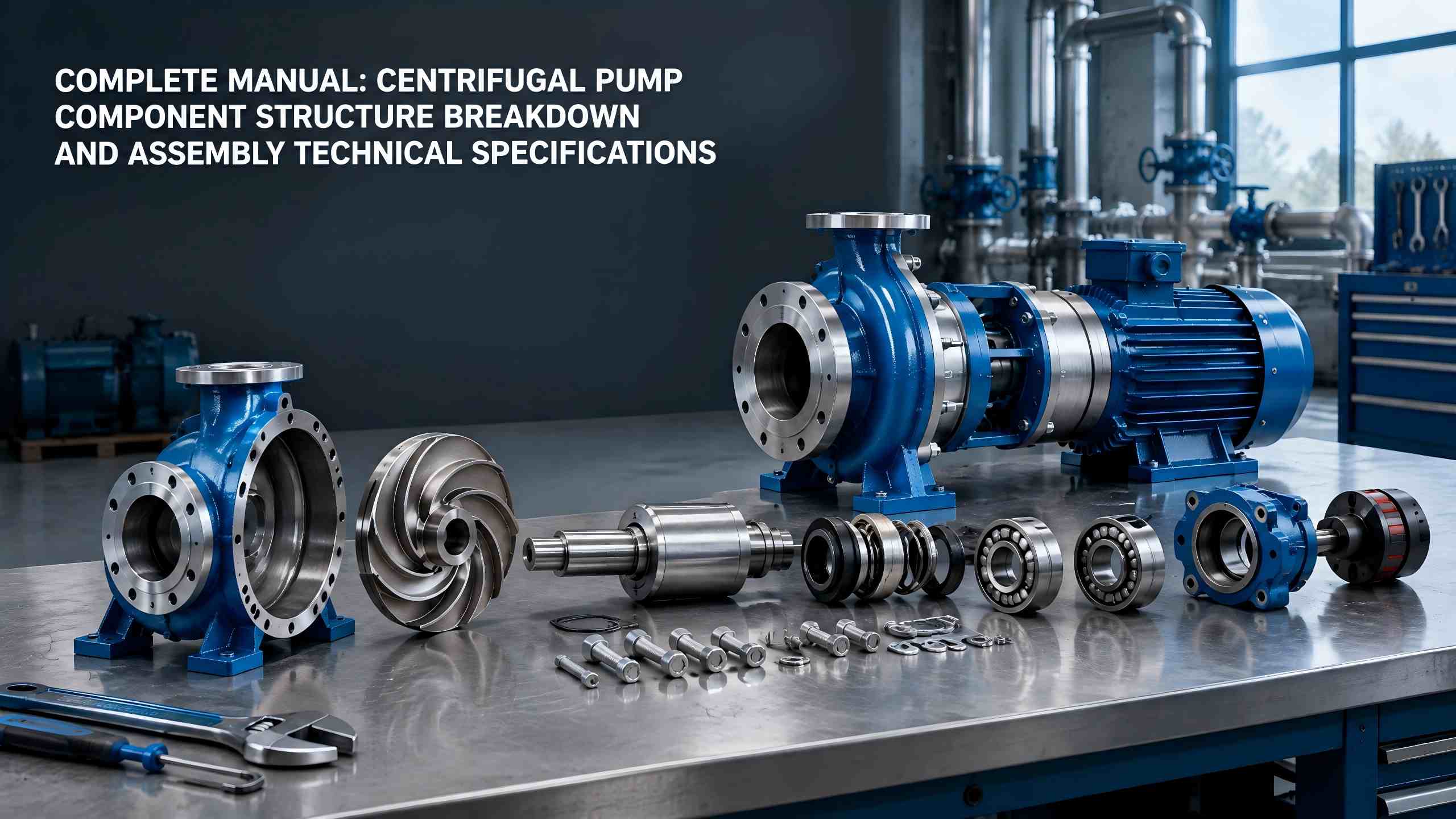
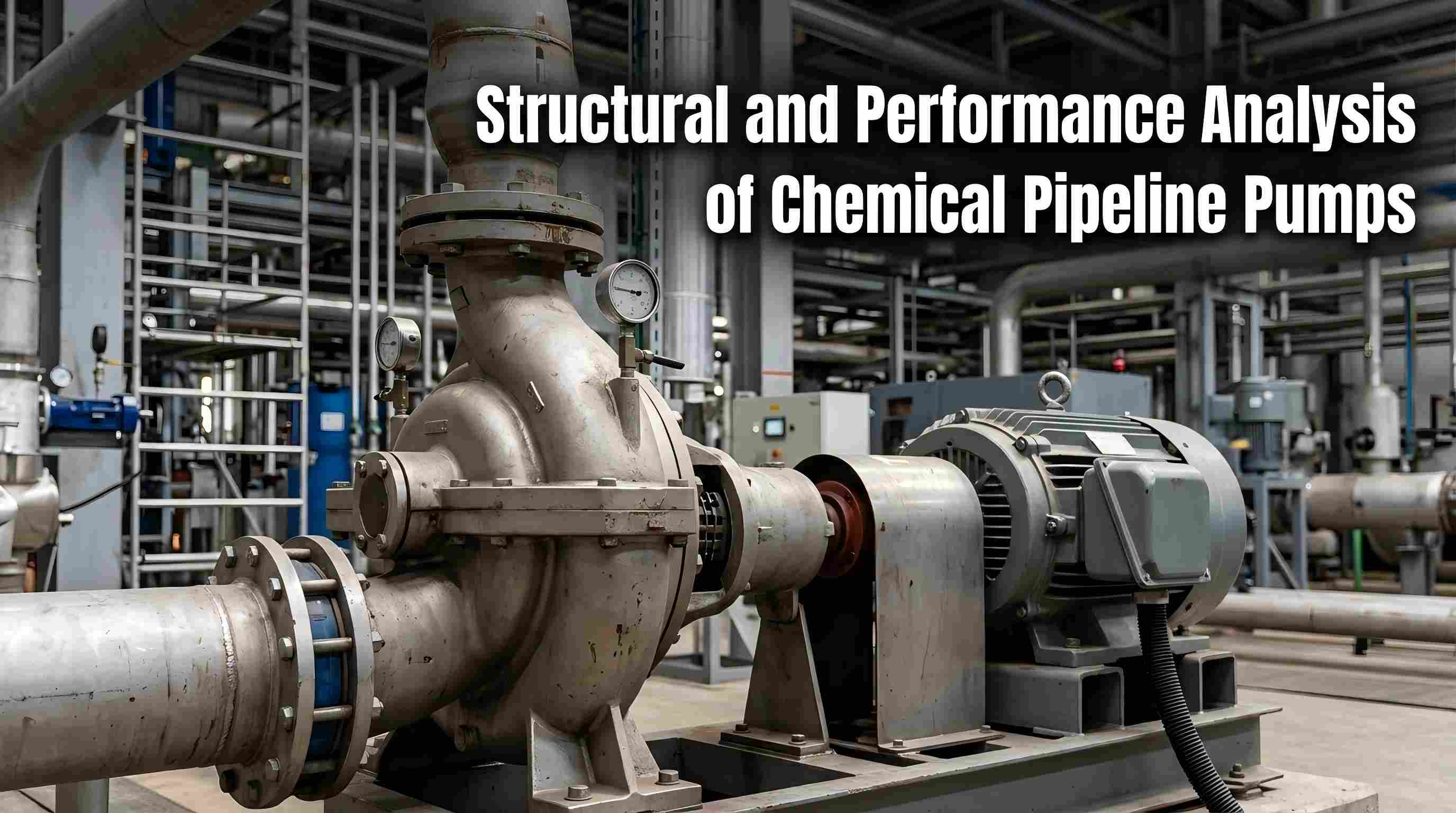
A centrifugal pump is a general‑purpose liquid conveying mechanical device that operates with one or more driven impeller rotors. During operation, liquid enters the pump chamber along the pump axis, and is ejected at high speed from the tip of the impeller blades in the circumferential direction by the centrifugal force generated by the high‑speed rotation of the impeller, thereby realizing liquid conveying, pressurization, and head increase.
Centrifugal pump (incompressible fluid): Liquids are generally regarded as incompressible. In a centrifugal pump, the volume of the fluid remains basically unchanged from the inlet to the outlet of the pump. The main function of the pump is to increase the pressure energy (head) of the liquid to overcome resistance, with its density remaining constant.
Centrifugal compressor (compressible fluid): Gases are compressible. During the operation of the compressor, as the pressure rises significantly, the volume of the gas changes drastically (shrinks), and the density increases substantially. Therefore, the compressor not only needs to increase pressure but also handle the temperature rise and volume contraction caused by compression.
Core Difference 2: Differences in Internal Structure
Due to different working principles, application fields, and fluid types, centrifugal compressors and centrifugal pumps are completely different in structure, especially internal structure.
Basic component composition
Centrifugal compressor: Usually composed of a motor, air intake filter, storage tank, complex inter‑stage cooling system, drainage device, and precision valves, etc.
Centrifugal pump: Relatively simple in structure, usually composed of a pump casing (casing), impeller, motor, shaft, and guide vane (or volute), etc.
Secrets of flow path design
As the gas volume continuously shrinks during compression, the internal flow paths (impeller flow paths) of multi‑stage centrifugal compressors become narrower and narrower from the first stage to the last stage to adapt to changes in gas volume. In contrast, the liquid volume conveyed by centrifugal pumps remains unchanged, so their flow path widths are generally consistent.
Core Difference 3: Differences in Application Scenarios
Centrifugal pumps and centrifugal compressors are used in different industries. Clarifying application scenarios helps you quickly decide which type to choose:
Typical applications of centrifugal compressors
It can always be found in occasions requiring gas pressurization, such as air separation units (oxygen/nitrogen production), natural gas processing, refrigeration systems (e.g., central air conditioning chillers). In addition, centrifugal compressors are widely used in gas turbines, automotive turbochargers, and superchargers.
Typical applications of centrifugal pumps
Due to its unique design, centrifugal pumps are generally used in any application involving low‑viscosity fluids. They are widely used in industry, agriculture, and daily activities to convey water, solvents, organic substances, oil, acids, alkalis, and any "thin" liquids in industry.
Conclusion
In summary, although centrifugal compressors and centrifugal pumps both belong to centrifugal fluid machinery and share the same centrifugal work principle, they are essentially different in equipment definition, internal structure, fluid action effect, industrial application, and operation and maintenance standards.
As a professional fluid equipment brand, Teffiko has been deeply engaged in the field of centrifugal fluid equipment for many years, accurately controlling the design, production, and application standards of the two types of equipment, and providing more adaptable and stable fluid conveying and pressurization solutions for various industries.
We use cookies to offer you a better browsing experience, analyze site traffic and personalize content. By using this site, you agree to our use of cookies.
Privacy Policy