In fields such as industrial fluid transportation, municipal water supply, and water conservancy projects, pumps serve as core fluid machinery. Their selection directly impacts system operational efficiency, energy consumption costs, and stability. Among them, multistage pumps and single-stage pumps are the two most widely used categories, and many users often face the dilemma of "which one to choose" during selection.
First, here is a core conclusion: The key advantages of single-stage pumps lie in their simple structure, low cost, and convenient maintenance, making them suitable for scenarios requiring low head and large flow rates. In contrast, multistage pumps achieve high head through series-connected impellers, making them ideal for high-pressure and long-distance transportation needs. Below, we will elaborate on each aspect to help you understand the underlying logic.
I. Structural Differences Between Multistage Pumps and Single-Stage Pumps
To understand their differences, we must start with their fundamental structures.
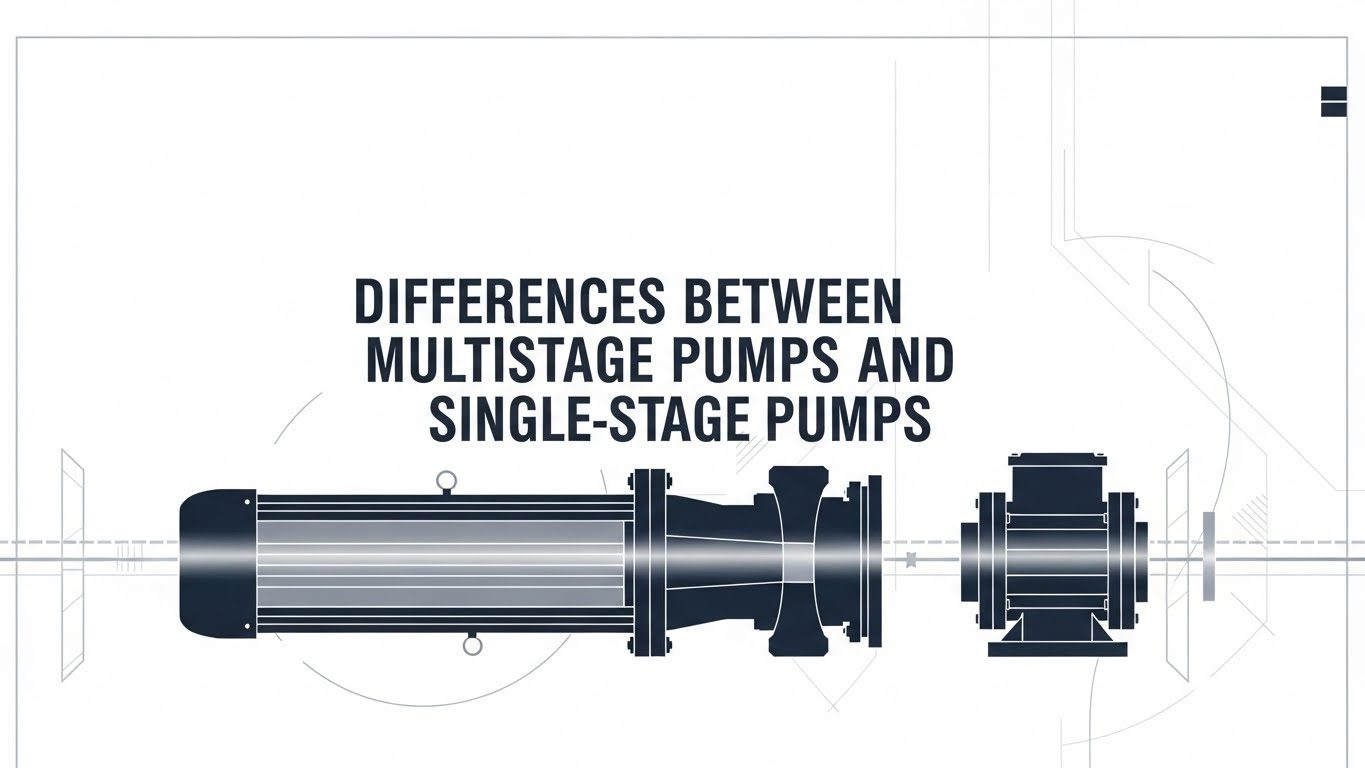
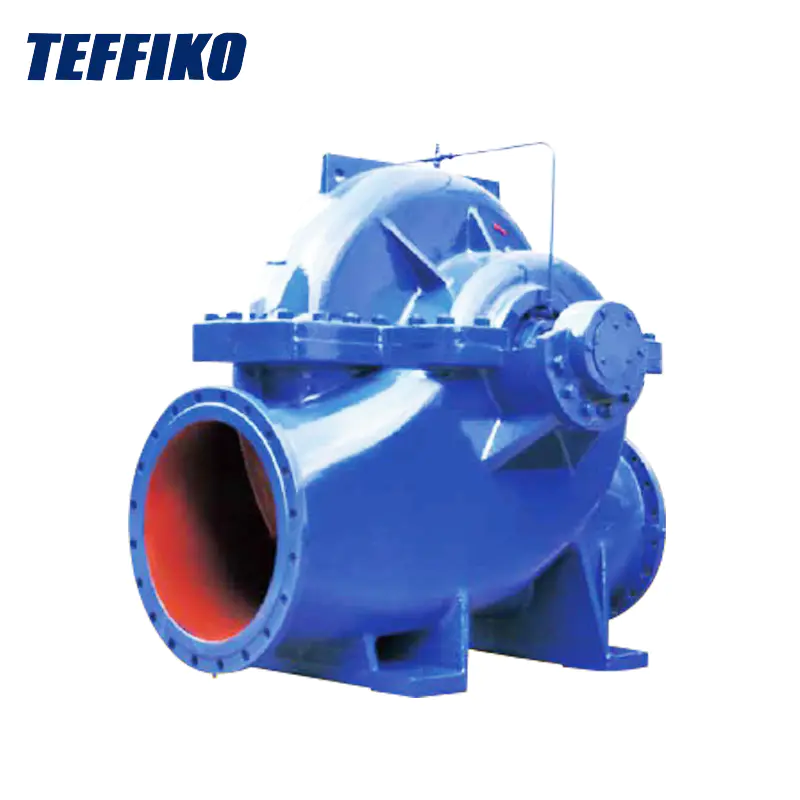
Single-Stage Pump: As the name suggests, a single-stage pump is equipped with only one impeller. Fluid enters through the suction port, undergoes one-time acceleration and pressure boost via this impeller, and is directly discharged through the discharge port. The entire process is like a sprinter completing a race in one go, emphasizing instant explosive power. Its structure is relatively simple, mainly consisting of a pump body, impeller, pump shaft, bearings, seals, and other components.
Multistage Pump: In contrast, a multistage pump is equipped with two or more impellers. Internally, it operates like a highly coordinated "relay team." After fluid is pressurized by the first-stage impeller, it is not discharged immediately but is smoothly guided to the inlet of the next-stage impeller through a diffuser for secondary, tertiary, and subsequent continuous pressure boosts. Each impeller acts as a relay runner, passing the "pressure baton" layer by layer, ultimately generating extremely high pressure at the outlet.
II. Differences in Performance Parameters
This fundamental structural difference directly leads to significant disparities in their performance parameters, particularly in head.
Single-Stage Pump: Due to having only one impeller providing power, its head capacity is limited. Typically, the maximum head of a single-stage pump is only 125 meters. This determines that it is more suitable for occasions with low pressure requirements but potentially large flow rate needs.
Multistage Pump: Leveraging its "team relay" advantage, multistage pumps can easily achieve very high heads. By increasing the number of impellers (i.e., "stages"), their head can exceed 125 meters, reaching hundreds of meters or even higher. This makes multistage pumps an irreplaceable choice for high-pressure and high-head application scenarios.
III. Comprehensive Considerations for Selection
In addition to the core differences mentioned above, more practical factors need to be considered during actual selection.
Comparison Dimension
Single-Stage Pump
Multistage Pump
Structural Complexity
Simple with fewer components
Complex with more components
Maintenance Difficulty
Low, easy to disassemble and repair
High, relatively more difficult to maintain than single-stage pumps
Initial Cost
Relatively low
Relatively high, generally more expensive than single-stage pumps
Operational Characteristics
Higher efficiency under conditions of large flow rate and low head
More advantageous under high-head conditions; motor can be flexibly configured
Floor Space
Horizontal pumps require larger floor space
Vertical multistage pumps have a compact structure and require less floor space
A common misunderstanding is corrected: When the head is less than 125 meters, it is not mandatory to choose a single-stage pump. Instead, a comprehensive consideration is needed. For example, in cases where a single-stage pump requires a two-pole motor with a higher rotational speed to meet the head requirement, a multistage pump can use a four-pole motor with a lower rotational speed by increasing the number of impellers, thereby improving the pump's service life and reducing unit noise.
Therefore, when the actual required head of the pump is less than 125 meters, the selection between a single-stage pump and a multistage pump should be based on comprehensive factors such as pump room area, pump price (multistage pumps are generally more expensive than single-stage pumps), and noise requirements.
New Technological Trend: It is worth noting that with technological advancements, single-impeller pumps can also significantly increase their head by increasing the pump's rotational speed, replacing traditional multistage pumps in certain occasions, although their price is relatively higher. This provides new possibilities for selection.
IV. Conclusion
There is no absolute superiority or inferiority between multistage pumps and single-stage pumps. The key lies in accurately matching the operating conditions, spatial constraints, and long-term operational goals. Blindly pursuing high parameters or simply reducing initial costs may lead to greater hidden costs.
As a brand specializing in the R&D and manufacturing of high-performance centrifugal pumps, Teffiko always takes energy efficiency, reliability, and intelligent operation and maintenance as its core, providing a full range of solutions covering single-stage pumps, multistage pumps, high-speed pumps, and customized systems.
✅ Contact Teffiko's technical team now at sales@teffiko.com for free selection support.
We use cookies to offer you a better browsing experience, analyze site traffic and personalize content. By using this site, you agree to our use of cookies.
Privacy Policy