Athena Engineering S.r.l.
News

Centrifugal Pump Curve: A Complete Guide for the Petrochemical Industry

2025-10-21

In the fluid handling systems of the petrochemical industry, centrifugal pumps are critical equipment driving core operations such as oil and gas extraction, refining and processing, and chemical transportation. To fully unlock the performance potential of centrifugal pumps and ensure the stability and economy of industrial processes, the key lies in accurately mastering the centrifugal pump curve—a technical tool that directly determines a pump’s operating efficiency, pressure output, and service life. Whether you are an engineer designing process systems, a procurement specialist selecting equipment, or an operator troubleshooting faults, proficiency in centrifugal pump curves is an essential skill for optimizing production processes.

Centrifugal Pump Curve

I. What Is a Centrifugal Pump Curve?

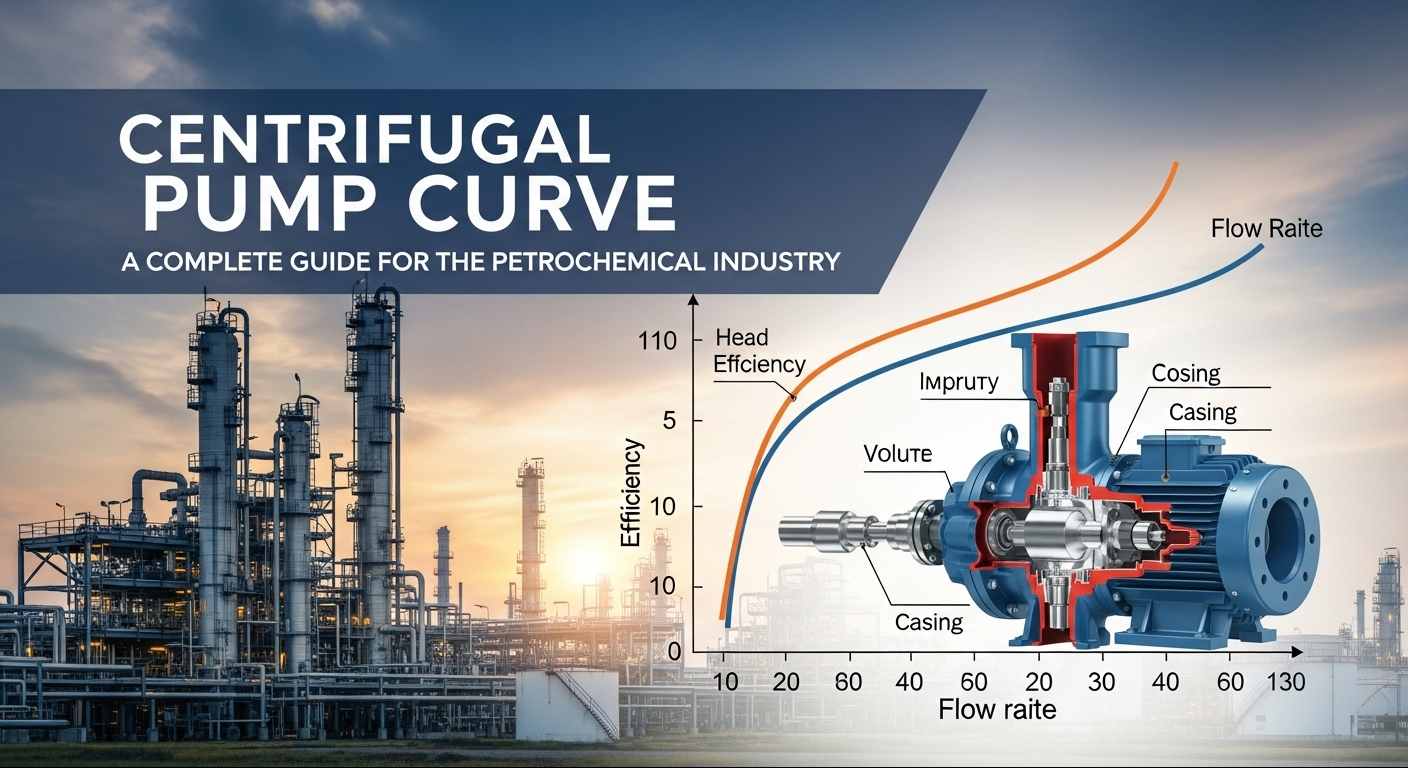
A centrifugal pump curve is a graphical representation of key operating parameters—flow rate, total head, brake horsepower (BHP), and efficiency—under specific design conditions of the pump. It serves as a precise technical specification, clearly illustrating the pump’s performance under different operating conditions, and is the core basis for petrochemical system design, pump model selection, and performance troubleshooting.

The core purpose of a centrifugal pump curve is to bridge the gap between the pump’s performance limits and the actual requirements of petrochemical processes. For industry users, this means:


  • Precisely matching the pump’s output to process requirements
  • Avoiding inefficient or destructive operating conditions
  • Comparing the performance of different pump models or brands


Without referencing the centrifugal pump curve, pump selection becomes a blind attempt, which may lead to soaring energy consumption, and even equipment failures and production shutdowns. In the petrochemical industry, where reliability and safety are of utmost importance, the curve is an indispensable tool for ensuring continuous production.

II. Key Components of a Centrifugal Pump Curve

A standard centrifugal pump curve integrates four interrelated parameters, each crucial for the operational safety and efficiency of petrochemical scenarios:

1. Flow Rate (Q)

Flow rate, measured in gallons per minute (GPM) or cubic meters per hour (m³/h), represents the volume of fluid the pump can deliver per unit time. Plotted on the X-axis of the curve, it is directly related to process requirements—for example, solvent circulation in refining units may require a flow rate of 800 GPM, while crude oil pipelines can have flow rate demands reaching thousands of cubic meters per hour.

2. Total Head (H)

Total head, measured in feet or meters, refers to the total pressure the pump can generate to overcome system resistance (including static head: the vertical height difference between the fluid source and outlet; dynamic head: friction losses in pipes, valves, heat exchangers, and other equipment). Plotted on the Y-axis of the curve, it reflects the pump’s "conveying" capacity—critical for scenarios such as high-pressure hydrogenation units and long-distance oil and gas transportation in the petrochemical industry.

3. Brake Horsepower (BHP)

Brake horsepower is the mechanical power required to drive the pump, measured in horsepower (HP) or kilowatts (kW). The BHP curve on the centrifugal pump curve shows the relationship between power demand and flow rate—helping users correctly match motor size and calculate energy consumption costs. For example, at a flow rate of 1000 GPM, a pump with a BHP of 50 consumes more energy than one with a BHP of 40. Given the continuous operation characteristics of the petrochemical industry, efficiency is a core consideration for long-term cost control.

4. Efficiency (η)

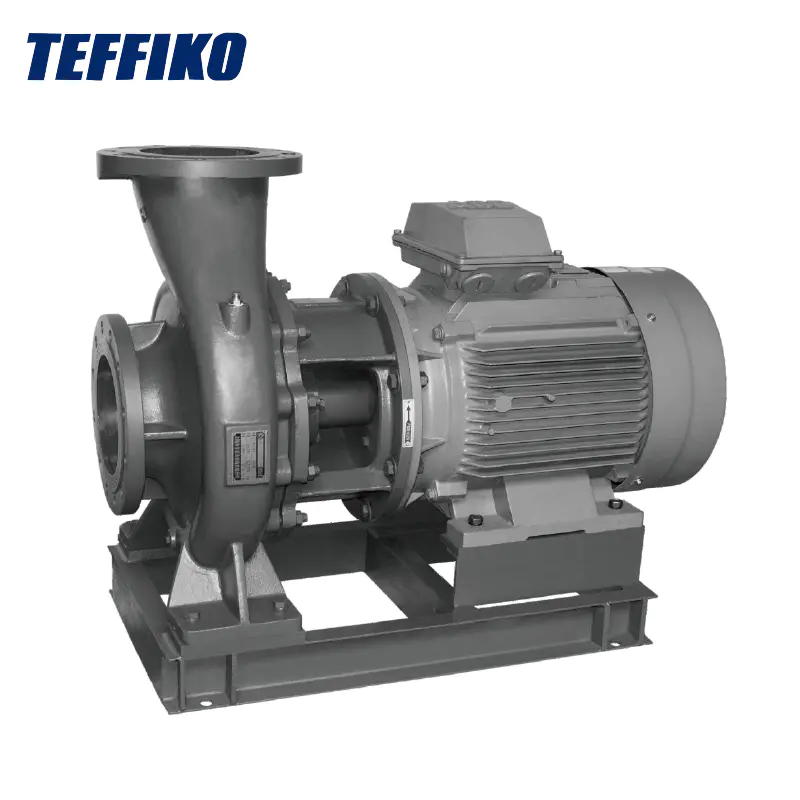
Efficiency, expressed as a percentage, measures how effectively the pump converts mechanical power (BHP) into hydraulic energy (fluid energy). The peak of the efficiency curve is the Best Efficiency Point (BEP)—the operating point where the pump achieves the highest efficiency. Operating the pump near the BEP minimizes energy waste, reduces equipment temperature rise, and extends the service life of key components such as impellers and bearings. For instance, the Teffiko centrifugal pump has a BEP of 88% at a flow rate of 750 GPM, which can save significant electricity costs for refining enterprises compared to less efficient models at the same flow rate.

These four parameters are interrelated: a change in one parameter (e.g., increasing flow rate) will affect others (e.g., decreasing head and increasing BHP). Understanding the relationships between them is key to optimizing the performance of petrochemical pump units.

III. Step-by-Step Guide: How to Read a Centrifugal Pump Curve for Beginners

Reading a centrifugal pump curve may seem complex at first, but breaking it down into simple steps makes it easy to master even for industry newcomers:

Step 1: Identify the Axes


  • X-axis: Flow rate (Q) — typically measured in GPM or m³/h;
  • Y-axis: Total head (H) — typically measured in feet or meters;
  • Additional curves: Efficiency (η, %) and BHP (HP/kW) curves are overlaid on the same graph, usually with their own scales on the right Y-axis.


Step 2: Locate the Best Efficiency Point (BEP)

Find the peak of the efficiency curve—that is the BEP. Process systems should be designed to operate the pump as close to this point as possible. For example, if a pump’s BEP is at a flow rate of 1000 GPM and a head of 150 feet, adjusting the operating parameters of the refining unit to be close to these values will achieve the highest efficiency and lowest operating costs.

Step 3: Determine Performance Parameters at a Specific Flow Rate

To obtain the head, BHP, and efficiency at a specific flow rate:

1.Draw a vertical line from the target flow rate on the X-axis until it intersects the head curve;

2.Draw a horizontal line from the intersection point to the Y-axis to get the total head value;

3.Draw horizontal lines from the same intersection point to the efficiency curve and BHP curve, then map to their respective scales to get the efficiency and BHP values.

Example: If a petrochemical process requires a flow rate of 800 GPM, draw a vertical line at 800 GPM on the X-axis, which intersects the head curve at 160 feet; the same vertical line intersects the efficiency curve at 85% and the BHP curve at 48 HP—indicating that the pump will generate 160 feet of head, operate at 85% efficiency, and require 48 HP of BHP at a flow rate of 800 GPM.

Step 4: Check the Operating Range

Most centrifugal pump curves mark the "Preferred Operating Range (POR)", usually around the BEP (±10%-20%). Operating outside this range may cause cavitation, excessive vibration, or shortened pump life. For example, operating the pump below 50% of the BEP may cause fluid recirculation, while operating above 120% may place excessive load on the motor. Especially in high-pressure petrochemical scenarios, such abnormalities may pose safety risks.

Step 5: Consider Fluid Properties

Centrifugal pump curves provided by manufacturers are typically based on water at 60°F (15°C). However, fluids involved in the petrochemical industry are mostly viscous or high-density fluids such as crude oil, diesel, and chemical solvents, requiring curve correction—viscous fluids reduce flow rate and efficiency, while denser fluids increase BHP demand. For non-aqueous applications, always refer to the manufacturer’s guidelines or use correction charts for adjustments to avoid equipment damage due to parameter deviations.

IV. Using Centrifugal Pump Curves to Troubleshoot Common Pump Faults

Centrifugal pump curves are not only used for selection but also powerful tools for troubleshooting performance issues in petrochemical scenarios. Below are common industry faults and how to diagnose them using curves:

1. Cavitation

Cavitation occurs when the pressure at the pump inlet drops below the fluid’s vapor pressure, forming vapor bubbles that collapse and cause damage. High-temperature and high-pressure conditions in the petrochemical industry are more prone to cavitation. To check for cavitation using curves:


  • Locate the Net Positive Suction Head Required (NPSHr) curve on the characteristic curve (usually included in centrifugal pump curves);
  • Compare NPSHr with the Net Positive Suction Head Available (NPSHa) in the system—if NPSHa < NPSHr, cavitation is likely to occur;
  • Solutions: Increase NPSHa by raising the suction tank level, shortening the suction pipe length, reducing fluid temperature, or selecting a pump with a lower NPSHr.


2. Insufficient Flow Rate or Pressure

If the pump’s actual flow rate or pressure is lower than process requirements:


  • Plot the actual operating point on the centrifugal pump curve;
  • If the point falls below the head curve, possible causes include:
    • System resistance higher than designed;
    • Impeller wear or damage;
    • Motor speed lower than the rated value;
  • Solutions: Reduce system resistance, replace the impeller, or adjust the motor speed to match the curve requirements.


3. Excessive Energy Consumption

If the pump’s energy consumption exceeds expectations:


  • Compare the actual BHP (calculated from motor current) with the BHP curve at the operating flow rate;
  • If the actual BHP is higher than the curve value, possible causes include:
    • Operating point above the BEP (excessive flow rate beyond process needs);
    • Fluid density or viscosity higher than assumed (e.g., increased crude oil viscosity due to temperature drop);
    • Mechanical issues (e.g., bearing wear, seal jamming, impeller fouling);
  • Solutions: Adjust the operating point to be close to the BEP (e.g., use a variable frequency drive to reduce flow rate), correct fluid parameter calculations, or perform maintenance on the pump (clean impeller fouling, replace bearings).


4. Pump Surge

Surge (rapid pressure fluctuations and unstable flow) occurs when the pump operates below the Minimum Stable Flow Rate (MSFR), which is usually marked on the far left of the preferred operating range on the centrifugal pump curve. Intermittent processes or load adjustments in the petrochemical industry are prone to causing surge. Solutions:


  • Increase system flow rate (e.g., open bypass valves, adjust process load);
  • Install surge tanks or recirculation lines to maintain minimum flow;
  • Select a pump with a lower MSFR for low-flow conditions.


V. How to Apply Centrifugal Pump Curves to Select the Right Pump for Petrochemical Projects

Selecting the right centrifugal pump first requires clarifying the system requirements of the petrochemical process and accurately matching them with the pump’s characteristic curve. Follow these steps for successful selection:

Step 1: Define System Requirements

First, calculate the required flow rate and total head of the process system:


  • Flow rate (Q): Determine the volume of fluid needed per unit time (e.g., a hydrogenation unit requires a hydrogen delivery flow rate of 500 m³/h);
  • Total head (H): Calculate the sum of static head (vertical distance between the suction and discharge ends) and dynamic head (friction losses in pipes, valves, heat exchangers, reactors, and other equipment). Use professional pipe friction calculation software or industry standard charts for accurate estimation, considering the high-pressure and large-diameter characteristics of petrochemical pipelines.


Step 2: Clarify Fluid Properties

Record detailed key parameters of the fluid—viscosity, density, temperature, corrosiveness, solids content, etc.—these factors directly affect pump performance and material selection:


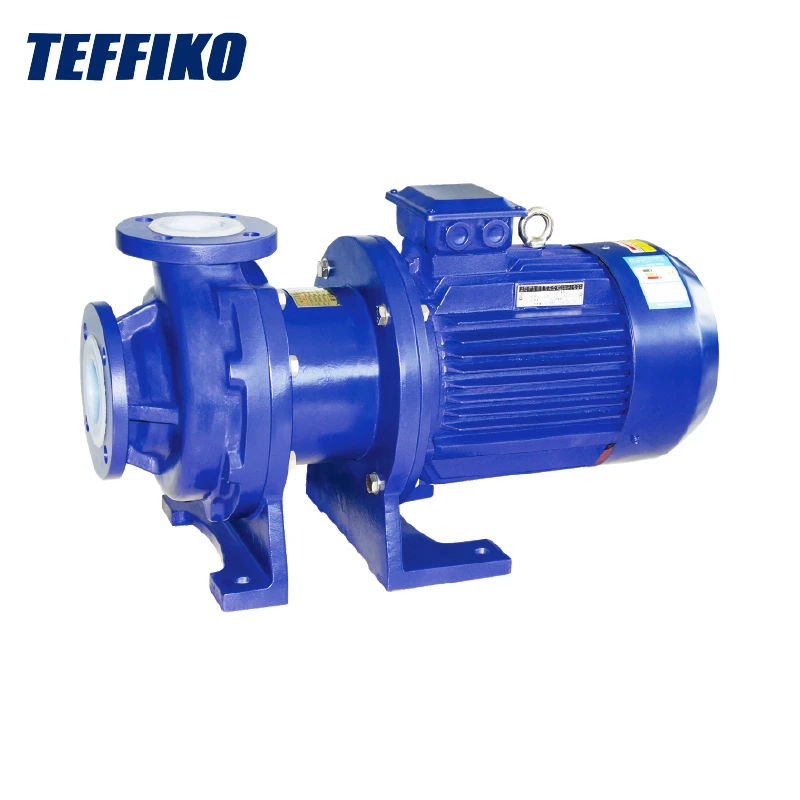
  • Corrosive fluids (e.g., acid-base chemical raw materials, sour crude oil): Select pumps made of corrosion-resistant materials such as stainless steel or Hastelloy;
  • High-viscosity fluids (e.g., heavy crude oil, asphalt): Select pumps with large impellers and low speeds, whose characteristic curves are adapted to the transportation needs of viscous fluids;
  • High-temperature fluids (e.g., high-temperature oil slurry in refining processes): Pay attention to the pump’s high-temperature resistance, and correct curve parameters based on the actual operating temperature.


Step 3: Compare Pump Characteristic Curves

Collect centrifugal pump curves from manufacturers and compare them according to process requirements:


  • Plot the required operating point (flow rate and head) of the system on each curve;
  • Ensure the point is within the pump’s preferred operating range (close to the BEP) to achieve optimal efficiency and long-term stable operation;
  • Evaluate BHP requirements to ensure motor size matching and avoid overload due to insufficient power;
  • Check NPSHr to ensure it is less than the system’s NPSHa to prevent cavitation risks.


Step 4: Consider Specific Requirements of the Petrochemical Industry

The petrochemical industry has operating conditions such as high pressure, high temperature, strong corrosiveness, and continuous operation, requiring the selection of targeted characteristic curves:


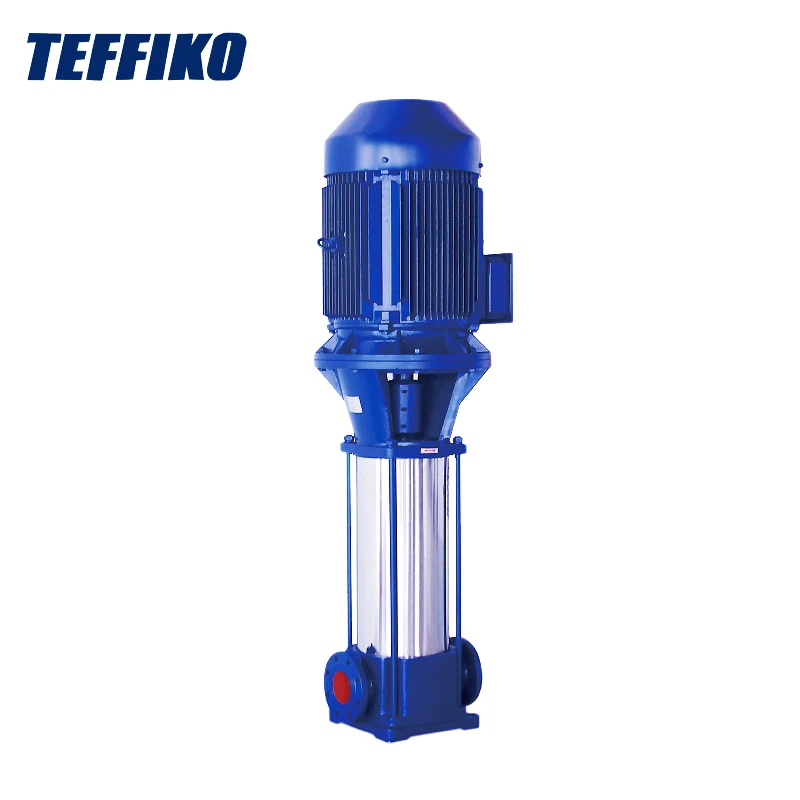
  • Crude oil transportation: High-pressure, large-flow characteristic curves (e.g., Teffiko’s multi-stage centrifugal pumps, suitable for long-distance pipeline transportation);
  • Refining and processing: High-temperature and corrosion-resistant characteristic curves;
  • Chemical transportation: Characteristic curves for precise flow control to ensure the proportioning accuracy of chemical intermediates;
  • Oil and gas extraction: High-head, sand erosion-resistant characteristic curves, adapted to harsh downhole or wellhead conditions.


Step 5: Evaluate Life-Cycle Costs

When selecting a pump, do not only focus on the initial purchase cost—use centrifugal pump curves to compare long-term operating costs:


  • Calculate energy consumption costs using the BHP curve (energy cost = BHP × 0.746 × operating hours × electricity price). The continuous operation characteristics of petrochemical pump units make the impact of efficiency differences on costs extremely significant;
  • Consider maintenance costs: Pumps operating near the BEP require less frequent maintenance (e.g., fewer impeller replacements, reduced bearing wear), reducing downtime for maintenance;
  • Balance reliability and safety: Select pumps with mature application cases in the petrochemical industry, whose characteristic curves have been verified by actual operating conditions, to reduce failure risks and safety hazards.


Conclusion

The centrifugal pump curve is a core technical tool for the efficient, safe, and reliable operation of fluid handling systems in the petrochemical industry. From process design and equipment selection to fault troubleshooting, mastering this tool ensures that pump units operate at peak performance, reduces energy consumption costs, minimizes downtime losses, and guarantees production safety. Whether handling crude oil, refined products, or chemical raw materials, accurately matching process requirements with centrifugal pump curves is the key to project success.

For petrochemical enterprises seeking high-performance solutions, brands such as Teffiko offer centrifugal pumps with detailed, application-specific characteristic curves—designed specifically for the high-pressure, high-temperature, and highly corrosive conditions of the industry, and verified in numerous refining and oil and gas projects. Remember: a centrifugal pump curve is more than just a technical chart—it is a core guide for optimizing fluid transportation in the petrochemical industry. Invest time in understanding it thoroughly, and you will reap the rewards of stable processes, controlled costs, and safe and reliable production operations.


If you want to learn about the characteristic curves of Teffiko centrifugal pumps, click here to obtain relevant product information!


Related News
X
We use cookies to offer you a better browsing experience, analyze site traffic and personalize content. By using this site, you agree to our use of cookies. Privacy Policy
Reject Accept