Athena Engineering S.r.l.
News

The Relationship Between the Outlet Pressure and Flow Rate of a Centrifugal Pump

2025-12-08

Centrifugal pumps are the "workhorses" in industries such as water treatment, oil and gas, and manufacturing. Outlet pressure (also known as discharge pressure) and flow rate are their most critical performance indicators. The correlation between these two directly determines the pump's efficiency, energy consumption, and system stability. Whether you are engaged in engineering design, equipment operation, or other related fields, mastering this relationship is the key to optimizing equipment performance and avoiding detours. Below, combined with practical industrial on-site experience, we analyze their interaction, influencing factors, and practical applications—all practical insights.

I. Core Law: Inverse Proportional Relationship Under Fixed Conditions

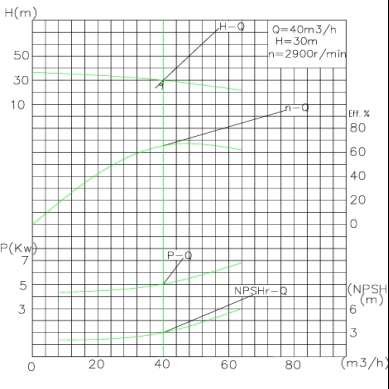
Under the condition of constant rotational speed and impeller diameter, the outlet pressure and flow rate of a centrifugal pump present an inverse proportional relationship. This law can be intuitively reflected through the Q-H curve (flow rate-head curve): head is directly related to pressure, and as flow rate increases, head decreases, and vice versa.

The principle is not complicated: centrifugal pumps transfer energy to fluids through the centrifugal force generated by the rotating impeller. When the flow rate increases, more fluid passes through the impeller channels per unit time. However, the total energy output of the impeller is limited at a fixed rotational speed, so the energy allocated to each fluid unit decreases, and the outlet pressure drops accordingly. For example, a centrifugal pump with a rotational speed of 1800 rpm has an outlet pressure of approximately 4 bar when the flow rate is 60 m³/h; when the flow rate increases to 90 m³/h, the pressure will likely drop to around 2.2 bar. This inverse proportional relationship holds true for all centrifugal pumps operating within their design range.

II. Key Factors Affecting the Pressure-Flow Relationship

The basic inverse proportional law is affected by the following factors, leading to the deviation of the Q-H curve and thus changing the interaction between the two:


  1. Rotational Speed: According to the affinity laws, pressure is proportional to the square of the rotational speed, and flow rate is proportional to the rotational speed. Increasing the rotational speed (e.g., via a Variable Frequency Drive/VFD) will synchronously increase both pressure and flow rate, shifting the entire Q-H curve upward. Under ideal conditions, when the rotational speed doubles, the pressure increases to 4 times the original, and the flow rate doubles synchronously.
  2. Impeller Diameter: Trimming the impeller will synchronously reduce both pressure and flow rate. The affinity laws also apply here: pressure is proportional to the square of the diameter, and flow rate is proportional to the diameter. Generally, a 10% reduction in diameter will result in an approximate 19% decrease in pressure and a 10% decrease in flow rate.
  3. System Resistance: The actual operating point of the pump is the intersection of its Q-H curve and the system resistance curve. Factors such as excessively narrow pipelines, clogged filters, and excessively long transportation distances will increase system resistance, leading to a decrease in flow rate—the pump needs to generate higher pressure to overcome the resistance and transport the fluid.
  4. Fluid Properties: Viscosity and density are core influencing parameters. High-viscosity fluids such as oil have greater internal friction, resulting in lower flow rate and pressure compared to water; density directly affects pressure (pressure = density × gravity × head), but has minimal impact on flow rate.

Q-H curve diagram

III. Practical Applications: Optimizing Operation and Troubleshooting

Mastering the above laws can help solve practical problems and improve operational effects in a targeted manner:


  1. Flow Rate Regulation: To increase the flow rate, you can reduce system resistance by opening valves wider, replacing with larger-diameter pipelines, or increasing the pump rotational speed via a VFD; to reduce the flow rate, avoid using throttle valves (which easily cause energy waste) and prioritize reducing the rotational speed through a VFD to maintain the optimal pressure-flow balance.
  2. Pressure Troubleshooting: When the outlet pressure is too low, first check for impeller wear, insufficient rotational speed, or excessive system resistance. Increasing the rotational speed or replacing the worn impeller can restore the pressure without affecting the flow rate; when the pressure is too high, it is necessary to reduce the system resistance or trim the impeller.
  3. Efficiency Maximization: The pump should operate near the Best Efficiency Point (BEP), which is the area with the highest efficiency on the Q-H curve. Operating away from the BEP (e.g., high pressure and low flow rate) will increase energy consumption and may also cause cavitation, mechanical damage, and other problems.


IV. Frequently Asked Questions

Q: Is the higher the outlet pressure of a centrifugal pump, the greater the flow rate?

A: No. Under fixed rotational speed and system resistance, pressure and flow rate have an inverse proportional relationship—usually, the higher the pressure, the lower the flow rate.

Q: How to increase the flow rate without reducing the pressure?

A: Increase the rotational speed via a VFD or replace the impeller with a larger diameter. According to the affinity laws, both methods can achieve synchronous improvement of flow rate and pressure.

Q: What are the main factors affecting the outlet pressure?

A: The core factors are rotational speed, impeller diameter, system resistance, and fluid density. Among them, rotational speed and diameter have the most significant impacts and should be prioritized during adjustments.


Conclusion


The core relationship between the outlet pressure and flow rate of a centrifugal pump is an inverse proportionality under fixed conditions, but it can be flexibly optimized by adjusting the rotational speed, impeller size, system resistance, and fluid properties. Applying this knowledge to practical operations can not only improve the pump's operational performance and reduce energy consumption but also avoid downtime losses caused by equipment failures. It should be noted that for specific application scenarios, it is crucial to refer to the pump's Q-H curve and conduct on-site tests to determine the optimal operating point. Whether in system design or later troubleshooting, thoroughly understanding this core relationship is essential for the efficient and stable operation of centrifugal pumps. If you have any other questions regarding centrifugal pump selection, pressure-flow parameter matching, working condition optimization, etc., feel free to contact teffiko. We have a professional technical team, customized solutions, and comprehensive after-sales support to escort the efficient operation of your equipment throughout the process and help solve various industrial fluid transportation challenges.


Related News
X
We use cookies to offer you a better browsing experience, analyze site traffic and personalize content. By using this site, you agree to our use of cookies. Privacy Policy
Reject Accept