We are glad to share with you about the results of our work, company news, and give you timely developments and personnel appointment and removal conditions.
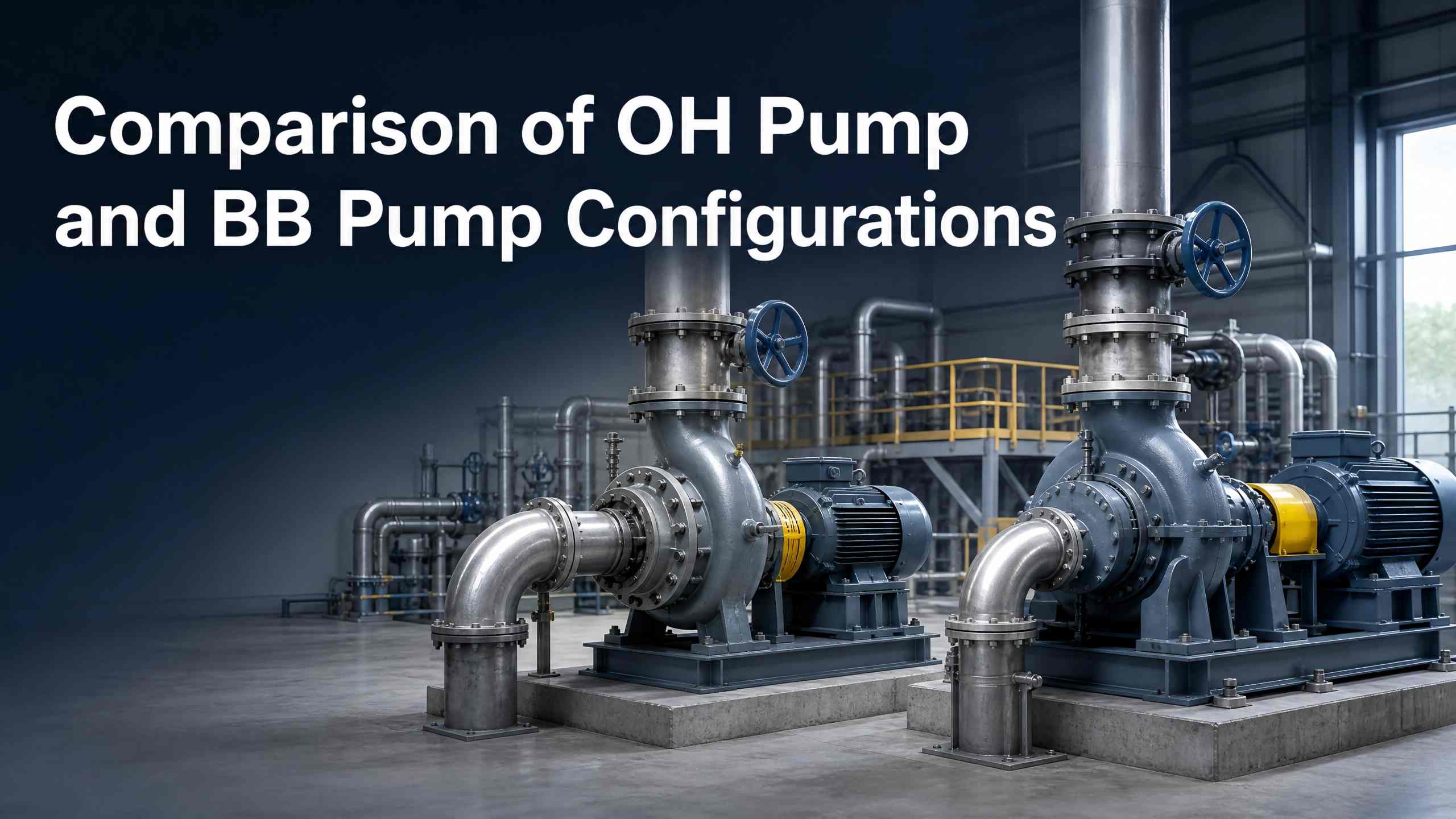
End-suction pumps and inline pumps are the two most widely used pump models. Many engineers and procurement staff struggle to distinguish their applicable working conditions, performance differences, advantages and disadvantages during model selection. This article comprehensively compares the two pumps from structural design, performance characteristics, pros and cons, applicable scenarios, cost and maintenance dimensions to help you select the optimal model accurately.
Split casing pumps (split case pumps, split casing centrifugal pumps) are core fluid transportation equipment for industrial and civil applications. Featuring splittable pump casings, large flow rates, high stability and easy maintenance, they are widely adopted in municipal engineering, fire protection, heating ventilation and air conditioning (HVAC), power generation, chemical industry, agriculture and other sectors, serving as the preferred pump type for 24-hour continuous water conveyance conditions. This guide systematically sorts out core knowledge of split casing pumps to facilitate rapid model selection, standardized operation and maintenance.
Water pump vibration, noise, pipeline shaking and building resonance are mainly caused by substandard installation and vibration isolation failure. Vibration isolation is a core installation process rather than an optional noise reduction step. Standard installation effectively blocks vibration transmission between pumps, pipelines and building structures, avoiding pipeline cracking and structural resonance, extending pump service life and ensuring stable water supply system operation.
As a professional centrifugal pump brand, Teffiko has deep expertise in the industrial fluid transportation sector, with products widely applied across industries including water treatment, chemical engineering, HVAC and manufacturing. Amid upgraded industry energy efficiency standards and continuously evolving production operating conditions in 2026, centrifugal pump selection is no longer a simple matter of parameter matching—it directly impacts equipment energy consumption, operational stability and long-term operating costs. To help enterprises avoid procurement pitfalls, this document concisely outlines ten core selection factors tailored to current industrial procurement requirements.
Transporting strong industrial acid media imposes extremely high requirements on equipment. Ordinary water pumps are prone to corrosion and leakage, posing major safety hazards. Acid pumps are special conveying equipment engineered for heavily corrosive chemical working conditions. They can safely and stably deliver acidic fluids such as sulfuric acid, hydrochloric acid and nitric acid, and are widely applied in industries including chemical engineering, pharmaceuticals, metallurgy and wastewater treatment. These pumps not only ensure stable production, but also eliminate risks of chemical spills and cut operation and maintenance costs. As the chemical industry expands, the global chemical pump market keeps growing, and acid-resistant industrial acid pumps have become core equipment for corrosive fluid handling.
Centrifugal pumps are vital in industrial fluid transport, and slight vibration is normal per ANSI/HI 9.6.4. However, excessive vibration causes severe wear and increased costs. Since vibration is merely a symptom, it typically stems from three overlapping categories: design/selection defects, internal faults, and external system interference. This paper analyzes these core causes to guide equipment inspection and maintenance.
We use cookies to offer you a better browsing experience, analyze site traffic and personalize content. By using this site, you agree to our use of cookies.Privacy Policy