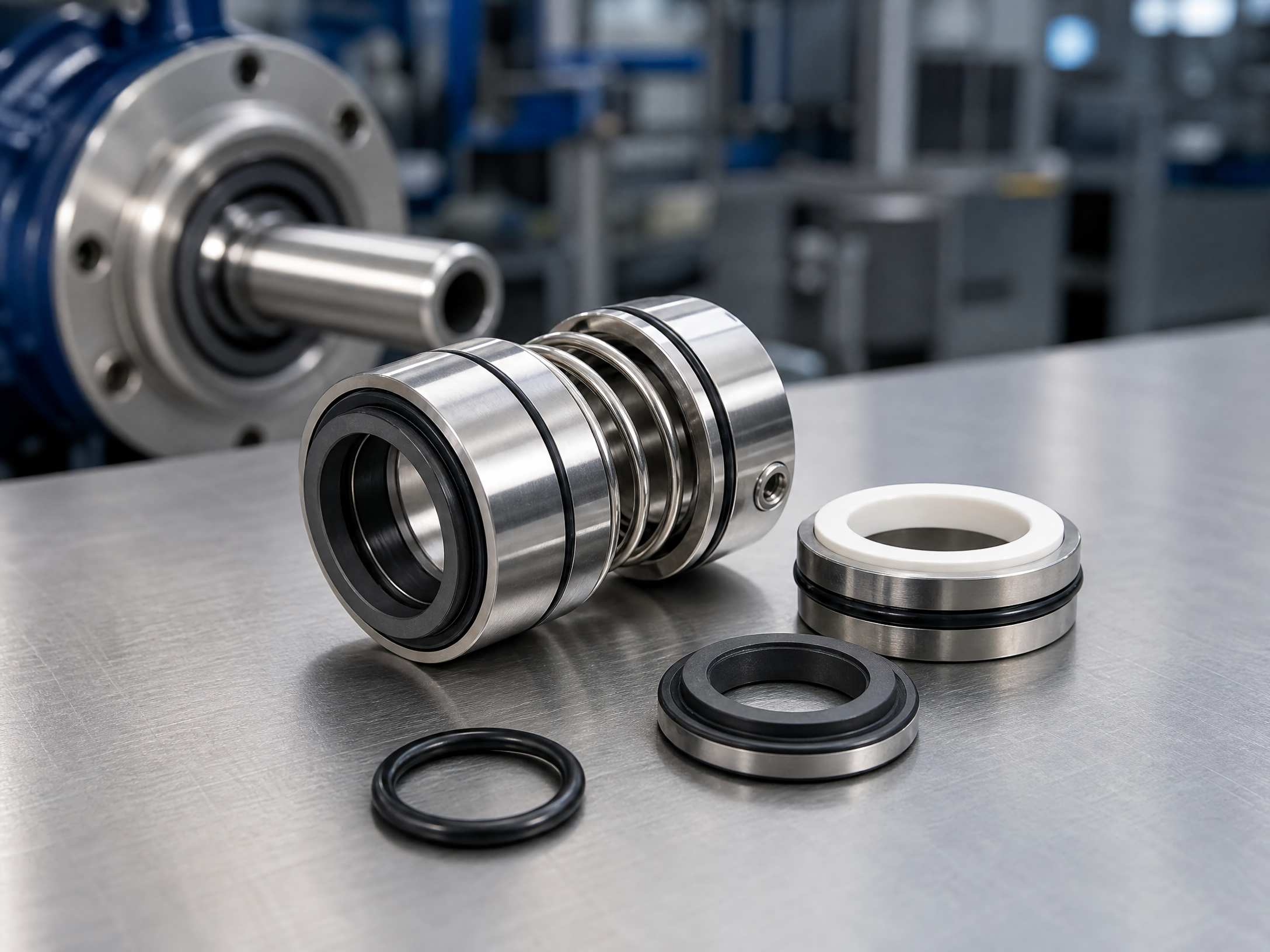
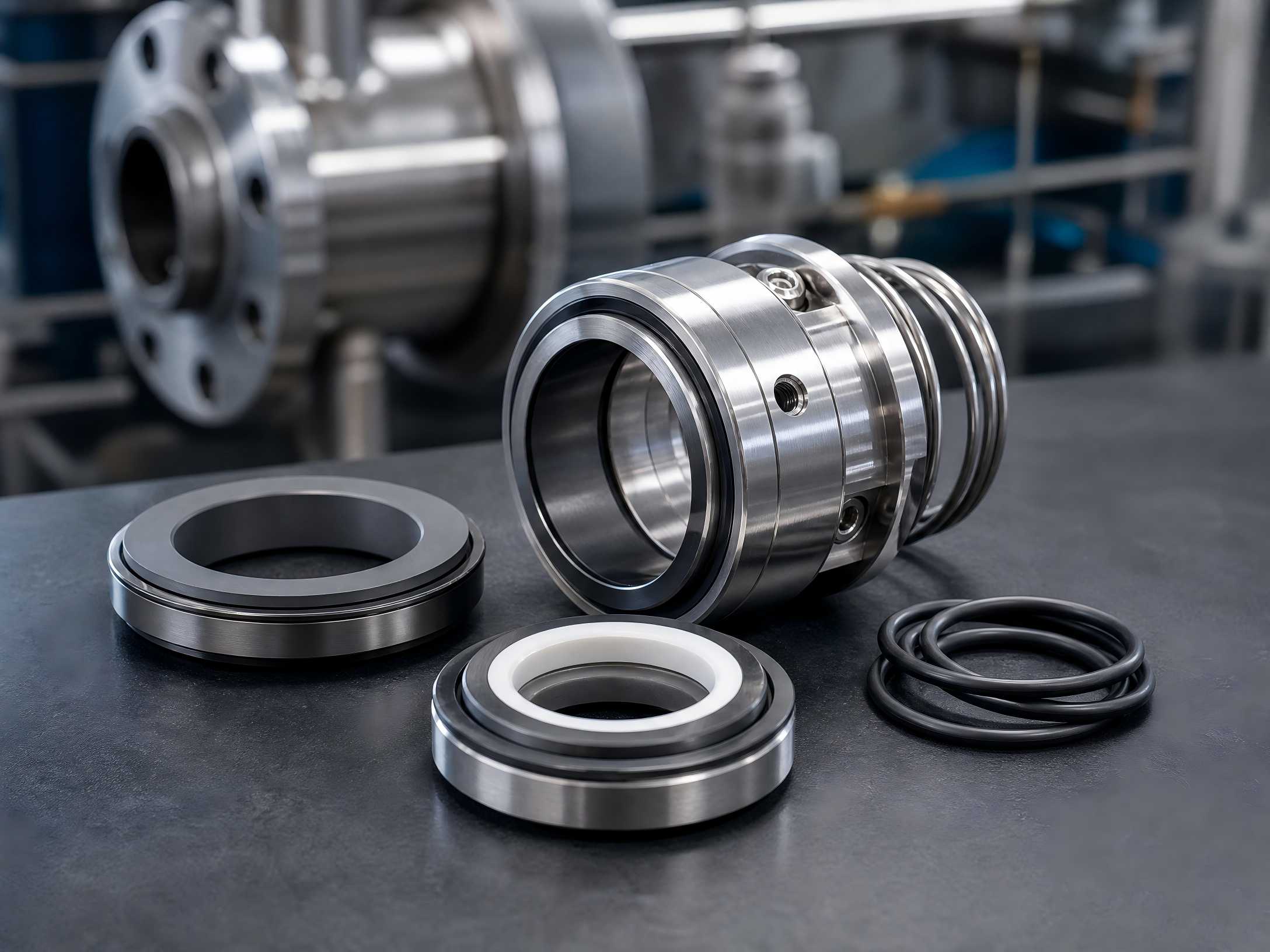
Mechanical seals are core sealing components for fluid‑handling equipment such as centrifugal pumps, reaction synthesis kettles, turbo‑compressors and submersible motors, ensuring leak‑free and stable equipment operation. Nevertheless, their performance and service life depend not only on the product itself but also heavily on selection matching, installation precision and operation‑maintenance practices. Industry statistics show that over 80 % of seal leakage, premature failure and frequent replacement issues stem from improper selection, non‑standard installation or operational errors. Combining industry standards with field practical experience, Teffiko addresses precise type‑selection and installation‑precision control to achieve more reliable and efficient equipment operation.
As a precision core component of equipment, a mechanical seal forms a tight barrier via rotating‑stationary ring end faces, elastic elements and auxiliary sealing structures to block internal‑medium leakage and prevent external dust and impurities from intruding into equipment. Proper selection and application of mechanical seals can effectively resolve equipment seepage problems, reduce unplanned downtime, cut operation‑maintenance costs substantially, and avoid safety and environmental risks arising from leakage of corrosive, flammable and explosive media.
Conversely, mis‑selection and mismatched models directly trigger rapid wear of seal end faces, ageing and cracking of rubber parts and seal failure‑induced leakage, severely impairing the operational stability of complete industrial equipment.
Diversified dedicated mechanical‑seal types are available for different working conditions and medium properties to suit various industrial scenarios. Their scope of application must be clarified prior to selection:
Correct mechanical‑seal selection hinges on matching structures and materials against five key parameters: seal‑chamber pressure, medium temperature, operating rotational speed, fluid properties and installation space. Standard selection principles are specified below.
1. Determine seal structure by seal‑chamber pressure
Pressure constitutes the core factor governing seal structure. Non‑balanced mechanical seals with simple structures and cost‑effective performance are applicable for low‑pressure and atmospheric‑pressure conditions to satisfy general sealing requirements. Balanced mechanical seals must be adopted for medium‑to‑high‑pressure conditions and working conditions with drastic pressure fluctuations. They effectively reduce end‑face specific pressure, mitigate frictional heating and avoid leakage resulting from high‑pressure separation of seal end faces. Single‑end or double‑end seal structures can be chosen according to sealing requirements; double‑end seals are preferred for high‑risk media to realise double‑layer protection.
2. Determine seal type by operating rotational speed
Rotary‑type and stationary‑type seals are differentiated according to equipment operating linear velocity. For high‑speed working conditions, hydrodynamic non‑contact mechanical seals are prioritised to minimise end‑face frictional loss, adapt to high‑speed operation and avert rapid seal damage from high‑speed dry‑grinding. Conventional contact‑type seals suffice for low‑speed and steady‑state equipment.
3. Match materials and auxiliary systems against medium temperature and properties
Corrosiveness, abrasiveness and thermal characteristics of media directly dictate friction‑pair materials and auxiliary‑seal O‑ring materials; corresponding protection systems shall also be equipped:
4. Determine spring and assembly configuration by installation space
Select single‑spring, multi‑spring or wave‑spring structures flexibly according to the effective installation space of the seal chamber, and distinguish internally‑mounted and externally‑mounted seals. Multi‑spring internally‑mounted seals fit standard chambers. Single‑spring or wave‑spring seals are preferred for compact confined spaces to guarantee installation conformity and elastic compensation performance.
1. Single‑end mechanical seal
Applicable to clean‑water pumps, circulating pumps and general industrial water pumps under non‑corrosive, particle‑free, normal‑temperature and atmospheric‑pressure conditions. Featuring simple structures, convenient maintenance and low costs, it is the primary option for general‑purpose working conditions.
2. Double‑end mechanical seal
Suitable for chemical pumps, pharmaceutical pumps and working conditions involving flammable‑explosive, toxic and strongly corrosive media. Double‑layer sealing protection enables barrier‑fluid injection to achieve zero‑leakage and deliver extremely high safety.
3. Metal‑bellows mechanical seal
Free of conventional O‑ring structures, it completely eliminates high‑temperature‑induced ageing. It adapts to high‑temperature hot oil, heat‑conduction‑oil pumps and heavily‑vibrating equipment with superior temperature‑resistance, fatigue‑resistance and extended service life.
4. Cartridge mechanical seal
Pre‑assembled as an integral unit, it obviates complex commissioning and avoids manual installation errors. Suitable for most working conditions, it serves production scenarios demanding low failure rates and minimal maintenance.
Even with properly‑matched selection, sub‑standard equipment precision will still cause seal failure. Core equipment‑precision parameters must be verified prior to installation and comply with industry specifications before construction:
1. Pre‑installation verification
First confirm that seal model and specifications fully match working conditions of equipment; check completeness and intactness of all components against the general‑assembly drawing. For seals with coil‑spring drive, distinguish left‑hand and right‑hand spring directions according to shaft rotation direction to prevent failure from reverse assembly.
2. Pre‑installation cleaning and pre‑treatment
Thoroughly clean shaft sleeves, seal chambers, gland covers and other components to remove burrs, rust and impurities and guarantee clean foreign‑object‑free parts. Inspect sound bearing operation. Apply a thin layer of lubricant to shaft mounting positions for ordinary working conditions to reduce friction. For conditions where rubber rings are incompatible with oil products, soapy water may be used for lubrication. Floating‑mounted stationary rings without anti‑rotation pins shall be installed dry without oil application.
3. Formal installation operations
Strictly control installation dimensions in accordance with product manuals. Fit stationary rings and gland covers onto shafts first to avoid end‑face impact damage, then install rotating‑ring assemblies. Tighten set screws of spring seats and drive seats in staggered uniform passes. Before gland‑cover locking, perform axial‑compression tests by manually pushing‑pulling compensation rings. Qualification is confirmed when automatic spring‑back without jamming occurs upon release. Finally tighten all bolts uniformly.
Selecting the correct mechanical seal constitutes a systematic undertaking of parameter matching, material compatibility, precise installation and standardised operation. Should you require custom procurement, technical documentation, samples, quotations or bulk‑order proposals, feel free to contact the TEFFIKO team. We will recommend suitable mechanical‑seal product solutions tailored to your actual working conditions to support efficient and stable production.
-