In fields such as petrochemicals, pharmaceuticals, printing and dyeing, electroplating and environmental‑protection water treatment, the transportation of corrosive, toxic, flammable‑explosive and high‑value fluids imposes extremely high requirements on equipment sealing performance, stability and safety. Conventional mechanical‑seal centrifugal pumps are prone to leakage during long‑term operation, which not only wastes materials and pollutes the environment but also creates potential safety hazards. The Teffiko chemical magnetic pump adopts magnetic coupling transmission technology to achieve fully sealed and leakage‑free transportation, making it an ideal choice for safe production. This article provides a comprehensive analysis covering working principles, structure, advantages, parameters, application scenarios, operating prohibitions and operation‑maintenance key points to help readers get started quickly.
I. What Is a Chemical Magnetic Pump?
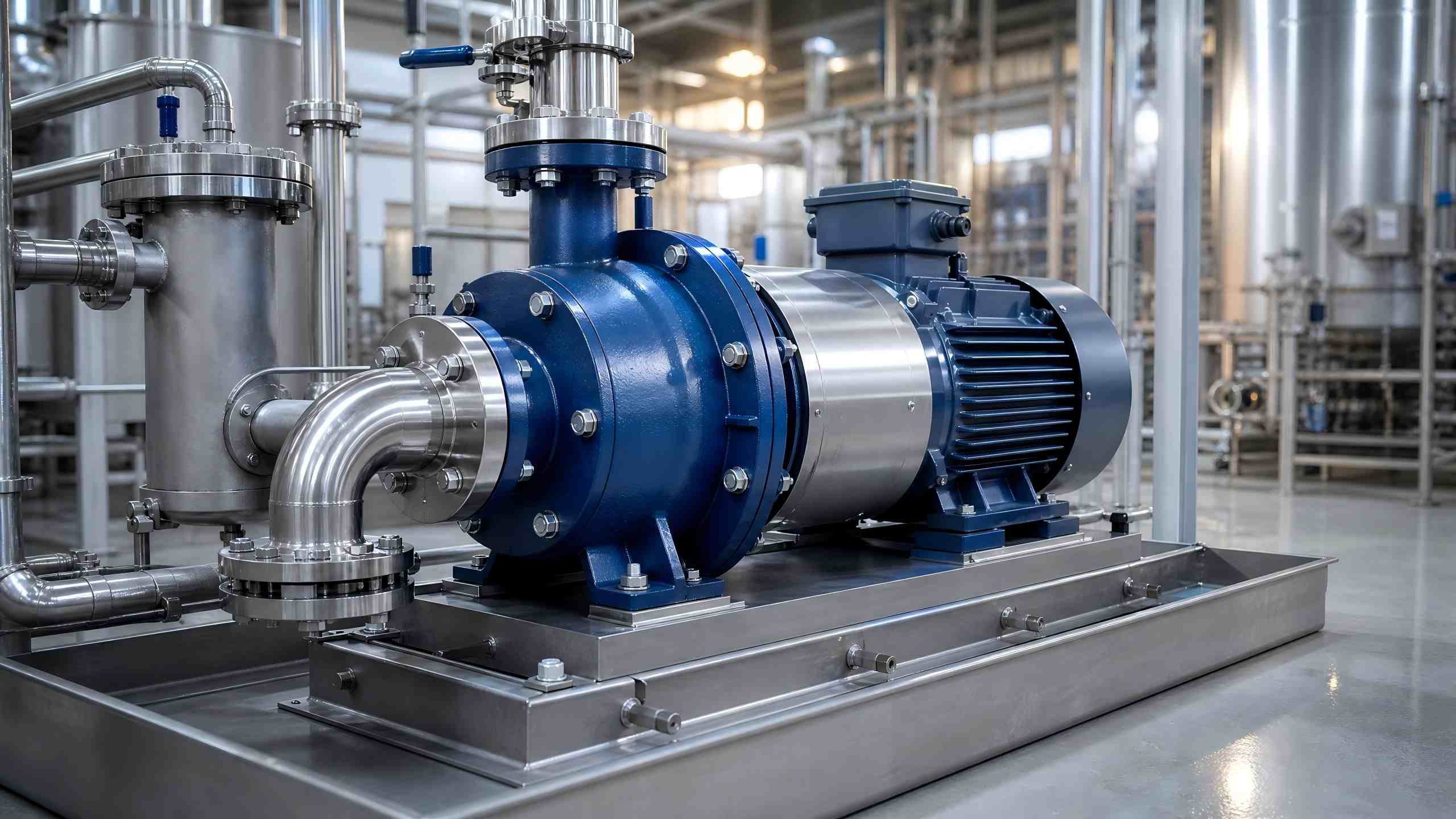
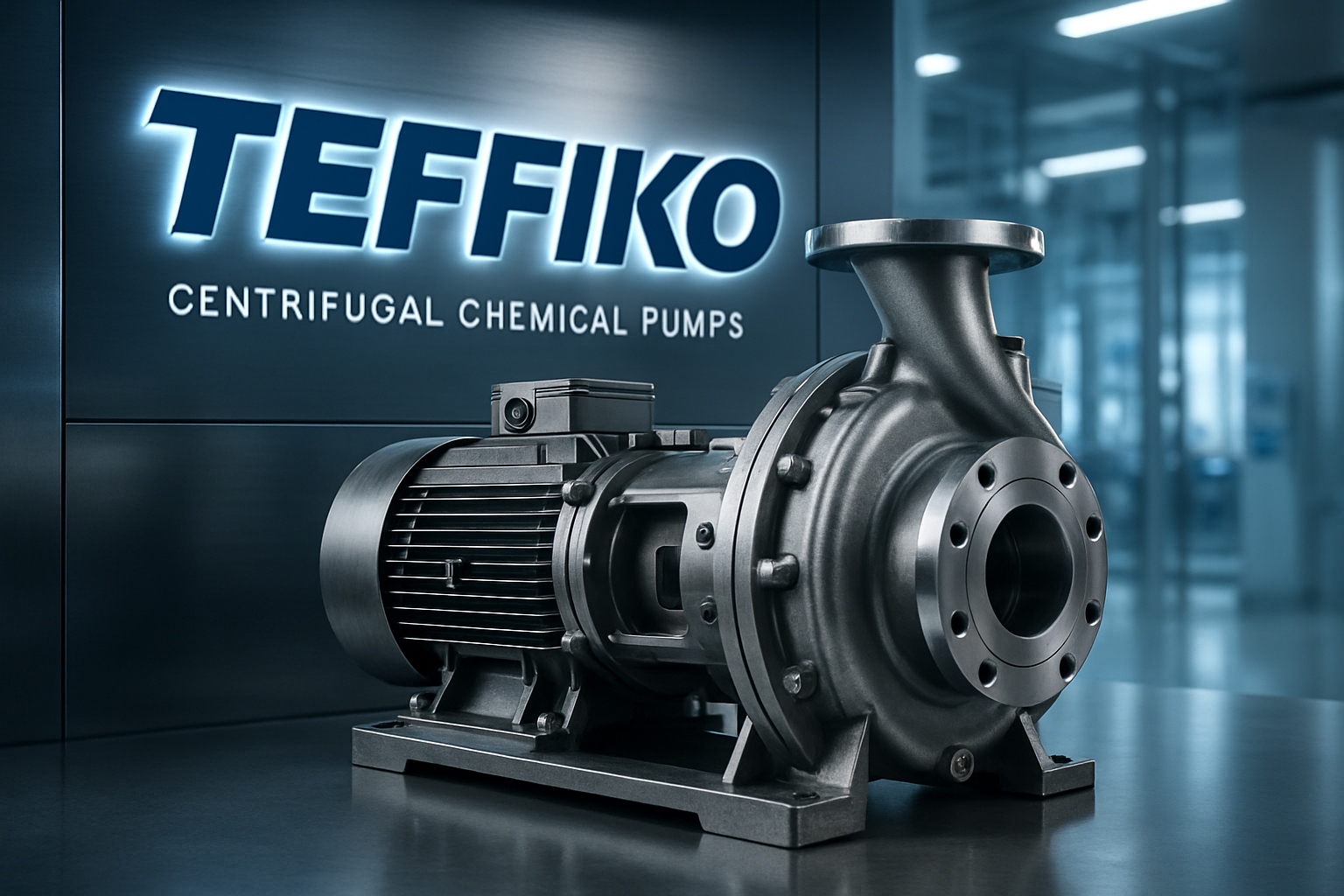
A chemical magnetic pump is a non‑contact transmission centrifugal pump designed based on modern magnetomechanical principles, belonging to static‑seal pump types with full sealing and zero leakage. This equipment completely eliminates the mechanical‑seal structure of conventional pumps. Torque is transmitted through magnetic coupling, and transported media are fully enclosed inside the static isolation sleeve. It fundamentally puts an end to medium leakage and contamination, perfectly solving the inherent drawback of shaft‑seal leakage in conventional mechanically driven pumps. It is a special‑purpose industrial pump suitable for transporting various high‑risk and clean chemical media.
II. Core Working Principle
Chemical magnetic pumps rely on magnetic couplers to transmit torque in a non‑contact manner and deliver stable and reliable operation. When the equipment runs, the motor drives the outer rotor assembly with outer magnetic steel to rotate synchronously. Magnetic lines penetrate the non‑magnetically conductive isolation sleeve and remotely drive the inner‑magnetic‑steel rotor and impeller to rotate synchronously. Centrifugal force generated by the impeller completes suction, pressurization and transportation of media. The whole process involves no mechanical contact or frictional transmission. Media are always enclosed within the pump chamber to realize true zero‑leakage and pollution‑free transportation.
III. Main Structural Components
Chemical magnetic pumps feature a modular and compact structure for convenient disassembly, assembly and simple operation‑maintenance. They mainly consist of three major assemblies with well‑defined functions and stable performance:
Magnetic transmission assembly: Composed of outer‑magnet assembly, inner‑magnet assembly and isolation sleeve. It serves as the core structure for leakage‑free transportation, fully isolating media from the external environment. It also comes with overload‑protection functions to effectively prevent motor burnout caused by overload.
Media‑contact wetted parts: Including impeller and pump casing, which are in direct contact with chemical media. Mainstream materials adopted include stainless steel, fluoroplastic, F46 lining, FRPP, PVDF and corundum ceramics with corrosion‑resistant properties. These materials adapt to corrosive media such as acids, alkalis of different concentrations and organic solvents to avoid medium contamination and component corrosion.
Drive‑and‑support assembly: Made up of motor, wear‑resistant bearings and fixed base. Bearings of the equipment adopt the self‑lubrication and self‑cooling mode relying on transported media, requiring no extra lubrication system. It runs with low vibration and low noise to support long‑term stable operation of the equipment.
IV. Core Advantages of Chemical Magnetic Pumps
Compared with conventional mechanical‑seal chemical pumps, chemical magnetic pumps deliver remarkable comprehensive performance advantages and better adaptability to complex chemical working conditions:
Full‑seal zero‑leakage for safety and environmental protection: Static seals replace dynamic seals to completely eliminate medium leakage. It suits transportation of flammable‑explosive and toxic media and helps enterprises achieve safe production with zero leakage and zero contamination.
Built‑in overload protection: Magnetic couplers buffer transmission loads to protect motors effectively and reduce equipment failure rates.
Corrosion resistance and broad medium adaptability: Customized with multiple materials to handle most corrosive chemical media.
Compact structure, low noise and long service life: Free of mechanical friction loss, it operates at low noise with extended service life.
Low operation‑maintenance costs: Standardized modular design enables disassembly and overhaul without special tools for simple and hassle‑free later‑stage maintenance.
V. Application Scenarios and Standard Operating Parameters
Application scenarios: The equipment is widely used in petrochemicals, fine chemicals, pharmaceuticals, printing and dyeing, electroplating, food processing, national defense industry, sewage treatment and other sectors. It is mainly used to transport corrosive liquids free of iron filings and fibrous impurities. It is especially suitable for working conditions for transporting flammable, explosive, volatile, toxic and precious rare fluids. For special working conditions beyond the capacity of conventional magnetic pumps, high‑temperature magnetic pumps or chemical magnetic pumps equipped with suspension separators can be selected. They effectively address transportation challenges under high‑temperature conditions and for media containing trace particles, and can directly replace traditional IH‑type chemical process pumps with stronger working‑condition adaptability.
Standard operating parameters: Chemical magnetic pumps follow fixed medium‑adaptation criteria and working‑condition limits as specified below:
Medium‑adaptation criteria: Normally applicable for media with density ≤ 1300 kg/m³ and viscosity ≤ 30 × 10⁻⁶ m²/s. When medium density exceeds 1600 kg/m³, special customized magnetic couplers are required for normal operation.
Temperature‑and‑pressure parameter differentiation: For metal and F46‑lined magnetic pumps, the maximum operating temperature is 80 °C and the rated pressure is 1.6 MPa. For non‑metallic magnetic pumps, the maximum operating temperature is 60 °C and the rated pressure is 0.6 MPa. Special high‑temperature magnetic pumps can withstand ultra‑high‑temperature working conditions up to 350 °C to meet demands of special high‑temperature production lines.
Operating prohibitions and common misconceptions: Three prohibitions most frequently violated by novice operators directly determine equipment service life and must be strictly observed:
No dry‑running: Bearings of magnetic pumps rely on transported media for lubrication and cooling. Under dry‑running conditions, lack of medium for heat dissipation and lubrication will rapidly burn out bearings, cause thermal deformation of the isolation sleeve and demagnetization of magnetic steel. Dry‑running is the primary root cause of chemical magnetic pump damage.
No transportation of media containing impurities: Liquids containing ferromagnetic impurities, fibers or hard solid particles are prohibited. Impurities continuously scour and abrade wetted components such as pump casing and impeller, which may easily lead to impeller jamming and pump blockage. Filtration equipment must be installed in advance for working conditions with trace impurities.
No arbitrary modification of pipelines: Do not privately alter the nominal diameter of original pump pipelines. Mismatched pipelines will upset rated parameters of the equipment, impair normal head, flow rate and operating efficiency, and result in abnormal equipment performance.
VI. Basic Daily Maintenance Tips
Standard daily operation and maintenance are critical to extending equipment service life.
Before startup: Fully fill the pump chamber with media to prevent no‑load startup.
Periodic cleaning: Clean the inlet filter screen to intercept impurities and stop them from entering the pump chamber and abrading components.
Operational monitoring: Keep real‑time track of equipment pressure, noise and vibration. Shut down the machine immediately for troubleshooting once abnormalities occur.
Long‑term shutdown: Drain residual media inside the pump to prevent corrosion of internal components by acidic and alkaline media.
Unattended working conditions: Temperature‑control and liquid‑level protection devices may be installed to enhance equipment operational safety in an all‑round manner.
Summary
With advantages including zero leakage, corrosion resistance, overload protection, broad working‑condition adaptability and simple operation‑maintenance, chemical magnetic pumps resolve numerous pain points of conventional chemical pumps and serve as core equipment for chemical fluid transportation. Novice operators should master working principles, structures and working‑condition parameters, keep in mind applicable media and operating prohibitions, conduct standardized operations and perform regular maintenance. In this way, faults can be avoided, equipment performance can be maximized, and safe and stable operation of production lines can be guaranteed.
To learn more about Teffiko chemical magnetic pumps, please visit our official website: http://www.teffiko.com
We use cookies to offer you a better browsing experience, analyze site traffic and personalize content. By using this site, you agree to our use of cookies.Privacy Policy