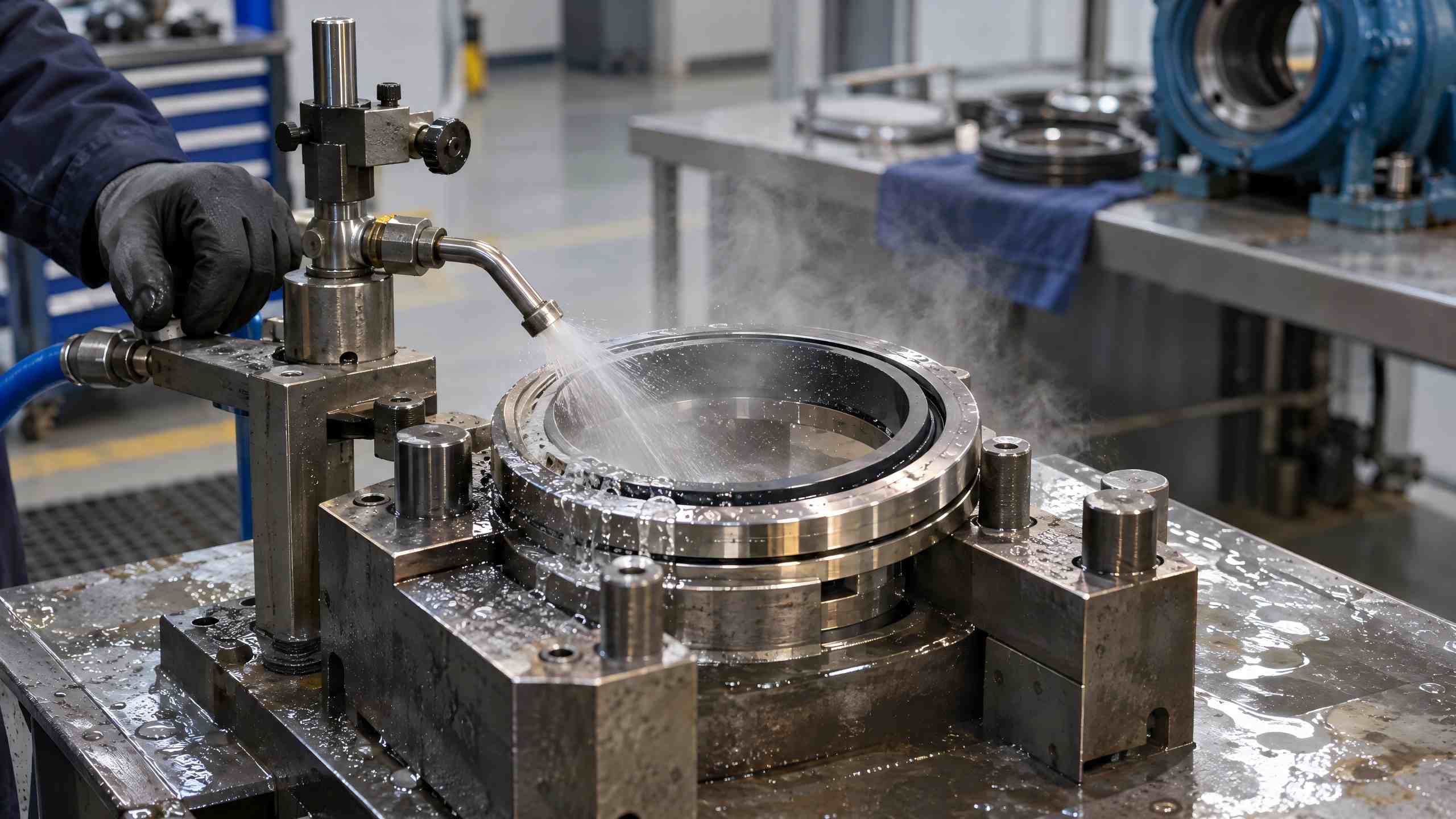
The mechanical seal face is the most vulnerable core component of centrifugal pumps. Subject to high temperatures, medium crystallization, environmental impurities and other factors, it is highly prone to failures such as abrasive leakage and thermal cracking. Seal‑face quenching is a critical protection process for water pumps. By injecting liquid or gas into the low‑pressure seal face, it achieves rapid cooling, impurity isolation, debris removal and containment of leaked media. It constitutes an indispensable operation‑and‑maintenance measure under special working conditions. Teffiko has long been dedicated to centrifugal‑pump mechanical‑seal solutions. This article concisely outlines the core scenarios and application specifications for activating face quenching, catering to daily equipment operation and maintenance requirements.
1. What is Seal‑Face Quenching?
Quenching differs from conventional continuous seal flushing and serves as a targeted forced‑protection measure. Conventional flushing merely stabilizes operating temperatures, whereas quenching rapidly removes peak heat from the faces. In addition, it isolates air and moisture, blocks impurity ingress, and safely diverts trace leaked media. It delivers both equipment‑protection and safety‑environmental‑protection benefits. It applies only to severe special working conditions and must not be misused over extended periods.
2. Six Core Working Conditions Requiring Activation of Seal‑Face Quenching
1. Transporting easily‑crystallizable or easily‑solidifiable media
When pumping liquids that crystallize with temperature change or solidify upon exposure to air, frictional heat at the seal faces accelerates medium solidification. Hard crystalline particles scratch the sealing friction pairs and cause seal failure. Quenching the rear side of the faces enables precise temperature control, inhibits medium crystallization and solidification, and preserves face integrity.
2. Equipment operation under harsh ambient conditions
When water pumps run in dusty, humid and impurity‑laden environments, external contaminants readily penetrate seal clearances, resulting in face abrasion, seizure and corrosion. Quenching builds a protective barrier that isolates external impurities and moisture and significantly reduces seal degradation caused by the environment.
3. Transporting media at temperatures above 110 °C
At medium temperatures exceeding 110 °C, high heat conducts along the pump shaft toward bearings, triggering lubricant aging, failure and bearing damage. Combined with frictional heat, this also gives rise to liquid‑film flash vaporization, dry‑running and cracking of seal faces. Quenching delivers rapid cooling, blocks heat conduction, and protects both seal faces and bearing assemblies.
4. Transporting flammable‑explosive and strongly‑corrosive media
Leakage of high‑risk chemical media may lead to corrosion, environmental pollution and even fire or explosion hazards. Quenching stabilizes seal performance, lowers leakage risks, safely diverts trace leaked media, and mitigates safety and environmental risks.
5. Working conditions with frequent start‑stop cycles, high pressure and high‑speed operation
Frequent pump start‑stop generates transient thermal shock and may cause thermal cracking of seal rings. Under high‑pressure and high‑linear‑velocity conditions, conventional cooling provides insufficient heat dissipation and readily induces sealing‑ring aging. Quenching suppresses peak temperatures, relieves thermal stress and slows the aging and damage of sealing components.
6. Abnormal cooling and risk of dry‑running
Pump cavitation and insufficient flushing flow bring about dry friction at seal faces and sharp temperature rises. As an emergency measure, quenching achieves fast cooling, buys buffer time for shutdown and maintenance, and curbs equipment‑damage costs.
3. Key Precautions for Quenching Application
Quenching must be performed in a standardized manner to avoid counter‑productive damage: strictly control medium temperature differences and prevent face cracking from thermal shock; the quenching medium must be clean and impurity‑free to avoid seal erosion; quenching is a dedicated emergency measure and shall not replace conventional continuous flushing; match the characteristics of seal materials such as graphite and silicon carbide to suit equipment working conditions.
Summary
Seal‑face quenching represents a core protection process for centrifugal pumps under special working conditions. It is mainly applicable to scenarios involving high temperatures, high‑risk corrosive media, easily‑crystallizable media, harsh environments, frequent start‑stop cycles and emergency fault handling. Standardized and targeted quenching effectively extends mechanical‑seal service life, cuts equipment failure rates and operation‑and‑maintenance costs, and guarantees safe and stable water‑pump operation.
For more supporting solutions for centrifugal‑pump mechanical seals, please visit our official website: [http://www.teffiko.com] or email sales@teffiko.com.
We use cookies to offer you a better browsing experience, analyze site traffic and personalize content. By using this site, you agree to our use of cookies. Privacy Policy