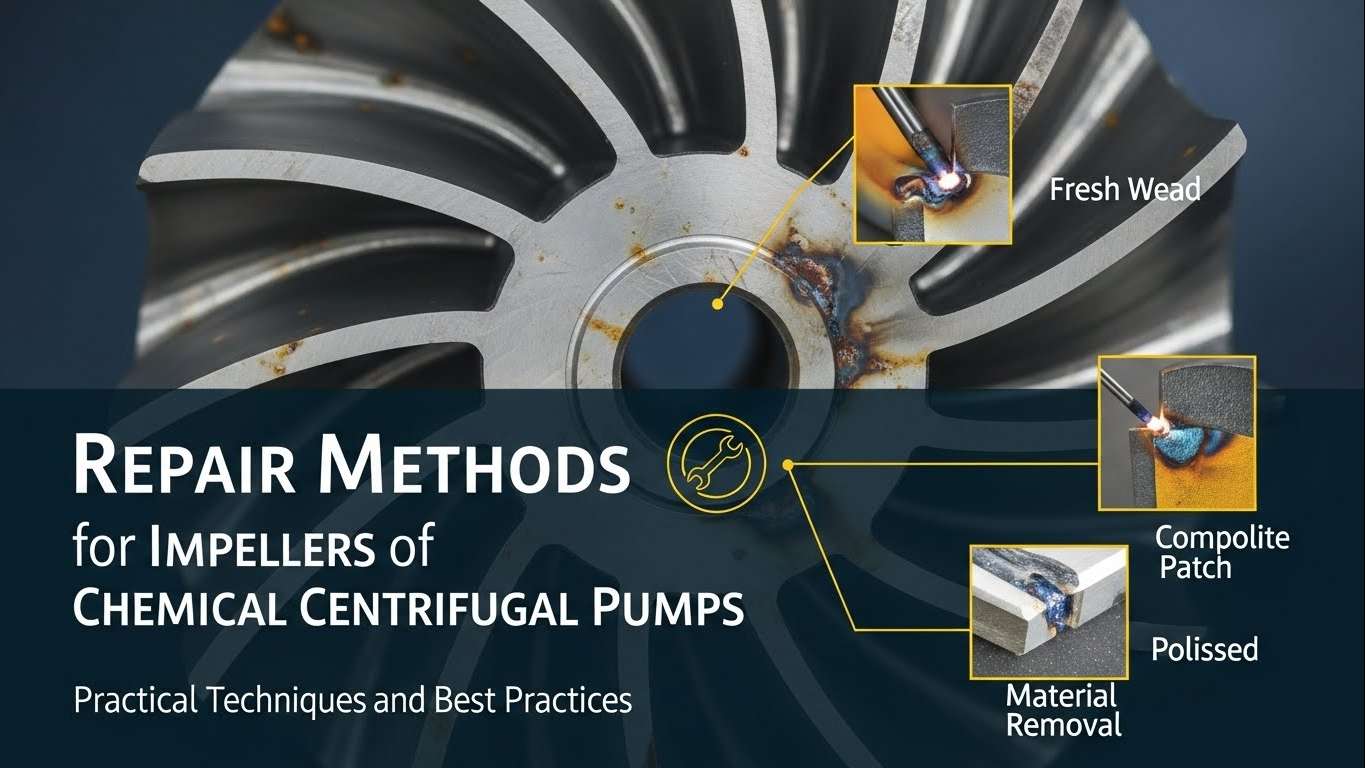
Repair Methods for Impellers of Chemical Centrifugal Pumps
2025-12-15
I. Common Causes of Impeller Damage
1. Corrosion
Many chemical media, such as acids, alkalis, and organic solvents, can react with the metal materials of impellers. For example, common carbon steel impellers are prone to corrosion holes when exposed to acidic media; even stainless steel impellers with better corrosion resistance may suffer pitting corrosion or stress corrosion cracking in chloride-containing environments—these are common scenarios encountered in daily pump maintenance.
2. Erosion
If the conveyed fluid contains solid particles (e.g., mineral slurry, impurities in waste liquid), these particles will flow at high speed with the fluid and continuously scour the impeller surface. Over time, the blades will gradually thin, the edges will wear out, and even pits may form. This type of damage is particularly common in mineral slurry transportation and waste liquid treatment sections, requiring frequent repairs.
3. Cavitation
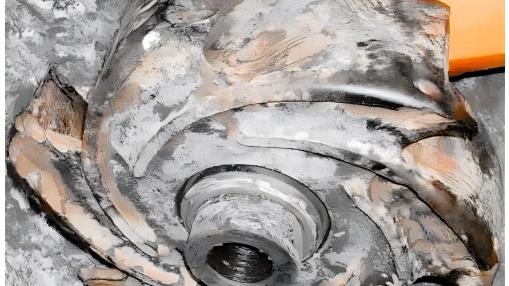
Cavitation is the most concealed and easily overlooked issue. When the pump's inlet pressure is too low, local vaporization of the liquid occurs, forming bubbles. As these bubbles move to the high-pressure area with the fluid, they collapse instantly, generating extremely strong impact forces that can pit the impeller surface into a honeycomb-like structure and even penetrate the blades in severe cases. By the time abnormal pump operation is detected, cavitation damage is often already severe.
4. Mechanical Fatigue and Vibration
Problems such as misalignment during installation, shaft deformation, or bearing wear can cause the impeller to bear abnormal loads during operation. In the long term, fatigue cracks are likely to appear at the root of the blades, and sometimes the fit between the hub and the shaft may loosen, resulting in abnormal noise during operation and seriously affecting pump stability.
II. Common Repair Methods
Method 1: Welding Repair
Applicable to metal impellers with cracks, local defects, etc.
Common Materials: Stainless steel, carbon steel, Hastelloy, etc.
Operation Points:
After disassembling the impeller, thoroughly clean the surface corrosion layer and oil stains to expose the base material.
Penetrant testing or ultrasonic testing is recommended to confirm no hidden cracks.
Select welding materials matching the impeller material; nickel-based welding materials can be considered for highly corrosive environments.
Control welding heat input to reduce deformation; TIG welding is recommended for thin-walled parts.
After welding, grind to restore the original flow channel shape and re-perform dynamic balance correction.
Advantages: Restores structural strength; cost is usually lower than replacing with a new part.
Notes: Not suitable for large-area corrosion or erosion; requires operation by experienced welders; improper heat treatment may affect material corrosion resistance.
Method 2: Coating/Lining Repair
Applicable to surface corrosion or slight erosion protection, and can also be used as a preventive maintenance measure. Not applicable to impellers with structural cracks.
Common Protective Materials:
Epoxy coating: Acid and alkali resistant, easy to construct.
Polyurethane coating: Good wear resistance, suitable for particle-containing media.
Ceramic lining: High hardness, strong erosion resistance, but high construction requirements.
Nickel-phosphorus chemical plating: Uniform coverage, with both corrosion resistance and wear resistance.
Advantages: Short construction cycle, low cost, and can extend impeller service life.
Notes: Excessively thick coating may change the flow channel profile; insufficient surface treatment can easily lead to coating peeling.
Method 3: Machining Repair
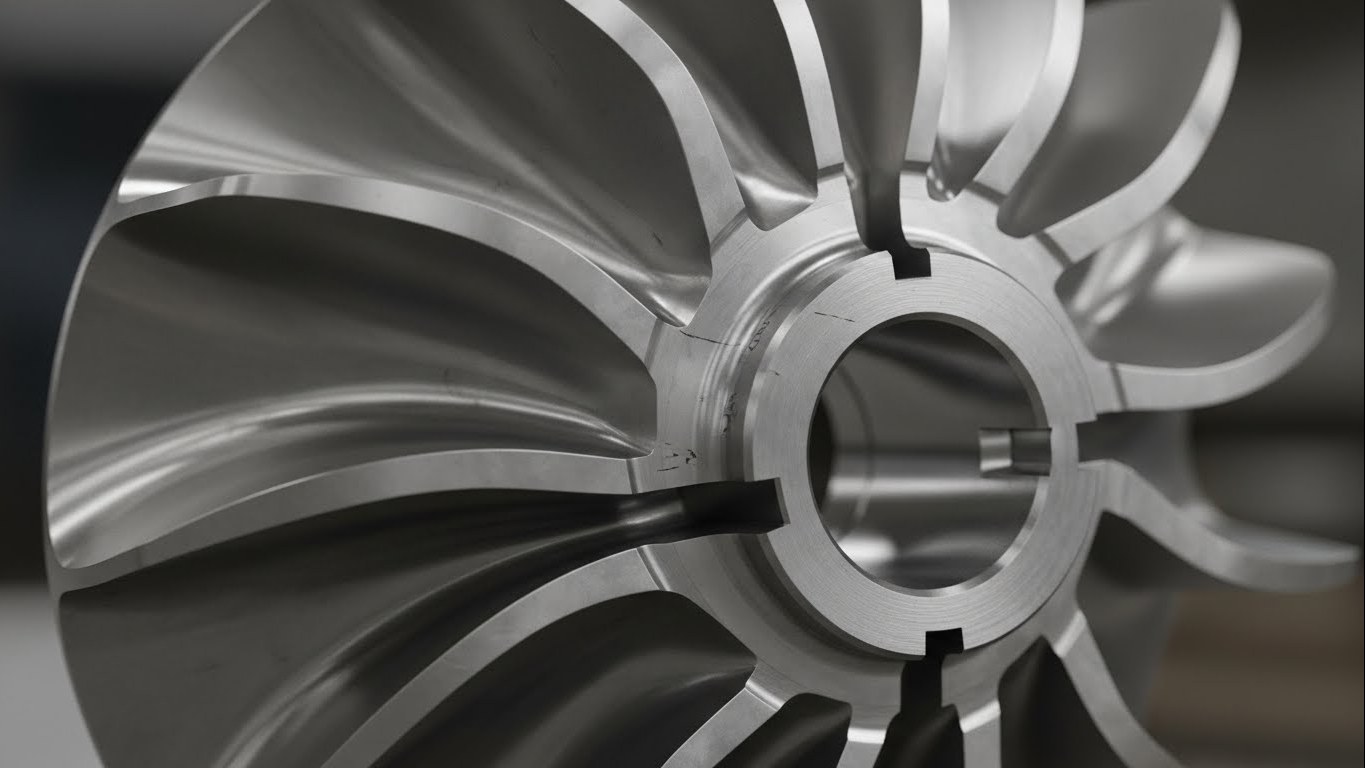
Applicable to dimensional deviation issues such as impeller hub wear and blade profile deformation. For example, when the front and rear covers of a closed impeller thin due to friction, or the blade outlet becomes uneven due to erosion, machining can be used to restore the original geometric dimensions.
Advantages: High repair accuracy, helping to restore pump efficiency.
Notes: Only applicable to impellers with minimal material loss; excessive machining will reduce strength; professional equipment is required for complex curved surface machining.
Method 4: Direct Replacement
It is recommended to replace with a new impeller if the impeller has the following conditions:
Multiple through cracks or broken blades;
Corrosion depth exceeding 30% of the wall thickness;
Repair cost is close to or exceeds the price of a new impeller.
When selecting a new impeller, more durable materials can be chosen based on medium characteristics. For example, Hastelloy is suitable for strong acid environments, and ceramic-lined or ultra-high molecular weight polyethylene impellers can be considered for high-wear working conditions.
III. Key Considerations During Repair
Material Compatibility: Repair materials must be compatible with both the impeller base material and the conveyed medium; otherwise, electrochemical corrosion or coating failure may occur.
Dynamic Balance Correction: Repair operations such as welding and coating will change the impeller mass distribution. Especially for high-speed pumps, dynamic balance must be performed after repair to avoid excessive vibration during operation.
Compliance with Relevant Specifications: For pumps in key positions, it is recommended to follow standards such as API 610 for the repair process, including material confirmation, non-destructive testing, and balance grade requirements.
Emphasis on Preventive Maintenance: Regularly check operating parameters such as vibration and pressure, clean filters in a timely manner, and operate the pump within the designed flow range to effectively extend impeller service life. For important pumps, it is recommended to open the cover for impeller inspection every 6 to 12 months.
IV. Frequently Asked Questions
Q1: Can plastic impellers (e.g., PTFE, PP) be repaired?
A1: Minor damages can be attempted with special adhesives or hot air welding, but the repair strength is usually limited. Direct replacement is recommended for key positions or high-temperature and high-pressure environments.
Q2: What is the difference between static balance and dynamic balance?
A2: Static balance only corrects the center of gravity offset in a stationary state, while dynamic balance corrects unbalanced forces and moments in a rotating state. High-speed pumps must undergo dynamic balance.
Q3: How to judge cavitation?
A3: Usually, the pump will produce noise similar to gravel impact during operation, and the head and efficiency will decrease significantly. Inspection after disassembly will reveal dense holes on the impeller surface.
Summary
Impeller repair is a task that requires comprehensive consideration of technology, experience, and specifications. Selecting the correct repair method based on the type of damage, ensuring material suitability, and conducting thorough dynamic balance and quality testing are essential to achieve reliable repair and restore equipment performance. If you need professional support, teffiko can provide you with reliable solutions. We have a professional technical team and standardized processes, committed to helping you extend equipment life and ensure production safety.
We use cookies to offer you a better browsing experience, analyze site traffic and personalize content. By using this site, you agree to our use of cookies.
Privacy Policy