Athena Engineering S.r.l.
News

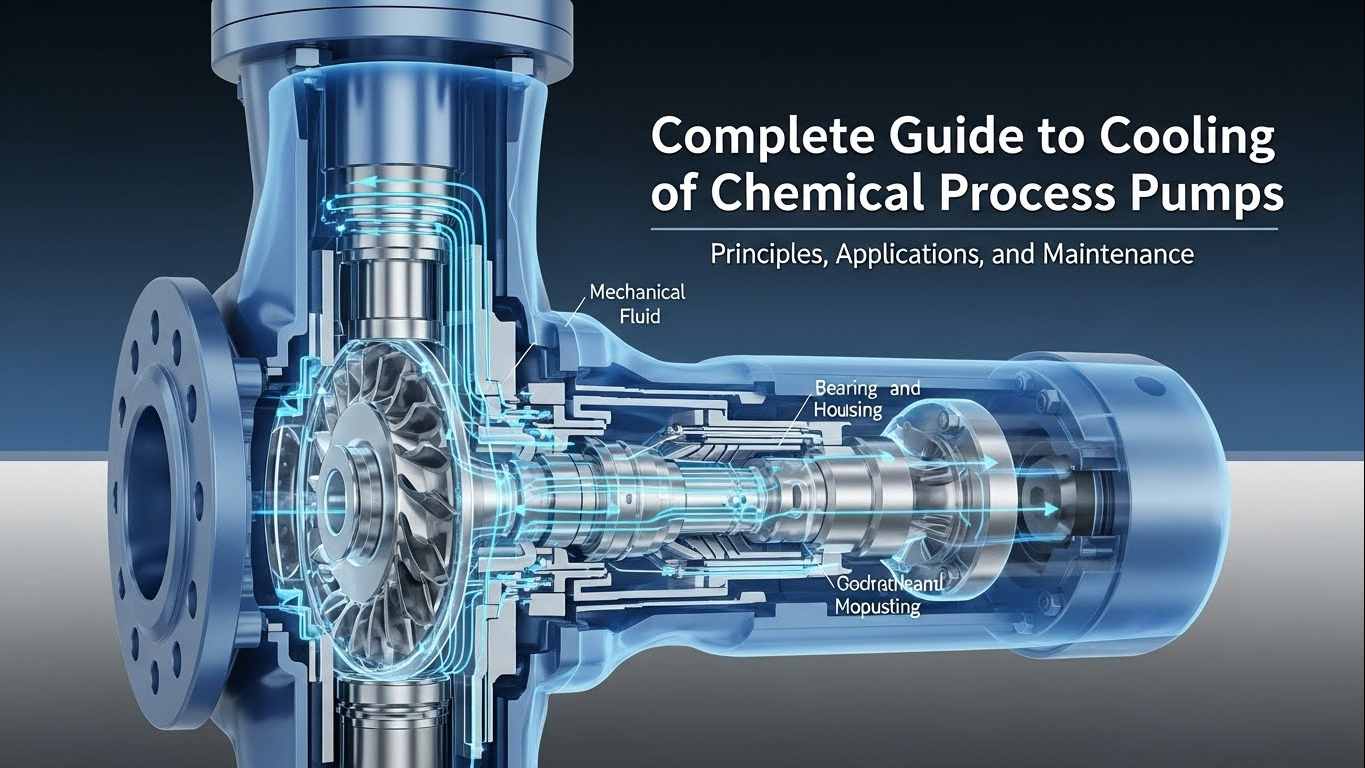
Complete Guide to Cooling of Chemical Process Pumps

2025-12-17

In petrochemical processes, pump reliability largely depends on effective temperature control. The cooling system selected for different medium temperatures not only impacts equipment lifespan but also directly affects operating costs.


As a petrochemical pump researcher, I will break down the most scientifically sound cooling configuration strategy based on three critical medium temperature thresholds.

Complete Guide to Cooling of Chemical Process Pumps

I. Key Temperature Demarcation Points: How to Choose a Cooling Plan?

Based on the severity of chemical service conditions, cooling strategies can be categorized into the following three levels:


1. Normal and Medium-Low Temperature Conditions (< 120°C)

For clean media with a conveying temperature below 120°C—such as ambient-temperature acid/base solutions or organic solvents—most chemical process pumps do not require an external cooling system. In this case, the pump relies on the process fluid itself for lubrication and cooling, offering a simple structure and low maintenance costs.


⚠️ Note:


If the medium is prone to crystallization or contains solid particles, a seal flushing connection must be provided on the pump casing—even at low temperatures—and an external flush line should be installed. The flush fluid effectively prevents particles from entering the seal faces or crystals from depositing on the stationary seal ring, significantly extending seal life.


2. Medium-High Temperature Range (120°C – 300°C)

When the medium temperature exceeds 120°C, thermal loading on both the pump casing and seal chamber increases dramatically. At this point, self-cooling by the process fluid alone is insufficient to ensure safe operation. Standard engineering practices include:


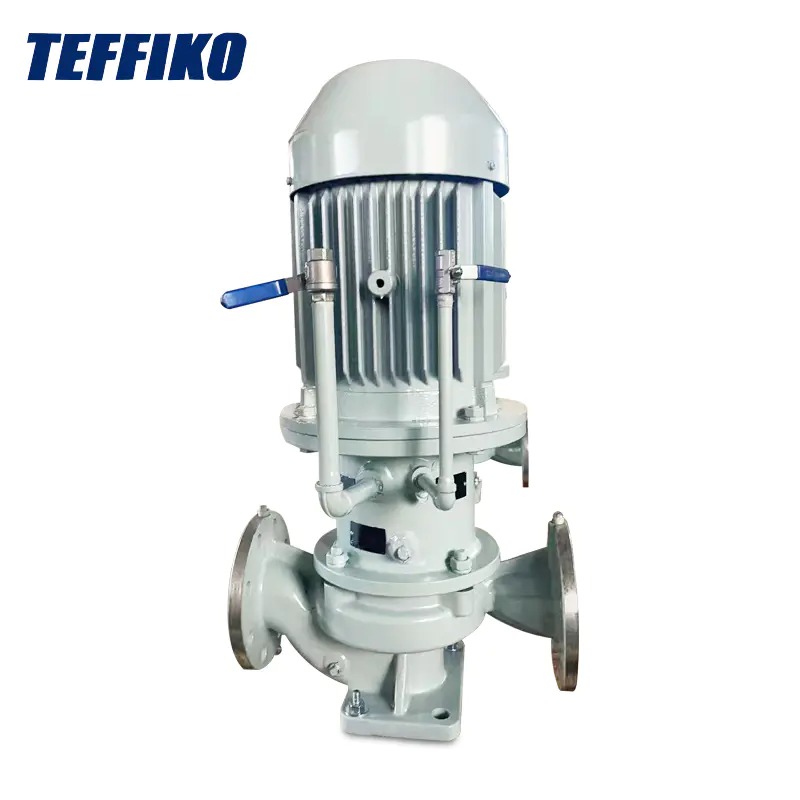
  • Cooling cavity in the pump cover: Circulate cooling water or heat transfer oil through a jacket to control pump body temperature.
  • Coolant supply to the seal chamber: A double-end mechanical seal must be used to create an isolated barrier fluid zone.
  • Preventing product contamination: If the process strictly prohibits any coolant from mixing with the product (e.g., in high-purity or food-grade applications), a portion of the pumped fluid can be diverted from the discharge side, cooled via a simple heat exchanger, and then reintroduced into the seal chamber—a method known as self-recirculating cooling. This approach is both safe and cost-effective.


3. Extreme High-Temperature Conditions (> 300°C)

For media such as heavy oil, molten salts, or high-temperature heat transfer fluids above 300°C, the pump enters “full-system cooling” mode:


  • Structural design: Pumps are typically centerline-mounted to minimize misalignment caused by thermal expansion.
  • Comprehensive cooling: Not only the pump head but also the bearing housing (or bracket) must be equipped with an active cooling system to prevent lubricant degradation and bearing seizure.
  • Seal selection: Metal bellows mechanical seals are mandatory. Although their cost is typically more than 10 times that of conventional seals, they offer unmatched reliability and performance at extreme temperatures.


II. Comparison Table of Cooling System Configurations

Medium Temperature Range Support Form Seal Type Cooling Focus Economic Evaluation
< 120°C Foot-mounted Standard single-end Self-cooling/lubrication by process fluid Most economical
120°C – 300°C Foot or centerline Double-end mechanical Pump cover cooling cavity + external/self-cooling Moderate investment
> 300°C Centerline-mounted Metal bellows Full cooling: pump head + bearing housing High investment, high reliability


Why Choose Teffiko’s Technical Support?

Standards-compliant: Strict adherence to API 610 and API 682 guidelines.


Field-proven expertise: Successfully resolved hundreds of seal leakage cases in extreme service conditions ranging from 120°C to 450°C.


Truly customized solutions: We reject “one-size-fits-all” approaches and tailor every design to your specific medium properties and operational requirements.


Don’t let inadequate cooling become a hidden safety risk on your production line.


📩 Message us now with your operating parameters—our Teffiko engineering team will provide free, professional optimization recommendations tailored to your application.


Related News
  • BACK TO ATHENA GROUP
  • X
    We use cookies to offer you a better browsing experience, analyze site traffic and personalize content. By using this site, you agree to our use of cookies. Privacy Policy
    Reject Accept