What Are the Methods for Centrifugal Pump Flow Control?
2025-12-16
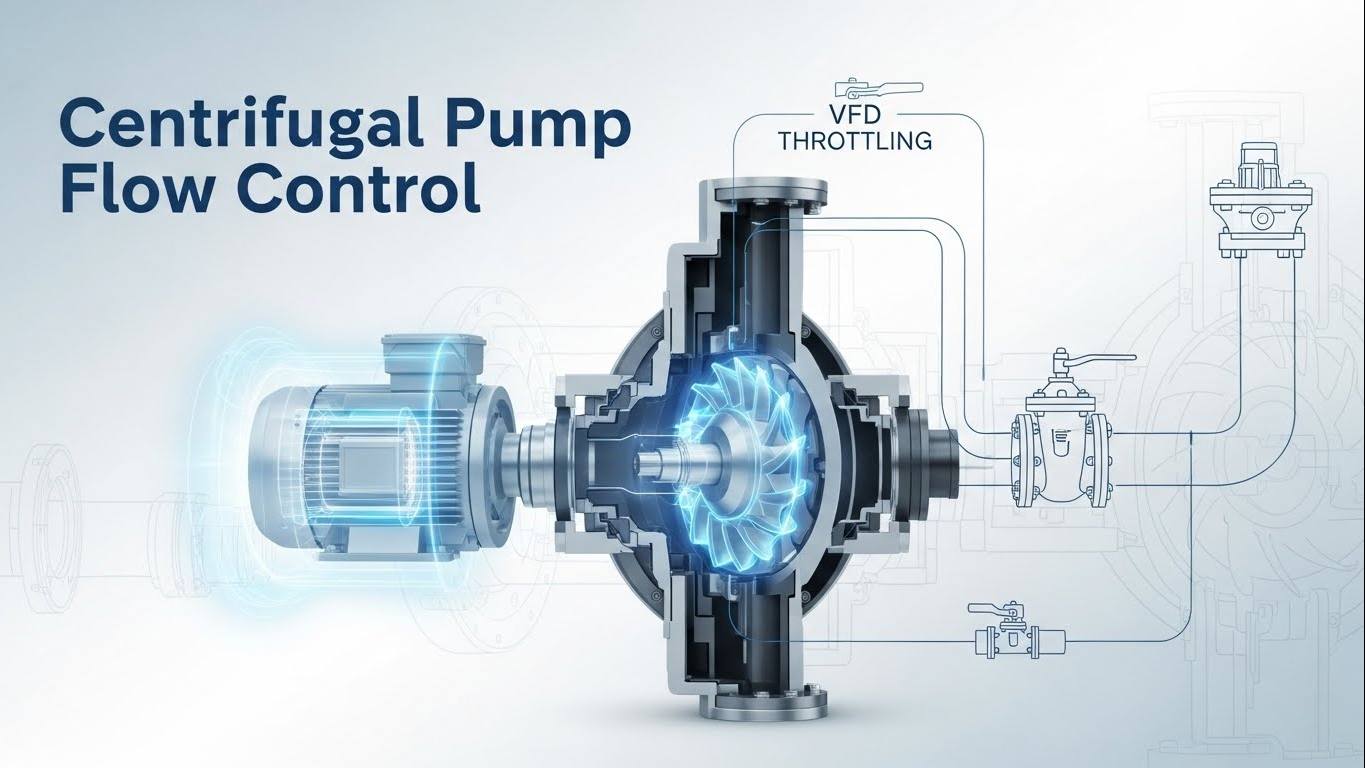
In the actual operation of centrifugal pumps, flow regulation is a common task. However, many on-site engineers face a puzzle: why do some methods consume more electricity while others save energy when reducing the flow rate? As a researcher, I will not only tell you what methods are available for centrifugal pump flow control but also show you "which regulation is the most cost-effective" through data comparison. This article will deeply analyze four mainstream flow control schemes.
1. Outlet Valve Throttling Regulation
Outlet valve regulation is the most primitive method in the industrial field. Its logic is simple: a control valve is connected in series at the pump outlet to control the flow rate by changing the valve resistance.
Characteristics: The pump's own performance curve remains unchanged, but the system resistance curve becomes steeper, leading to the deviation of the actual operating point.
Energy Efficiency Impact: Since the excess head is "consumed" as heat energy by the valve, the overall system efficiency decreases significantly, especially under low-flow conditions where energy waste is severe.
Applicable Scenarios: Temporary regulation, low-power systems, or occasions with low requirements for energy efficiency.
2. Bypass Recirculation Regulation
This method achieves indirect control of the main line flow by setting a bypass pipeline at the pump outlet to return part of the liquid to the storage tank or pump inlet.
Principle: The bypass is connected in parallel with the pump, changing the total flow distribution of the system. To maintain the required outlet pressure, the pump may need to output a larger total flow rate.
Energy Efficiency Impact: Due to the invalid circulation of part of the fluid, the overall energy consumption is usually higher than other regulation methods, and the system efficiency is low.
Advantages: It can effectively prevent the pump from operating below the minimum continuous flow rate, avoiding overheating, dry running, or mechanical damage.
Typical Applications: High-temperature medium transportation, boiler feed pumps, and chemical processes with strict requirements for minimum flow rate.
3. Impeller Diameter Trimming
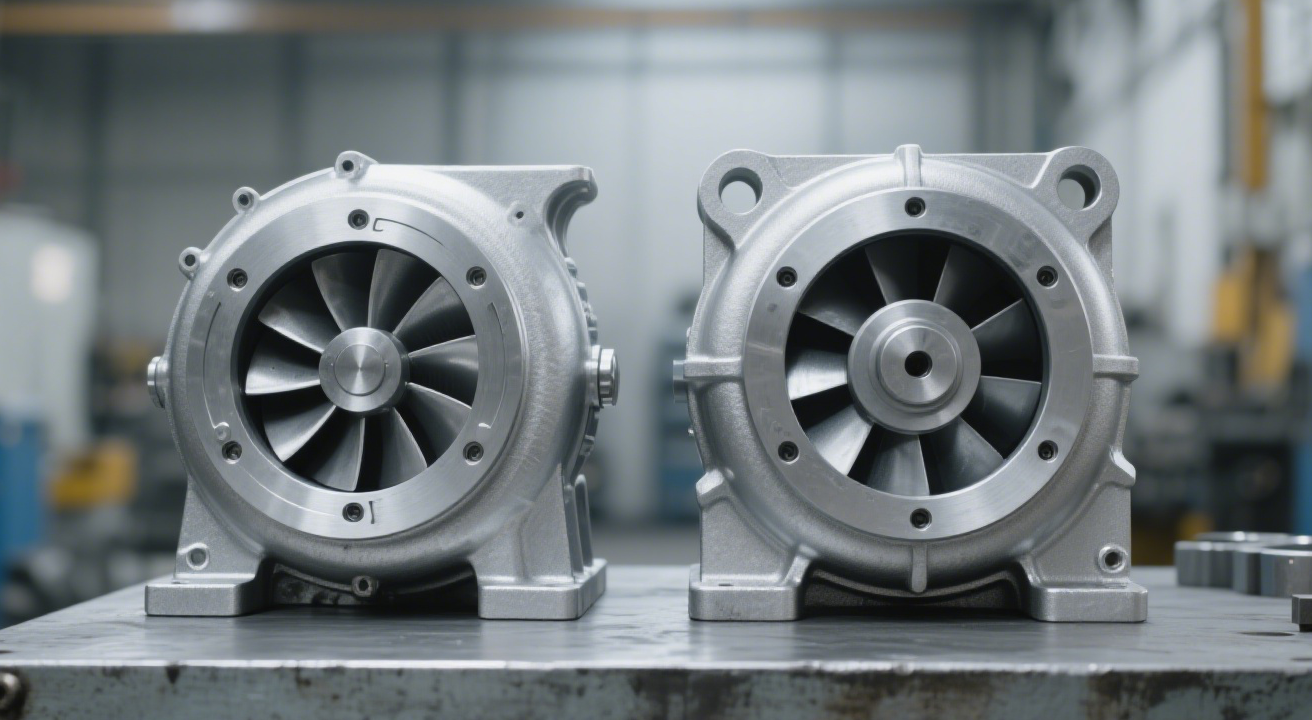
The head and flow capacity of the pump are permanently reduced by mechanically processing and reducing the outer diameter of the impeller. This is a "hardware-level" regulation that does not require additional control equipment.
Basis: Follows the impeller trimming law—flow rate is proportional to the impeller diameter, and head is proportional to the square of the diameter.
Energy Efficiency Performance: After modification, the pump can operate close to the high-efficiency zone under new working conditions, with minimal system efficiency loss.
Limitations: The operation is irreversible and only applicable to working conditions with long-term stable operation at low flow rates; excessive trimming will destroy the hydraulic balance and reduce efficiency.
Recommendation: Generally, the trimming ratio should not exceed 10% of the original diameter, and it should be performed by professional manufacturers.
4. Variable Frequency Speed Control
The rotation speed of the impeller is changed by adjusting the motor speed through a frequency converter.
4.1 Technical Essence
This is the most scientific method. When the speed decreases, the pump's characteristic curve shifts downward as a whole and becomes flatter. According to the affinity laws, power is proportional to the cube of the speed, which means a slight decrease in speed can bring significant energy-saving effects.
Energy Efficiency Advantages: No additional throttling loss, and the pump always operates close to the design working condition; as long as the speed is not lower than a reasonable lower limit (usually about 50% of the rated speed), the efficiency can still be maintained at a high level.
Additional Value: Soft start reduces mechanical impact, supports automatic integration, and extends the service life of the motor and pump.
Applicable Scope: Widely used in water supply, HVAC, chemical industry, electric power, and other fields with high requirements for energy efficiency and control accuracy.
5. In-depth Comparison of Centrifugal Pump Flow Control Methods
Control Method
Head Change
System Efficiency
Energy Consumption Level (100% Rated)
Recommendation
Outlet Valve Regulation
Remains High
Significantly Reduced
94% (Extremely High)
Only recommended for short-term and small-range regulation
Bypass Regulation
Reduced
Very Low
110% (Increases Instead of Decreasing)
Only used to prevent pump overheating or specific processes
Impeller Trimming
Reduced
High
67% (Excellent)
Suitable for scenarios with long-term fixed working conditions
Speed Control
Reduced
Extremely High
65% (Outstanding)
Preferred scheme with the highest long-term ROI
Conclusion
There is no absolutely optimal solution for centrifugal pump flow control, only suitable choices. In practical applications, the selection should be based on core factors such as flow demand, pressure range, fluid characteristics, and energy consumption budget. For complex working conditions, multiple methods can be combined to balance system stability and low energy consumption.
Teffiko, the core brand under Athena Group, specializes in centrifugal pump and flow control technology and can provide customized solutions. For parameter matching and scheme implementation of specific working conditions, please consult the Teffiko technical team to jointly achieve efficient and energy-saving operation of fluid systems.
We use cookies to offer you a better browsing experience, analyze site traffic and personalize content. By using this site, you agree to our use of cookies.
Privacy Policy