Athena Engineering S.r.l.
News

End-Suction Pump vs Inline Pumps: Which One Is Right for You?

2026-07-21 0 Leave me a message

End-suction pumps and inline pumps are the two most widely used pump models. Many engineers and procurement staff struggle to distinguish their applicable working conditions, performance differences, advantages and disadvantages during model selection. This article comprehensively compares the two pumps from structural design, performance characteristics, pros and cons, applicable scenarios, cost and maintenance dimensions to help you select the optimal model accurately.


I. Basic Structural and Design Differences

The core distinction between the two pumps lies in the connection mode between pump casing and motor as well as the overall layout structure, which directly determines their performance, installation conditions and operating limits.

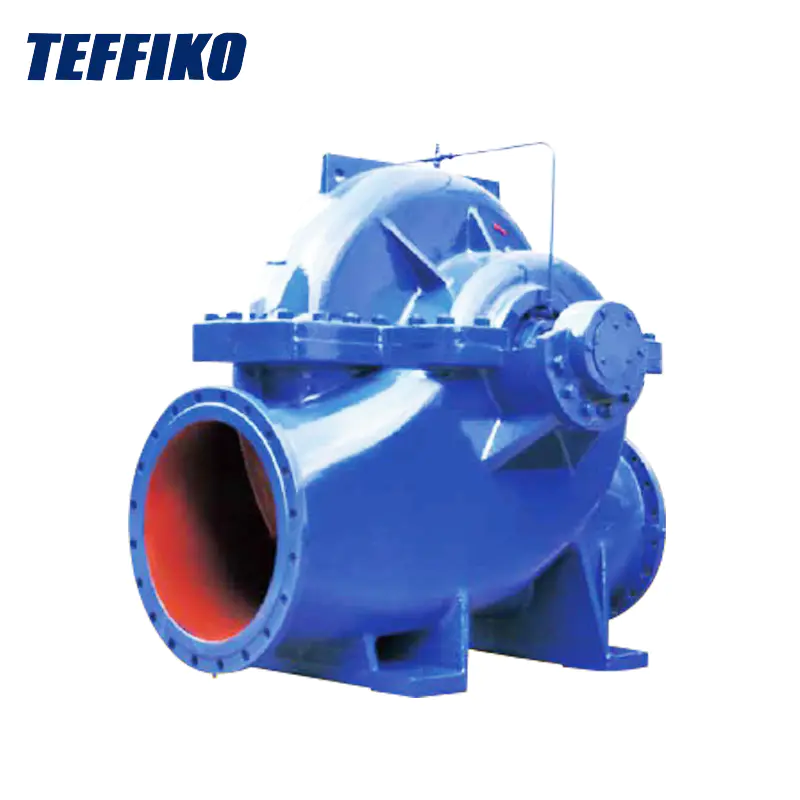
An end-suction pump is a conventional single-stage split centrifugal pump with a classic layout of horizontal side inlet and top outlet. Its structure is simple and mature. The equipment mainly consists of core components including pump housing, impeller, pump shaft, bearings and couplings. The pump casing and motor are independent of each other and transmit power through coupling connection. The pump housing is equipped with standard flanges for convenient on-site installation and subsequent maintenance. The body material can be selected from cast iron, stainless steel, bronze, etc., according to working conditions to adapt to different fluid media and temperature requirements. It adopts a horizontal installation design, suitable for medium and high flow rate working conditions.

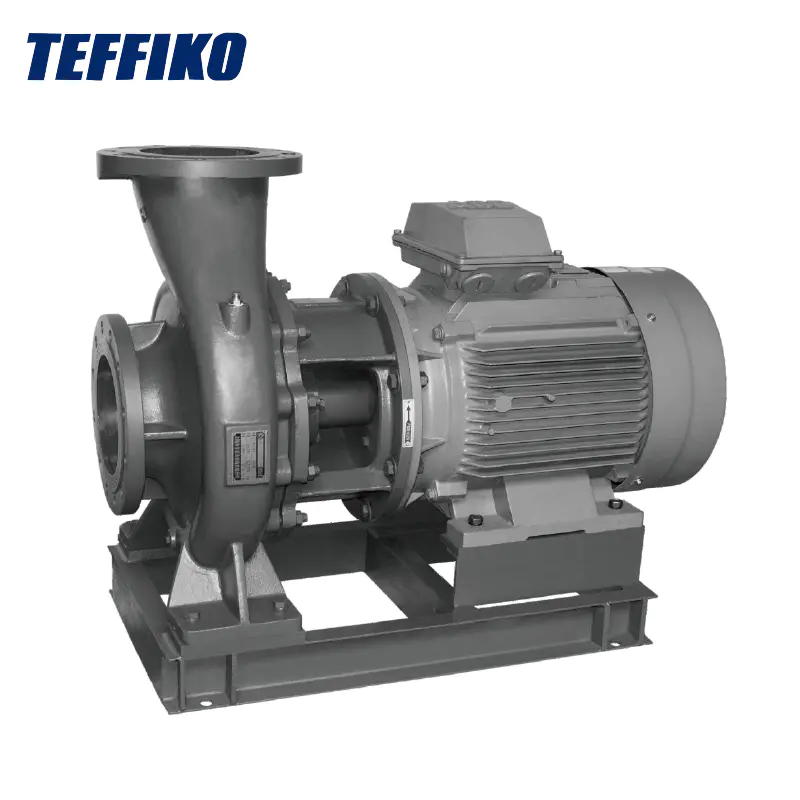
An inline pump features an integrated compact structure without couplings or intermediate transmission parts. The extended motor shaft directly drives the impeller for operation. The pump casing and motor are integrated into one piece with a straight through pipeline layout for inlet and outlet, and most models are fixed on a shared base plate. The streamlined structure greatly reduces equipment volume and the number of components, simplifying installation procedures. It is a typical lightweight, space-saving pump type mainly designed for medium and low flow rate fluid transmission.

II. Core Advantages, Disadvantages and Operating Characteristics

End-Suction Pump

Core Advantages:


  1. Extremely high versatility, compatible with clean water, general industrial fluids and various media, and adaptable to working conditions at different temperatures with complete specifications and wide market applicability.
  2. Stable heavy-load performance, capable of large flow, high head and high pressure working conditions, with outstanding durability and wear resistance for long-term continuous full-load operation.
  3. Convenient operation and maintenance. The split structure allows separate replacement of wearing parts such as mechanical seals and bearings without moving the motor, lowering maintenance difficulty.
  4. Lower initial procurement cost with obvious cost performance advantages.


Limitations:

Limited high-pressure adaptability, unable to meet ultra-high pressure working conditions; operating efficiency drops significantly and energy consumption rises under low flow operation; the horizontal split structure occupies a large floor area and requires regular coupling alignment to avoid equipment vibration and abnormal noise, leading to relatively heavy maintenance workload; improper model selection or operation may easily cause pump cavitation and shorten service life.

Inline Pump

Core Advantages:


  1. Ultimate space savings. The integrated structure features a compact size with far smaller floor space than end-suction pumps, suitable for narrow installation spaces.
  2. No power loss from coupling transmission, delivering high overall operating efficiency with lower noise and vibration. Its efficiency performs exceptionally well especially under low flow conditions.
  3. The straight through fluid design significantly reduces cavitation risks, lowering equipment failure rates with fewer wearing parts and simpler daily maintenance.
  4. Installation requires no complicated alignment procedures, boosting construction efficiency with prominent energy-saving effects.


Limitations:

Limited pressure bearing capacity, only applicable to medium and low pressure working conditions, unable to handle high-pressure, high-power heavy-duty industrial scenarios; drawbacks in maintenance due to integrated structure, making component replacement and equipment disassembly more difficult; higher initial procurement cost than end-suction pumps of equivalent specifications, bringing greater budget pressure.

III. Applicable Industries and Working Scenarios

End-Suction Pump Applicable Scenarios

With the advantages of large flow, high head, strong stability and wide adaptability, end-suction pumps are widely applied in urban and rural water supply and transportation, large HVAC systems, large-area farmland irrigation, industrial process fluid delivery, factory cooling water circulation, sewage treatment and other scenarios. They are particularly suitable for engineering projects requiring long-term continuous operation, complex working conditions and high flow and pressure requirements.

Inline Pump Applicable Scenarios

Focusing on lightweight, energy-saving and space-saving medium-low pressure, medium-small flow working conditions, inline pumps are mostly used in building domestic water supply, small HVAC water circulation, heating and cooling systems, pipeline pressurization, auxiliary fire water supply, small-scale irrigation and conventional clean water circulation systems. They fit commercial and civil scenarios with limited installation space, stable working conditions and no heavy-duty operation demands.

IV. Comprehensive Model Selection Comparison

Performance Comparison

Flow rate: End-suction pumps fit medium and high flow rates; inline pumps fit medium and small flow rates.

Pressure and head: End-suction pumps feature higher pressure bearing capacity and upper head limits for high-pressure demands; inline pumps only support medium and low pressure working conditions.

Efficiency: Inline pumps maintain stable efficiency under low flow conditions; end-suction pumps deliver better overall efficiency under high flow and heavy-load conditions.

Installation and Space

End-suction pumps adopt a horizontal layout requiring sufficient space for installation and maintenance, plus reserved space for coupling alignment, resulting in larger floor occupation. Inline pumps feature an integrated compact structure with flexible installation methods and no extra reserved space, perfectly matching narrow machine rooms and compact equipment supporting scenarios.

Maintenance and Cost

Maintenance convenience varies for each pump type: end-suction pumps allow easy disassembly of parts and convenient component replacement but demand regular alignment maintenance; inline pumps have low failure rates with hassle-free daily maintenance yet greater difficulty for in-depth overhaul. In terms of cost, end-suction pumps have low procurement thresholds, complete specifications and low initial investment; inline pumps cost more at the initial stage but consume less energy during long-term operation with lower overall maintenance costs.

V. Final Model Selection Summary

There is no absolute superior or inferior between end-suction pumps and inline pumps; suitability depends solely on working conditions. The core of model selection lies in five key factors of the project: flow rate and head requirements, pressure demand, installation space, budget and maintenance conditions.

If your project requires large flow, high head, high-pressure heavy load, long-term continuous operation, limited budget and convenient maintenance, prioritize end-suction pumps. If the project features moderate flow and pressure, narrow installation space, and pursues stable operation with low noise, low energy consumption and infrequent maintenance, inline pumps are the optimal choice.

Teffiko can accurately match cost-effective end-suction pumps and inline pumps according to different application scenarios, flow-head parameters and installation conditions, providing stable, energy-saving and durable customized solutions for various fluid transmission systems to help you select the optimal model accurately.


Related News
Leave me a message
  • BACK TO ATHENA GROUP
  • X
    We use cookies to offer you a better browsing experience, analyze site traffic and personalize content. By using this site, you agree to our use of cookies.Privacy Policy
    RejectAccept