Athena Engineering S.r.l.
News

How to Select an Industrial Centrifugal Pump for Your Requirements: A Complete Selection Guide

2026-11-11 0 Leave me a message

In industrial process sectors, efficient fluid handling governs the stability of the entire production line. Whether transporting clean water, chemicals or other liquids, industrial centrifugal pumps convert mechanical energy into kinetic energy to maintain steady flow of media at designed rates. Yet because they may appear to be “just pumps”, their selection is often oversimplified into a form-filling exercise. In serving clients across chemical processing, water treatment, metallurgy and energy sectors, Teffiko repeatedly observes that a considerable share of after-sales issues stem not from manufacturing defects, but from misjudged operating conditions at the selection stage — the pump itself functions properly, yet it is tasked with work it was never designed to perform.


1. Understand Its Operating Principle


An industrial centrifugal pump imparts kinetic energy to fluid through the high-speed rotation of its impeller; the volute then converts this kinetic energy into pressure energy. Featuring continuous flow, simple construction and low maintenance costs, these pumps are widely deployed in manufacturing, municipal wastewater treatment, agricultural irrigation and chemical processes. However, “versatile” does not mean arbitrarily selectable. Installed within different piping systems, one identical model may operate flawlessly while another develops vibration within merely three months.


2. Characterize the Fluid: The Starting Point of All Selection Work


First, clarify the exact medium: composition, temperature, density, viscosity, pH value, solids content, particle size, and whether the medium carries gas or is volatile. These factors directly determine material choice, sealing arrangements and cavitation risks. Rising viscosity reduces both head and efficiency and necessitates correction; solids-laden media require ample flow passages; volatile media impose strict constraints on NPSH. The same pump model behaves as a different piece of equipment when handling an alternative medium.


3. Match Pump Type to Application Scenarios

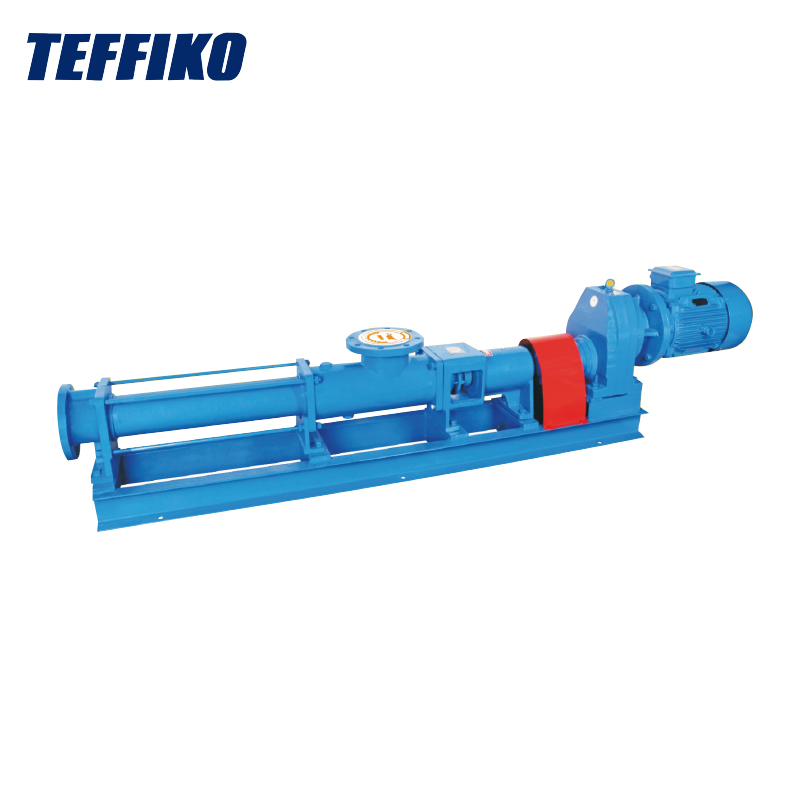
centrifugal pumps


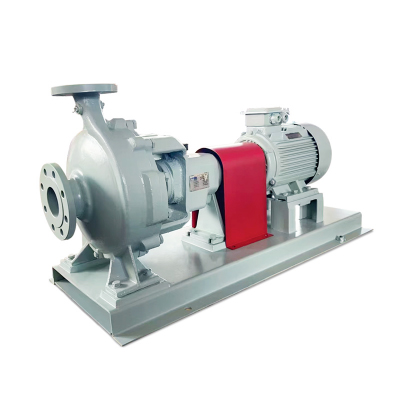
  • End-suction pumps: General industrial and clean-water services, compact structure, convenient maintenance
  • Self-priming pumps: Applications requiring liquid suction from low elevations or with risk of air ingress
  • Multistage pumps: Boiler feedwater, high-rise water supply, high-pressure process flows
  • Submersible / vertical sump pumps: Underwater services for sewage and sludge
  • Magnetically driven pumps: Hazardous, toxic and leak-prone media, eliminating mechanical seals
  • Slurry pumps: Abrasive media with high solids content


Lock down the application before confirming the model. Reversing this sequence leads to repeated rework.


4. Accurately Calculate Operating Points: TDH Is Not an Estimate


Total dynamic head (TDH) aggregates static head, frictional losses along piping, local resistance and differential pressure across downstream equipment, with an additional 5%–10% margin per industry convention. Flow rate shall be defined based on maximum continuous operating conditions rather than average values — many pumps fail during those occasional peak operating periods throughout the year. Excessive margin forces the pump to operate persistently outside its high-efficiency zone, worsening power consumption, vibration and seal service life. Insufficient margin prevents achievement of the designed flow rate. Margins are not intended to compensate for careless selection.


5. Verify NPSH: Prevent Pump Impairment at the Suction Side


The available net positive suction head (NPSHa) must exceed the required net positive suction head (NPSHr). API 610 specifies minimum ratios: no less than 1.3 for hydrocarbon media and no less than 1.5 for water and aqueous media. In engineering practice, an extra physical margin of 0.6–1 m is commonly added on top of these values. Inadequate margin triggers cavitation at the impeller inlet, manifesting as noise, diminished flow and reduced head. Pitting may develop within months, and in severe cases impeller blades may break off. Such damage is irreversible and often emerges after the expiration of the warranty period.


6. Efficiency and Energy Consumption: Keep Operating Points Within the High-Efficiency Zone


Although efficiency gaps between centrifugal pumps may amount to only a few percentage points, over an annual runtime of 8,000 hours, a three-percentage-point efficiency difference can generate a power cost gap exceeding the pump’s purchase price within three years. The comfortable operating window lies within ±10%–15% around the best efficiency point (BEP). For most services, API 610 recommends an operating range between 80% and 110% of BEP. If process flow fluctuates substantially, variable frequency drives or parallel pump installation represent the proper solution instead of purchasing an oversized pump that operates under throttling permanently.


7. Employ Specific Speed to Determine Hydraulic Type


Specific speed: \(n_s = 3.65 \times n \times \sqrt{Q} \div H^{0.75}\). Low specific speed corresponds to radial impellers suited for high-head, low-flow applications; higher specific speed falls into mixed-flow and axial-flow ranges for high-flow, low-head duties. It also guides stage configuration: high-head requirements prefer multistage series arrangements rather than arbitrarily raising the rotational speed of a single-stage pump. This step enables correct hydraulic selection prior to reviewing drawings.


8. Select Casing and Seal Materials Based on Media, Not Price


Common materials for casings and impellers include cast iron, ductile iron, stainless steel and duplex stainless steel, selected according to corrosivity and solids content. Mechanical seal selections cover flush plans, single or double seal configurations, and cartridge or component seals, determined by medium toxicity, temperature and permissible leakage rates. A typical symptom of improper seal selection is intact pump casing and compliant performance parameters, yet unplanned shutdowns every month for seal replacement.


9. Controls, Maintenance and Total Cost of Ownership


Modern processes generally require pumps to integrate with automation systems. Variable frequency drives (VFD) regulate flow and pressure according to actual demand and eliminate throttling losses. Meanwhile, assess spare part interchangeability, overhaul intervals and supplier response capability. Total cost of ownership (TCO) encompasses four components: procurement price, energy consumption, maintenance and downtime losses. Premium pumps carry higher upfront purchase prices yet frequently deliver greater long-term savings once this full cost sheet is evaluated.


Conclusion


Pump selection is far more than populating parameters on an inquiry form; it means projecting operating costs over the next decade in advance. Teffiko delivers one-stop support covering operating condition calculation, hydraulic selection, material and seal configuration, and factory performance testing validation. Our objective is to mitigate such risks at the drawing stage. Send us your flow rate, head, medium and piping specifications, and we will deliver alternative proposals alongside performance curve comparisons within 48 hours.


Related News
Leave me a message
  • BACK TO ATHENA GROUP
  • X
    We use cookies to offer you a better browsing experience, analyze site traffic and personalize content. By using this site, you agree to our use of cookies. Privacy Policy
    RejectAccept