Athena Engineering S.r.l.
News

What Is API 676? A Buyer’s Guide to the Screw Pump Standard

2026-11-10 0 Leave me a message

The phrase “the pump shall comply with API 676” found within technical specifications is one of the most frequently cited yet widely misunderstood statements in pump procurement. The seller responds “fully compliant”, and the buyer rests assured. Neither statement specifies the edition, data‑sheet options, nor the scope of testing. Six months later, when an inspector asks which clause governed the hydrostatic test, both parties discover they each relied on different editions.


This guide is written from the manufacturer’s perspective amid that real‑world scenario. Teffiko is an industrial pump brand under Athena Engineering S.r.l. In addition to API centrifugal and chemical‑process pumps, it manufactures progressive‑cavity, twin‑screw and triple‑screw pumps. The discussion below revolves around four questions: what the standard covers, how pump types are classified, where its boundaries lie within the API pump family, and what items buyers must define in writing prior to order placement. The objective is to make a “compliant” quotation verifiable.


I. What Is API 676: Scope and Application Boundaries


Full Title, Issuing Body and Edition History


Editions are addressed first because they represent one of the most common procurement pitfalls. API Standard 676, *Positive Displacement Pumps‑Rotary*, is published by the American Petroleum Institute and maintained by its Machinery Subcommittee (SOME). The official API catalogue lists source standard documents and their authorised distributors.


Edition Year Current Status
1st Edition 1980 Superseded
2nd Edition 1994 Superseded
3rd Edition 2009 (Reaffirmed 2015 [R2015]) Still common for installed units and legacy documentation
4th Edition February 2022 Current, 101 pages


The edition sequence is compiled from version records of standard resellers. The effective date, page count and status of the current edition, as well as the fact that it supersedes API 676:2009 (R2015), are confirmed in the API STD 676:2022 entry on Intertek Inform, where its abstract and referenced standards can also be located: AGMA 6091, ASA S2.19, DIN 910:2004, EN 287, ISO 965, SSPC‑SP‑6 and EN 288.


Edition control matters because publicly‑available manufacturer literature and legacy brochures still reference superseded editions. Ordering spare parts against the edition under which an existing pump was built is reasonable. Carrying that same edition forward into specifications for new projects, however, will lead to mismatched clause references during acceptance. Before issuing an enquiry, cross‑check the cited edition against the API catalogue.


II. Which Pumps Fall Under API 676: Type Designations


Designation Table


The standard classifies rotary positive‑displacement pumps using concise type designators. The table below is adapted from Table 1 using publicly‑available industry material; consult your authorised copy of the current edition for definitive content.


Designator Pump Type
VR Rotary vane pump, vanes in rotor
VS Rotary vane pump, vanes in stator
LS Rotary lobe pump, single lobe per rotor
LM Rotary lobe pump, multiple lobes
GET External gear pump, with timing gears
GEU External gear pump, without timing gears
GI Internal gear pump, with crescent
SS Single‑screw pump
SMT Multi‑screw pump, with timing gears
SMU Multi‑screw pump, rotor‑driven, without timing gears


Practical usage is straightforward. Stating “SS single‑screw pump in accordance with API 676 4th Edition” within an enquiry eliminates one round of clarification that would otherwise arise from simply writing “screw pump”. Type designators describe construction, not operating conditions; matching them to process requirements constitutes a separate sizing exercise.


Position of the Single‑Screw Pump


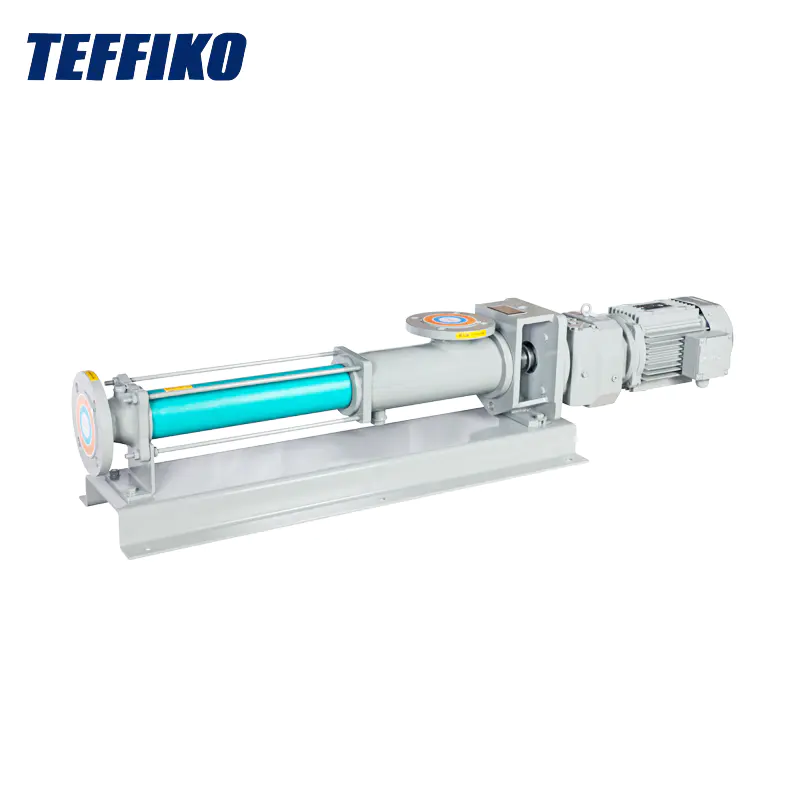
Single‑screw pumps, also known as progressive‑cavity pumps, fall under type SS: a metallic rotor rotates within an elastomer stator, moving fluid through sealed cavities. Their strengths lie in high‑viscosity services, gas‑entrained fluids, solids‑laden media and metering‑like duties — precisely the operating envelopes where rotary positive‑displacement machinery excels.


This is also the application domain for Teffiko’s own product portfolio. Our Model G progressive‑cavity pumps and open‑throat progressive‑cavity pumps serve these difficult‑to‑handle‑fluid applications. A word of caution for buyers: whether a given progressive‑cavity pump satisfies every clause of the standard, and which clauses permit documented deviations, must be agreed item‑by‑item during the enquiry phase and cannot be assumed merely from the term “screw pump”.


Single‑, Twin‑ and Triple‑Screw Pumps in API Terminology


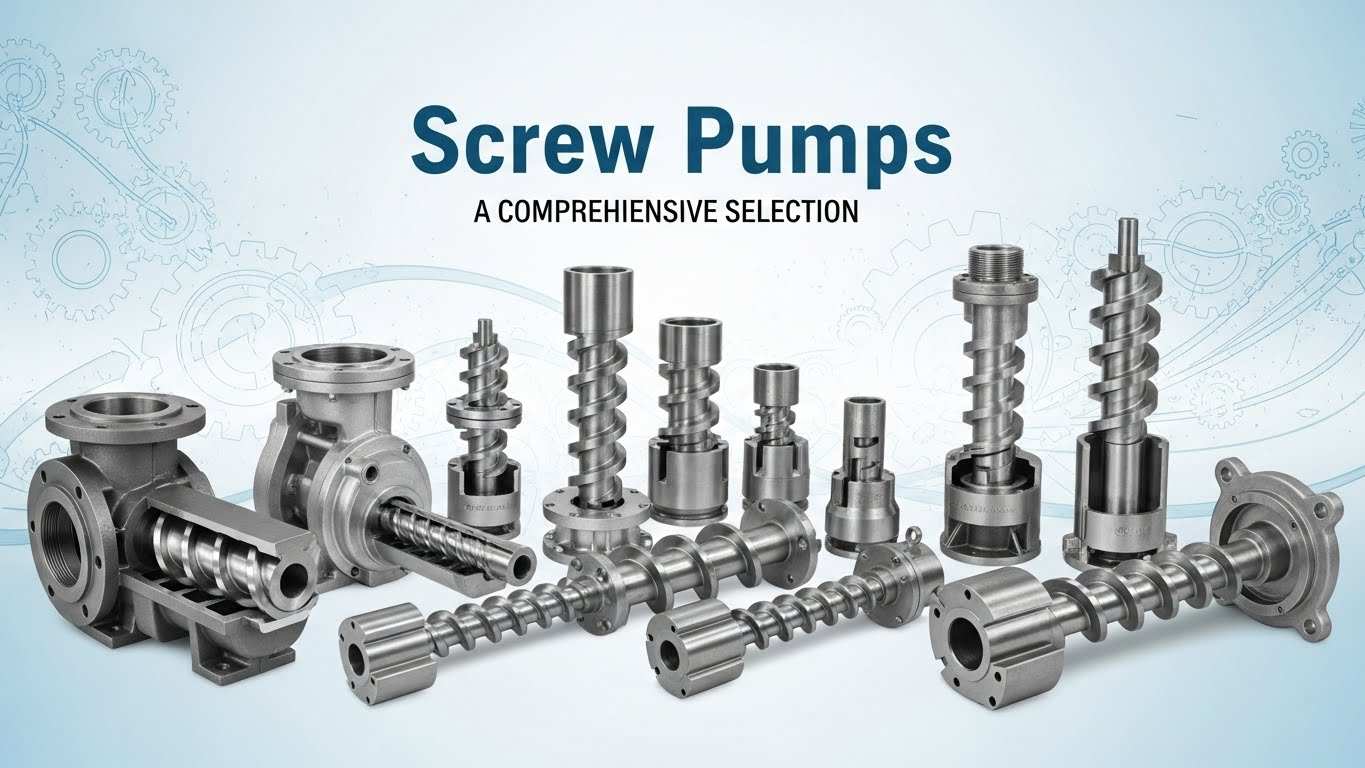
Beyond SS, twin‑screw and triple‑screw pumps are designated SMT or SMU. This distinction is not purely academic. Timing gears influence rotor anti‑seizure design, bearing arrangement and lubrication; consequently quotations should explicitly state which designation applies. Where operating conditions sit between screw‑pump and lobe‑pump application ranges, designators LS and LM from Table 1 provide reference points.


III. API 676 Relative to Other Standards in the API Pump Family


Boundary Summary Table


Standard Scope Key Points
API 610 Centrifugal pumps for petroleum, petrochemical and natural‑gas industries Dynamic‑energy machines; OH / BB type designators
API 674 Positive‑displacement reciprocating pumps Pulsation and vibration control are central considerations
API 675 Controlled‑volume (metering) pumps Accuracy and repeatability
API 676 Rotary positive‑displacement pumps and pump units Subject of this guide
API 682 Shaft sealing systems Companion standard, not a pump standard
API 685 Sealless centrifugal pumps Magnetic‑drive and canned‑motor machines


Boundary determination follows two steps: first identify the mode of motion (centrifugal, reciprocating or rotary), then check for shaft sealing, as sealless centrifugal equipment is covered by a separate standard.


API 676 versus API 685


These two are frequently confused. API 685 addresses sealless centrifugal pumps: magnetic‑drive centrifugal pumps and canned‑motor centrifugal pumps fall under it. A rotary positive‑displacement pump does not move into the scope of API 685 merely because it employs magnetic drive; it remains governed by rotary positive‑displacement‑pump requirements, with additional sealless features negotiated separately in the enquiry. Our complete guide to API 685 sealless pumps is a complementary reference. Reading both documents provides full coverage of this standard family.


API 610 and API 674


Compare with API 610: one covers centrifugal machines, the other rotary positive‑displacement equipment. Centrifugal pumps impart energy via impellers; their flow‑head performance follows characteristic curves. Rotary pumps displace a fixed volume, so flow is roughly proportional to rotational speed and viscosity exerts substantial influence. Their sizing logics are entirely different, which is why the two standards are not interchangeable within specifications.


Compare with API 674: both address positive‑displacement equipment, yet API 674 applies to reciprocating pumps — piston and diaphragm machinery — where pulsation and vibration control dominate. Rotary‑pump delivery is continuous, so such concerns are largely absent.


IV. What API 676 Requires: Design Baseline


The following provides an overview of design topics addressed by the standard and does not replace the authorised standard text. Numerical values presented are sourced from publicly‑available OEM data sheets and are labelled accordingly; values binding for your project are those appearing in your edition of the standard and within the contract.


Pressure‑Containing Components


Core parameters are Maximum Allowable Working Pressure (MAWP / MACP). Pressure‑containing parts are designed for MACP, hydrostatically tested, and furnished with specified corrosion allowances. As an example of published industry practice, the Viking XPD 676‑series data sheet (Viking Pump Bulletin Section 1305, Models 4223AX / 4323AX internal gear pumps) specifies certified hydrostatic testing at 1.5 × MACP, a 3 mm corrosion allowance above MAWP, and normalized‑and‑tempered‑steel castings.


Buyer action: document MACP and intended corrosion allowance on data sheets so all quotations share a common baseline.


Rotors and Timing Gears


Multi‑screw pumps are built either with timing gears (SMT) or as rotor‑driven units without timing gears (SMU). The standard addresses rotor anti‑seizure provisions and balancing, with specific grades defined in the main body. The Viking data sheet illustrates the level of detail involved: high‑strength fasteners carry manufacturer’s marks and material identifiers; tapped holes are drilled and tapped at specified multiples of bolt diameter. These are manufacturability‑related requirements worthy of explicit inquiry, as they indicate whether a supplier is truly building to the standard.


Bearings and Lubrication


Bearing life is a recurring point of contention in API rotary‑pump procurement. Industry‑wide reference is made to L10‑life requirements. For instance, Viking’s data sheet quotes a minimum L‑10 life of 25 000 hours for tapered‑roller thrust bearings at maximum flow, pressure and viscosity conditions. Buyer action: obtain written L10‑life commitments tied to specific operating‑condition points, rather than vague statements such as “long bearing life”.


Shaft Seals


Seals deserve a dedicated line‑item within enquiries. Useful cross‑industry background data originates from a 2025 reliability publication by the European Sealing Association. It aggregates 3 500 pump‑failure incidents recorded over two years across 18 end‑users: seals featured in 60.4 % of entries. Root causes for premature seal failure were attributed to operation (49 %), maintenance (28 %) and engineering (23 %). This dataset covers general‑purpose process pumps, predominantly centrifugal, and not specifically API 676 rotary pumps; it therefore serves as background information and not rotary‑pump‑specific statistics. The ESA also notes that “seal failure” reported on work orders typically describes a visible symptom rather than the underlying root cause.


Overpressure Protection


Positive‑displacement pumps exhibit behaviour absent in centrifugal pumps: closing the discharge valve causes pressure to keep rising because flow has nowhere to go. Consequently rotary positive‑displacement pumps require overpressure protection as a safety measure, commonly in‑line safety relief valves, torque‑limiting devices or rupture discs. Where reverse rotation is possible, protection shall be provided on both sides. The procurement challenge lies in responsibility demarcation: whether protection devices are integral or external, who supplies them, who performs sizing calculations, and who sets them must all be defined in writing at enquiry stage. Otherwise the pump vendor may assume the piping contractor will furnish protection, while the piping contractor assumes protection is part of the pump scope.


Baseplates, Nozzle Loads and Pump Units


Acceptance under the standard applies to the complete unit, not merely the bare pump. Baseplate rigidity and flatness, couplings and guards, and allowable nozzle loads all fall within this scope. Viking’s data sheet specifies machined mounting feet to Ra 6.3 μm, flatness tolerance of 25 μm, and cast‑casing drain connections with ANSI Class 300 RF flanges.


V. Testing, Inspection and Documentation


Three Tiers of Testing


In practical implementation, verification against this standard comprises at minimum three tiers. Hydrostatic testing validates the pressure boundary, as discussed earlier. Performance testing verifies flow, differential pressure, power consumption and efficiency, typically conducted at a specified viscosity and corrected for rotational speed; Viking’s data sheet references certified performance testing in accordance with Hydraulic Institute Pump Standard paragraph 3.6 at stated viscosity. Mechanical‑run testing evaluates bearing temperatures, vibration and noise.


Buyer action: explicitly define in contract which test tiers apply, their depth of execution, and witness responsibilities.


Inspection and Witness Points


Non‑destructive examination (NDE) constitutes a routine requirement. Viking’s data sheet mentions magnetic‑particle examination of castings and any weld repairs. Material traceability is equally important: material certificates, welding procedure specifications (WPS), weld maps and NDE procedures form part of the documentation package. Because these items can easily become unregulated, common practice establishes an Inspection and Test Plan (ITP) in advance, labelling each node as Witness (W), Hold (H) or Review (R), and performing acceptance against that checklist.


Documentation Package


Documentation constitutes the strongest evidence of compliance. Using the minimum list from publicly‑available Viking data sheets as reference, the documentation package includes: certified general‑arrangement drawings, allowable flange loads, cross‑sectional drawings and bill‑of‑materials, mechanical‑seal drawings, performance curves, certified hydrostatic‑test data, material certificates, welding procedure specifications, weld maps, NDE procedures, performance‑test procedures and data, enquiry‑stage, procurement‑stage and as‑built data sheets, installation manual, operation‑and‑maintenance manual, spare‑parts recommendations, drawing‑and‑submittal register, and packing list.


One wording trap exists: a certificate stating “tested per API 676” represents only a declaration; test records contain the actual data. Acceptance requires the data.


“Complies with”, “Designed to”, and “Equivalent to”


These three phrases carry substantially different weight in procurement. “Complies with” asserts fulfilment of every clause. “Designed to” asserts adherence to the standard’s design framework only. “Equivalent to” demands pre‑defined equivalence criteria; without them the phrase is meaningless. Buyers’ safeguard measures are procedural: state the edition within specifications, attach data‑sheet revision numbers, require a written deviation list from the manufacturer, and cross‑check each deviation point‑by‑point.


VI. Buyer Checklist: Writing API 676 into Your Enquiry


Decisions Only You Can Make


A significant subset of clauses leaves determinations to the buyer. These cluster into five categories: operating data, materials, test scope, documentation requirements, and special provisions such as sour‑service NACE MR0175 / ISO 15156, heating jackets, or API 682 classifications. Omission of any item permits the supplier’s standard configuration to make those determinations by default.


Edition Discipline


New projects shall reference the 4th Edition. Spare‑parts procurement and retrofits for existing equipment shall follow the edition under which the equipment was originally built. Write “API 676 4th Edition (2022)” together with the data‑sheet identifier within enquiries. Do not accept quotations stating merely “complies with API 676” without edition identification.


Pre‑Order Data Checklist


Category Information to Provide
Fluid Name and composition, corrosivity, solids content and particle‑size distribution, entrained gas
Operating Conditions Flow rate, suction and discharge pressures and temperatures, viscosity curve across operating‑and‑ambient‑temperature range, available NPSH
Materials Wetted‑component materials, seal‑face materials, bolt grades
Sealing API 682 classification, flush‑plan specifications
Driver Motor or gear unit, area classification, rotational speed
Protection Overpressure‑protection concept and scope‑of‑supply responsibilities
Acceptance Test scope, witness points, documentation register


From Standard to Sizing


All items above establish acceptance baselines. The next layer addresses product‑specific considerations: rotational speed, differential‑pressure range and model matching. The standard ensures correct procurement; proper sizing ensures satisfactory pump operation. Our Model‑G Screw‑Pump Sizing Guide covers everything from operating parameters through model‑selection matching. That exercise belongs to the product‑selection domain and is separate from the acceptance‑baseline work described here.


If this standard number already appears within your specifications, or your operating‑condition data remains undocumented, send your documentation to the Teffiko engineering team at sales@teffiko.com. We will review your enquiry against the standard framework prior to discussing any specific pump model.


Frequently Asked Questions


Do all screw pumps have to comply with API 676?


No. API 676 establishes minimum requirements for process pumps in petroleum, petrochemical and natural‑gas service. General‑industrial applications may follow manufacturer‑standard sizing. The standard becomes an acceptance criterion only when referenced within project specifications.


Is API 676 a certification?


No. It is a specification, not a certification scheme. Compliance is proven via data sheets, test records and the documentation package. Where third‑party verification is required, specify the witnessing‑inspection body within the contract rather than writing “pump shall hold certification”.


What is the difference between API 676 and API 610?


API 610 covers centrifugal pumps; API 676 covers rotary positive‑displacement pumps. Centrifugal pumps add energy through impellers; their flow‑head behaviour follows performance curves. Rotary positive‑displacement pumps move fixed fluid volumes via rotors, so flow is approximately proportional to rotational speed and viscosity exerts significant influence. Their sizing logics differ fundamentally.


Do API 676 and API 674 cover the same pump types?


No. Both are positive‑displacement‑pump standards, yet they differ in motion principle. API 674 governs reciprocating pumps (piston and diaphragm types), where pulsation and vibration control are central. API 676 applies to rotary pumps delivering continuous flow.


Which standard applies to sealless pumps?


First determine the mode of motion. Sealless centrifugal pumps (magnetic‑drive or canned‑motor) fall under API 685. Sealless rotary positive‑displacement pumps remain within API 676 scope; additional sealless‑design requirements are negotiated separately during the enquiry.


Beyond stating “complies with API 676”, what else should an enquiry contain?


Edition identifier, data‑sheet reference number, operating‑condition data, material specifications, seal configuration, overpressure‑protection scope‑of‑supply responsibilities, test scope and witness‑point definitions, documentation register, and deviation‑handling procedures. See Section VI for the complete checklist.


Conclusion


API 676 constitutes the procurement language for rotary positive‑displacement pumps and complete pump units. The word “compliant” carries acceptance‑relevant value only when accompanied by completed data sheets and a written deviation list. Test records and documentation packages furnish proof; a mere declaration does not.


Work beyond the standard belongs to product‑selection engineering. Teffiko’s portfolio of progressive‑cavity, twin‑screw and chemical‑process pumps addresses a broad spectrum of demanding‑service applications. Our engineers will review your operating‑condition data against the applicable standard baseline before recommending any model. Submit your fluid‑property, flow‑rate, differential‑pressure and viscosity data to sales@teffiko.com at the time of initial enquiry, or visit [www.teffiko.com](https://www.teffiko.com) to contact our team.


Related News
Leave me a message
  • BACK TO ATHENA GROUP
  • X
    We use cookies to offer you a better browsing experience, analyze site traffic and personalize content. By using this site, you agree to our use of cookies. Privacy Policy
    RejectAccept