Athena Engineering S.r.l.
News

Making the Most of the Mono Screw Pump: Overcoming the Challenge of Conveying High-Viscosity Syrup

2026-11-24 0 Leave me a message

On food and beverage, confectionery and baking, and beverage blending production lines, conveying high-viscosity syrup has long been a difficult challenge. Materials such as honey, caramel syrup, chocolate syrup, high-fructose corn syrup, and maltose syrup are highly viscous and of low fluidity, and their properties change markedly when the temperature changes. When conventional centrifugal pumps are selected, flow fluctuation, high energy consumption, and accelerated component wear often occur, directly dragging down the production pace and making it difficult to keep product flavor and mouthfeel stable. As a brand focused on the R&D and manufacture of industrial pumps, Teffiko specializes in mono screw pump (progressive cavity pump) products and provides stable, reliable conveying solutions for viscous materials.


I. How a Mono Screw Pump Conveys Syrup


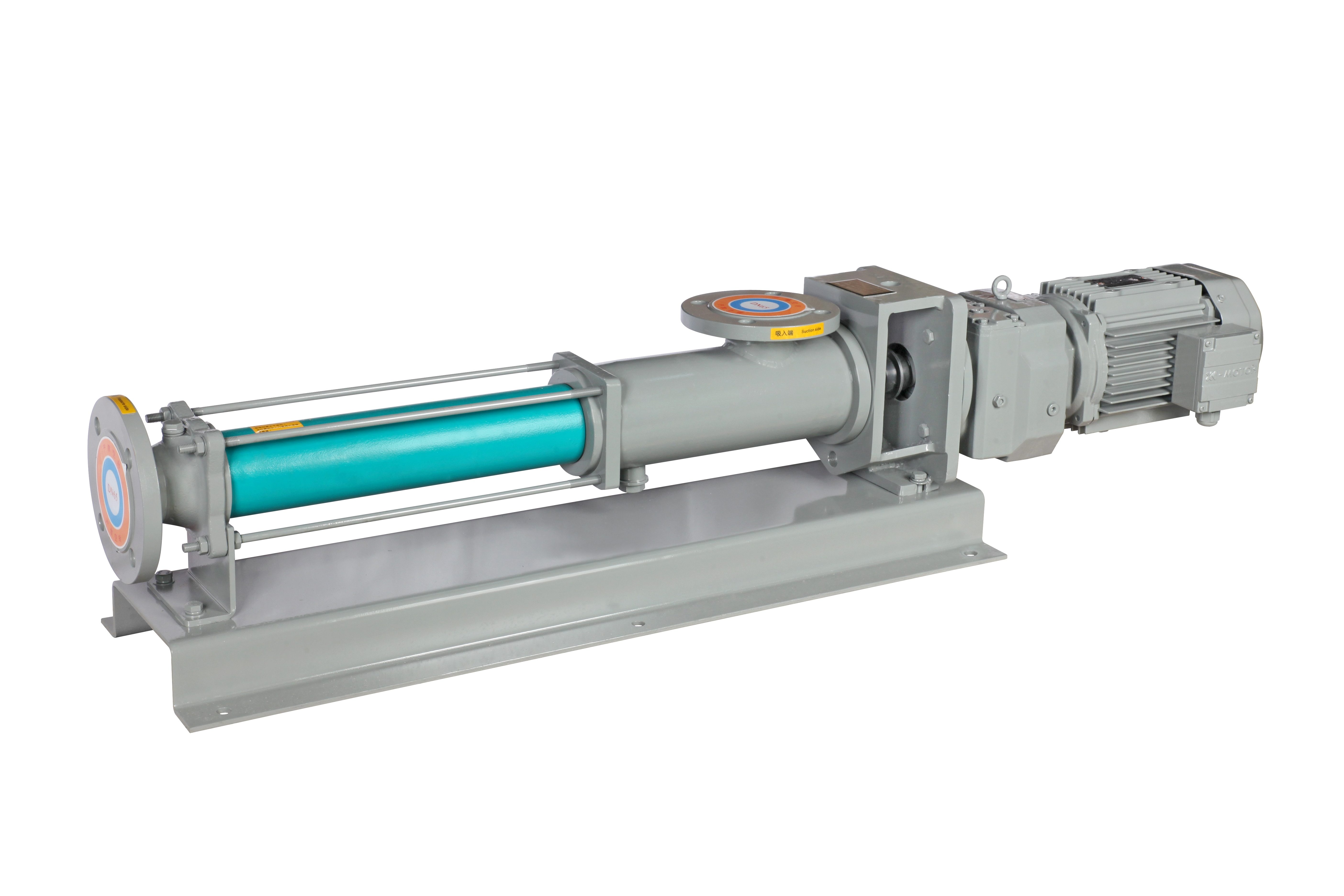
A mono screw pump is a rotary positive-displacement pump. Its core consists of two major components: a bushing (stator) with a double-helix cavity on the inside, and a single-helix screw (rotor) that meshes with the bushing and sits inside the cavity.


The motor drives the rotor through a universal joint, causing it to make a planetary orbit around the center of the stator. The rotor and stator mesh continuously, generating independent sealed chambers one after another. These chambers keep a constant volume and move axially at a uniform speed, progressively pushing the syrup from the inlet end to the outlet.


Throughout the entire conveying process, the material is enclosed inside the chambers and moves forward smoothly, without being vigorously agitated or torn apart. It is precisely this structural characteristic of "enclosed pushing" that makes the mono screw pump especially suitable for high-viscosity, shear-sensitive syrup media.


II. Core Advantages of Mono Screw Pumps for Conveying High-Viscosity Syrup

Screw Pumps

1. Wide High-Viscosity Adaptability


Different mono screw pump models cover a wide viscosity range and can handle viscous media up to the 200,000 cP level, coping with syrups of many concentrations and varieties.


The meshing structure of the rotor and stator lets the syrup flow gently inside the sealed chambers, avoiding excessive shear and deformation, and preserving the syrup's original color, aroma, and texture to the greatest extent; it performs outstandingly in conveying premium materials such as honey and chocolate syrup.


2. Steady Flow, Uniform Pressure


When the mono screw pump is running, its output is continuous and uniform, with small pressure fluctuation, and it performs even more stably under low-speed conditions.


For processes such as beverage proportioning and filling dispensing, a steady flow means the syrup dosage is controllable, ensuring consistent sweetness and concentration in every batch. Meanwhile, stable pressure can overcome the resistance of viscous syrup in the pipeline, making long-distance conveyance with high pipeline resistance smoother.


3. Adjustable Speed for Flexible Production Matching


The flow rate of a mono screw pump is directly proportional to its rotational speed. Paired with variable-frequency (VFD) speed control, the conveying flow can be changed precisely simply by adjusting the motor speed.


Faced with syrup conveying demands of different batches and different process requirements, a single pump can flexibly adapt, making it easy for enterprises to achieve refined, intelligent production without frequent equipment replacement.


4. Outstanding Self-Priming Performance


The mono screw pump has strong self-priming capability: at startup it needs no additional large amount of priming water and can draw syrup directly from a low-position storage tank.


When the storage tank is located low, or material needs to be taken from containers at different heights, this self-priming capability simplifies piping design, reduces start-stop operations, and improves continuous production efficiency.


5. Simple Structure, Low Maintenance Cost


Compared with other pumps for viscous material conveyance, the mono screw pump has a simple structure and few components; its core wearing parts are the rotor and stator, which are easy to replace, so repair costs are lower.


For food manufacturing enterprises, stable equipment operation and minimal downtime are critical. Convenient maintenance can reduce production downtime and lower overall operating costs.


III. Results in a Real Application Scenario


A large food processing plant produces pastry fillings and previously used centrifugal pumps to convey high-viscosity syrup. It had long suffered from unstable flow, rapid impeller wear, and batch-to-batch quality fluctuation, which limited production efficiency.


After switching to food-grade mono screw pumps:


  •  Syrup conveying flow remained steady, and dosing error was kept within a very small range;
  •  Pump body wear was slowed, and equipment service life was clearly extended;
  •  Maintenance frequency dropped sharply;
  •  Overall production efficiency increased by about 30%, and the product defect rate fell by 15%, delivering considerable economic benefits.


IV. Points You Must Not Overlook to Use the Mono Screw Pump Well


The mono screw pump offers excellent performance, but for long-term stable syrup conveyance, proper model selection and day-to-day use are equally critical:


1. Size the pump by the lowest operating viscosity: syrup viscosity changes markedly with temperature; reserve margin based on the actual viscosity under low-temperature working conditions to avoid pump blockage in winter or when insulation is insufficient.

2. Use food-grade materials: parts in contact with the material are made of 304 / 316L stainless steel, paired with a food-grade elastomer stator, compatible with CIP (clean-in-place) online cleaning, to meet food hygiene requirements.

3. Never run the pump dry: without material lubrication, the stator rubber heats up and ages rapidly; before startup, be sure that the pump chamber is full of medium.

4. Inspect wearing parts regularly: pay attention to the stator's wear condition; once flow declines, carry out timely inspection, repair, and replacement.


Conclusion


The difficulty of high-viscosity syrup conveyance lies in the material being viscous, shear-sensitive, and easily affected by temperature, together with the stringent requirement for flow stability. Relying on the positive-displacement principle of axial pushing through sealed chambers, the mono screw pump combines high-viscosity conveyance, low-shear protection, steady flow, and convenient maintenance, making it the preferred solution for syrup conveyance in the food industry.


If you are looking for a food-grade mono screw pump suited to high-viscosity syrup, welcome to visit the Teffiko official website for detailed selection parameters, working-condition solutions, and product literature, to help your production line run stably over the long term.


Related News
Leave me a message
  • BACK TO ATHENA GROUP
  • X
    We use cookies to offer you a better browsing experience, analyze site traffic and personalize content. By using this site, you agree to our use of cookies. Privacy Policy
    RejectAccept