Choosing the right pump family directly affects efficiency, service life, and safety in industrial operation. Two of the most widely used pumps are the centrifugal pump and the diaphragm pump. Both are used to transfer fluids, but they differ significantly in working principle, performance characteristics, and application. As an industrial pump brand with accumulated manufacturing and R&D experience, Teffiko compares centrifugal and diaphragm pumps side by side in this guide, explaining them one by one from working principle and fluid handling to key selection criteria.
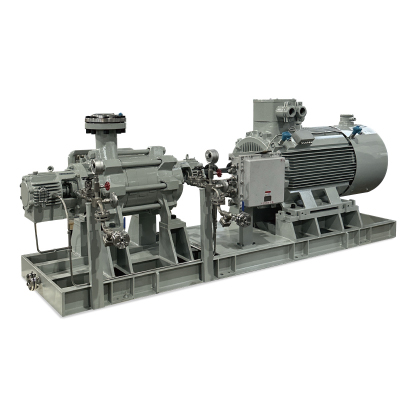
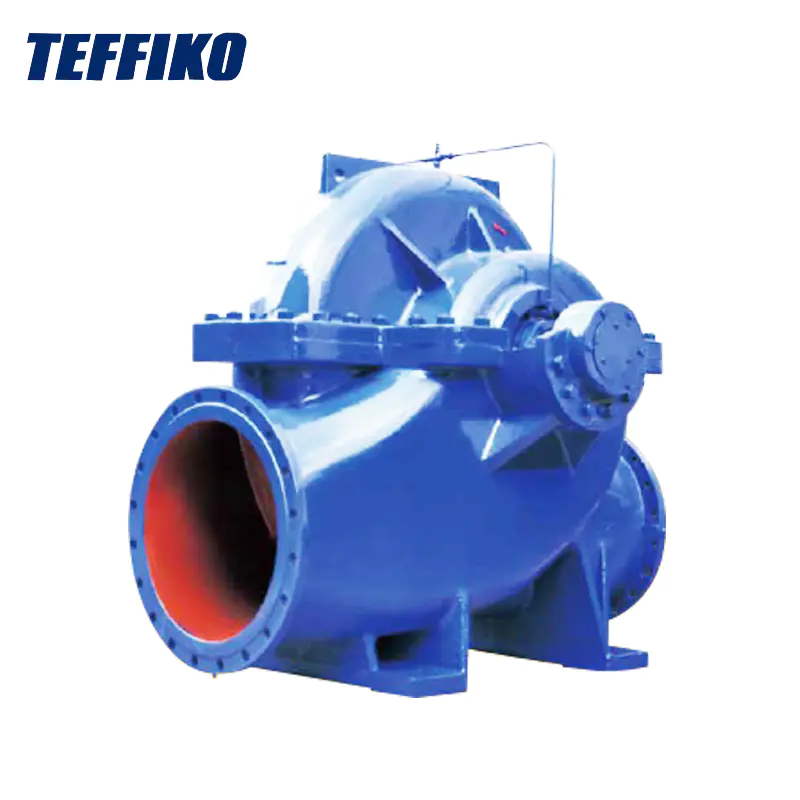
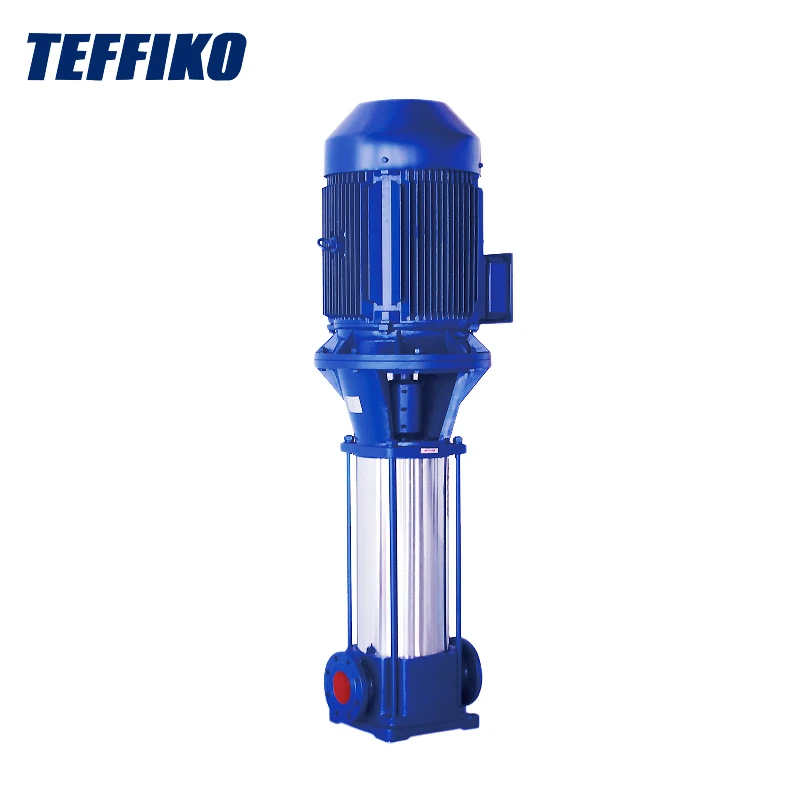
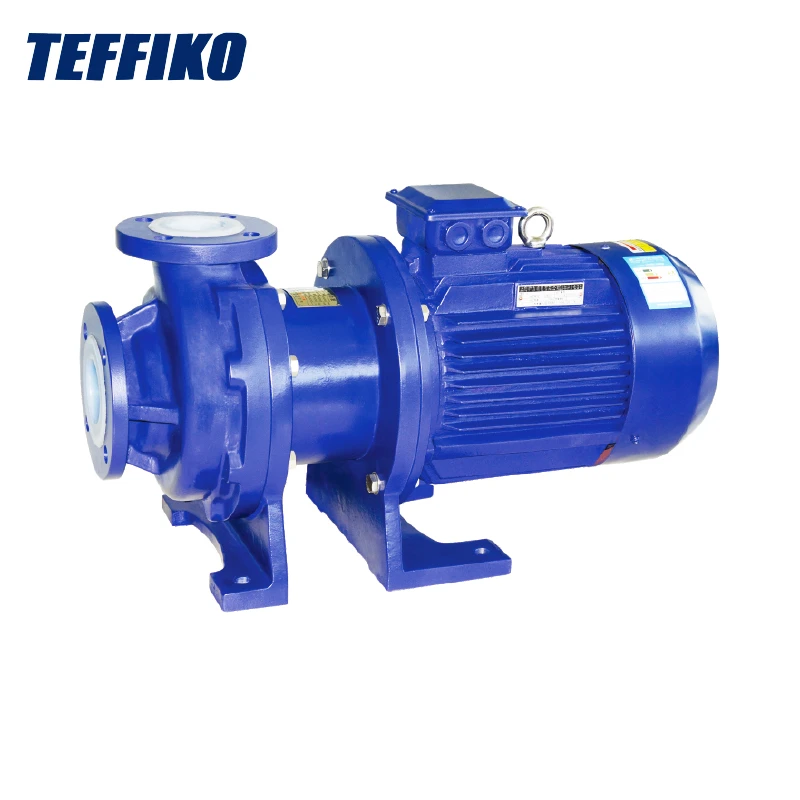
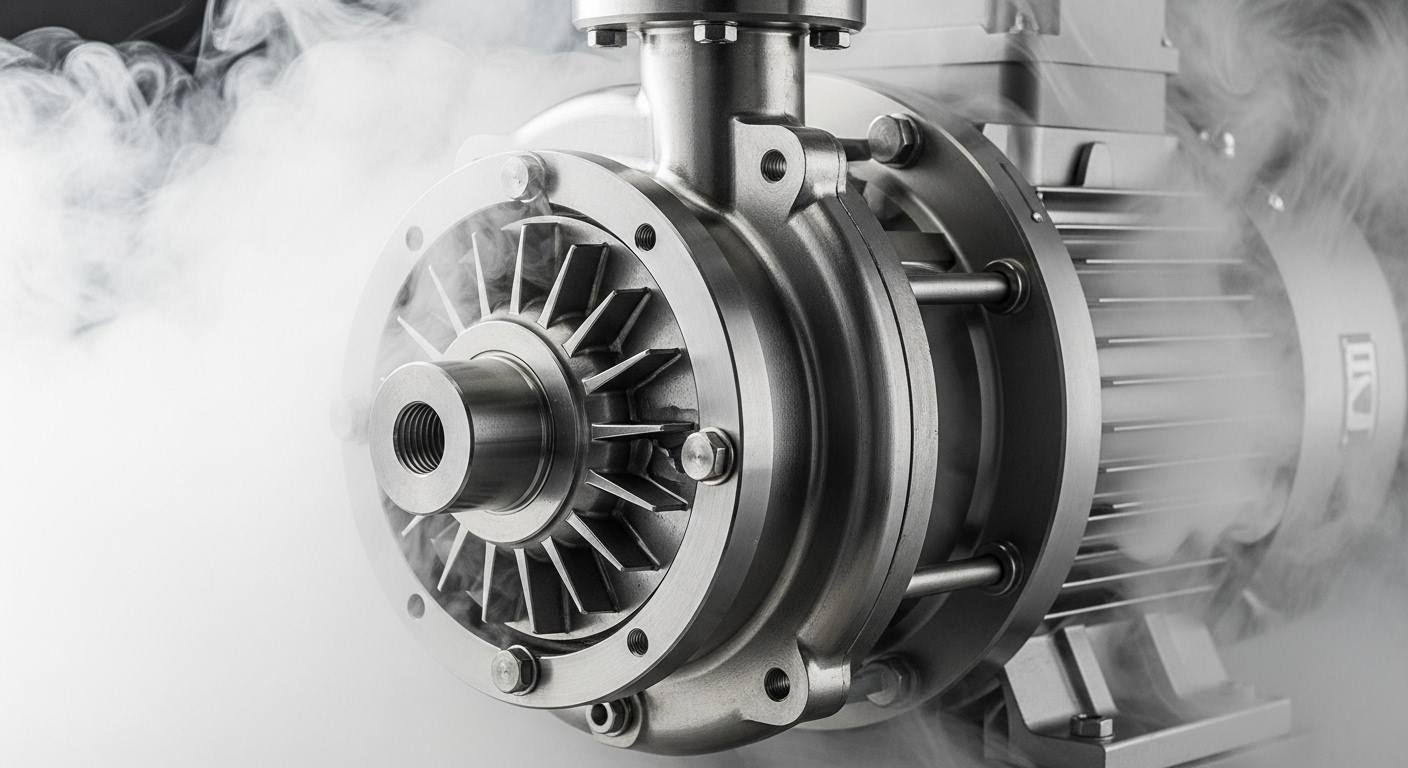
A centrifugal pump is a kinetic, rotodynamic pump. A motor drives the impeller to rotate inside the volute casing. Liquid enters through the impeller eye and is accelerated outward by centrifugal force; the volute converts velocity into pressure as the fluid leaves the casing.
Key features:
Smooth, continuous flow driven by impeller speed and diameter.
Large flow rate at moderate pressure; the flow rate adjusts naturally with system resistance.
Few moving parts, simple structure, and low cost per unit volume transferred.
On clean, low-viscosity liquids with very low solids content, it operates at best efficiency near the best efficiency point (BEP).
Typical applications: water treatment, HVAC circulation, and high-flow general industrial transfer.
What Is a Diaphragm Pump?
A diaphragm pump is a positive displacement (PD) pump. A flexible diaphragm moves back and forth inside the chamber, drawing in liquid during the suction stroke and pushing it out under pressure during the discharge stroke; check valves control the direction of flow.
The most common industrial version is the air-operated double-diaphragm (AODD) pump. Compressed air alternates behind the two diaphragms mounted on a common shaft: one discharges while the other draws in, producing continuous flow without an electric motor. Smaller electric or solenoid diaphragm pumps are used for dosing and metering.
Key features:
Fixed displacement per stroke; flow rate set by stroke frequency.
Pulsating flow, which can be controlled for precise dosing.
Self-priming and tolerant of dry run.
Handles high-viscosity, abrasive, corrosive, or solids-bearing liquids.
Flow rate varies with system resistance; the Q-H curve slopes downward
Flow rate essentially constant; pressure rises with system resistance
Flow Scale
Clear advantage for medium-to-high flow and continuous operation
Low-to-medium flow; output is pulsating
Viscosity Adaptation
Rising viscosity increases disc friction losses; head and efficiency decay markedly, and derating is required per the HI viscosity correction curves
Can maintain displacement with high-viscosity media, but stroke frequency must be reduced and larger suction/discharge piping installed
Self-Priming / Dry Run
Conventional models require priming; dry run can quickly damage the mechanical seal
Self-priming, can dry run for short periods, and can handle gas–liquid mixtures
Cavitation
NPSHa > NPSHr must be verified with margin; high risk with high temperature, high altitude, and volatile media
No impeller cavitation problem, but insufficient air-supply pressure causes failure to deliver capacity
Solids and Shear
Slurry pump and non-clog impeller options exist; limited in high-concentration, highly abrasive duty
More tolerant of particles, flocs, and shear-sensitive media, but the ball and valve seat can be jammed by large particles
Pulsation and Metering
Smooth output, suitable for continuous processes
AODD has strong pulsation, often requiring a surge tank or pulsation dampener; metering models deliver fixed-quantity dosing
Energy Efficiency
At the design point for high flow and low viscosity, efficiency typically reaches 70–85%
Air-operated types have lower overall efficiency when counted from the air compressor, but total cost may be more favorable in intermittent, low-flow, and explosion-proof service
Drive and Environment
Requires power supply; explosion-proof motor needed in hazardous areas
Air-operated types have no electrical components, suitable for explosion-proof, humid, and mobile applications
Five Decision Steps for Selection
1.Flow rate and continuity: high flow rate and long-period continuous operation → prefer a centrifugal pump; low flow rate, intermittent duty, and frequent start-stop → a diaphragm pump is easier to run.
2.Fluid properties: viscosity, density, solids particle size and concentration, gas content, whether shear-sensitive, corrosiveness, and pH. High viscosity, gas content, or shear sensitivity → lean toward diaphragm; clean and low viscosity → centrifugal.
3.Suction conditions and installation: liquid level below the pump, need for self-priming, or risk of running dry → diaphragm; stable flooded suction or priming conditions, and calculable NPSHa → centrifugal.
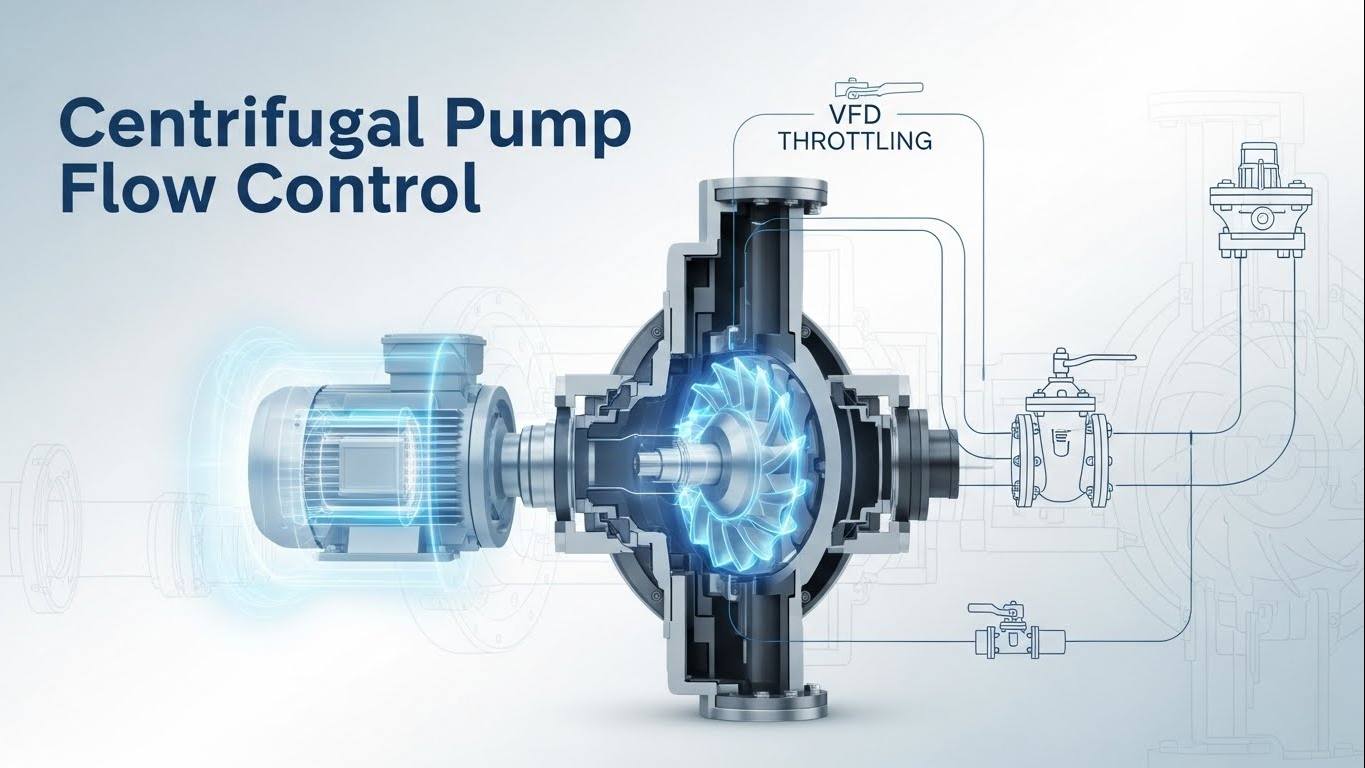
4.Whether system resistance fluctuates: gradual filter clogging, long piping, or large back-pressure variation → the constant-flow characteristic of a diaphragm pump is more stable; the centrifugal pump's operating point will drift, requiring a VFD or a control-valve closed loop.
1.Safety and metering requirements: no power supply in a hazardous area, or fixed-quantity chemical dosing required → air-operated/metering diaphragm pump; only stable transfer needed → centrifugal.
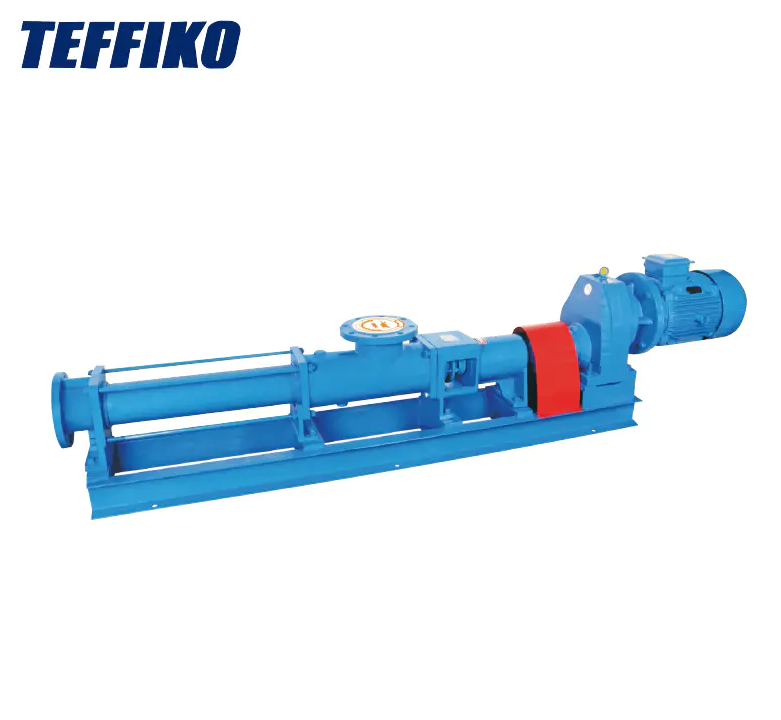
If the answer in step 2 is “high viscosity but few particles, and a steady output is required”, there is a third option worth adding to the comparison: the screw pump. Selection does not have to be locked into a binary choice.
Four Common Misconceptions
Misconception 1: “A diaphragm pump can deliver high pressure, so it can replace a centrifugal pump.” Pressure is not “given” by the pump; it is “demanded” by the system. A diaphragm pump simply does not automatically reduce flow when back pressure rises; the price is that the over-pressure risk must be borne by the pressure relief valve.
Misconception 2: “Throttling the discharge valve saves power.” For a centrifugal pump, throttling does reduce shaft power, but energy consumption per unit of flow rises; for long-period operation, a VFD should be used instead. This trick must never be applied to a diaphragm pump, as it amounts to artificially dead-heading the pump.
Misconception 3: “Where there are particles, a diaphragm pump must be used.” First look at particle size, concentration, and abrasiveness. For high-flow solids-bearing duty, a slurry pump is often more economical; the diaphragm pump's ball and valve seat are the wear points under highly abrasive media.
Misconception 4: “NPSH is only a matter of suction lift.” NPSHa is determined jointly by atmospheric pressure or liquid level, the fluid's vapor pressure, suction-pipe losses, and temperature; it must be verified against standards such as ANSI/HI 9.6.1 with adequate margin (in engineering practice commonly 0.5–1 m, or as required by the standard). High temperature, high altitude, and volatile media are the conditions where this most often goes wrong.
Conclusion
Centrifugal pumps deliver high flow rate and energy efficiency in clean-fluid systems with low resistance; diaphragm pumps provide precise dosing capability and resist corrosive, viscous, or solids-bearing liquids. Match the principle to the fluid, the curve to the system, and the material to the chemical composition.
If you encounter difficulties in actual selection or have customized pump-set requirements, please contact Teffiko. We provide a full range of industrial pump products compliant with international standards, together with a technical team with years of experience, to help you verify operating conditions, confirm performance curves, and provide matching solutions. You may visit our official website at www.teffiko.com or send an email to sales@teffiko.com; we will reply within 24 hours.
We use cookies to offer you a better browsing experience, analyze site traffic and personalize content. By using this site, you agree to our use of cookies. Privacy Policy