Athena Engineering S.r.l.
News

Desulfurization Pump: Working Principle and Function Detailed Explanation

2026-08-10 0 Leave me a message

Quick Overview of Core Knowledge on Desulfurization Pumps

Flue gas from thermal power, metallurgy, chemical, cement and other industries contains large quantities of SO₂. The wet flue gas desulfurization system (FGD) is standard equipment for emission compliance, energy conservation and carbon reduction. As the core power equipment of FGD, desulfurization pumps deliver corrosive solid-containing slurry and directly determine desulfurization efficiency and system stability.

Combined with industrial operation practices, this article elaborates on the core functions, working principles, structural design, performance parameters, operation & maintenance key points and industry trends of desulfurization pumps in a concise manner, helping readers quickly master core knowledge and solve problems in model selection and operation & maintenance.

I. What Is a Desulfurization Pump?

A desulfurization pump is a special horizontal centrifugal pump with corrosion and abrasion resistance tailored for wet flue gas desulfurization (FGD) working conditions, a subcategory of industrial slurry pumps, fundamentally different from ordinary clean water pumps.

It mainly transports acidic media such as limestone slurry and gypsum slurry, which carry solid particles with strong corrosiveness and high abrasiveness. Therefore, desulfurization pumps are specially reinforced in material, hydraulic structure and sealing system to stably adapt to 24-hour continuous high-load industrial operation for a long term.

Common types include absorber circulation pumps, gypsum discharge pumps, filtrate pumps and desulfurization wastewater pumps, covering the full process of slurry circulation, slag discharge and wastewater treatment within the desulfurization system.

II. Core Functions of Desulfurization Pumps

Indispensable core equipment for wet desulfurization systems, desulfurization pumps focus on three major aspects: desulfurization efficiency improvement, stable working conditions and environmental emission reduction.

1.Efficient desulfurization to guarantee exhaust gas compliance

It continuously delivers limestone absorbent slurry to the spray layers of the absorber, which neutralizes SO₂ and SO₃ in flue gas to generate gypsum precipitates. The desulfurization efficiency of the equipment can exceed 95%, lowering flue gas SO₂ concentration below 35 mg/Nm³ to meet strict domestic and international environmental standards.

2.Closed-loop circulation to stabilize system operation

Through the closed circulation mode of "slurry suction at tower bottom, top spraying and reaction backflow", flue gas and slurry maintain full and continuous contact to avoid fluctuations in desulfurization efficiency and ensure long-term stable operation of the complete system.

3.Energy conservation and carbon reduction for resource recovery

It cuts sulfide emissions at the source to reduce air pollution and help enterprises meet dual-carbon emission reduction targets. Meanwhile, it transports gypsum waste residue to dewatering equipment to realize solid waste recycling and lower enterprise operation and maintenance costs.

4.Working condition balancing to assist system operation & maintenance

It conveys desulfurization wastewater and dewatering filtrate to balance absorber liquid level, preventing shutdown and desulfurization failure caused by abnormal liquid levels and ensuring non-stop equipment operation.

5.Main Application Scenarios


  • Flue gas desulfurization systems of thermal power plants, cogeneration plants and biomass power plants
  • Sintering flue gas desulfurization projects in iron and steel, metallurgy industries
  • Industrial waste gas treatment equipment for cement, glass and chemical industries
  • Transportation working conditions of various industrial acidic wastewater and high-solid-content slag slurry

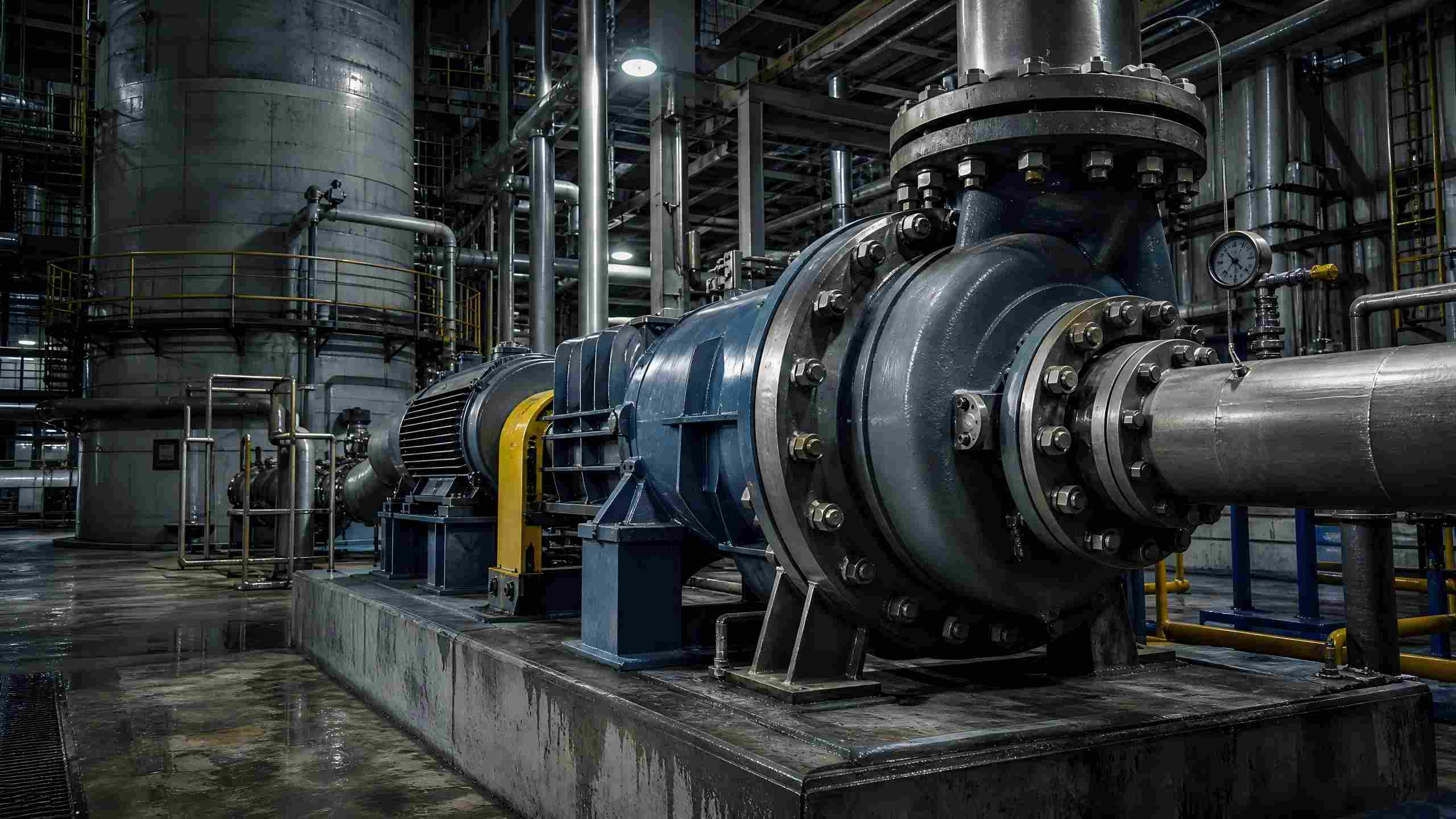
Industrial desulfurization pump system

III. Working Principle of Desulfurization Pumps

Desulfurization pumps operate based on the centrifugal force principle of centrifugal pumps at a rotational speed of 1450~2900 r/min. They convert mechanical energy into fluid potential energy to realize continuous circulating delivery of slurry, divided into three overall stages:

1.Slurry Suction

The motor drives the impeller to rotate at high speed, forming a negative pressure zone at the impeller center. Under air pressure difference, slurry at the bottom of the desulfurization tower is continuously drawn into the pump chamber.

2.Energy Conversion

The impeller does work on slurry, endowing it with kinetic energy and pressure energy. After slurry flows through the volute, it decelerates and stabilizes pressure, converting kinetic energy into static pressure energy to form high-pressure fluid with conventional delivery head ranging from 10 m to 150 m.

3.Spraying Circulation and Reaction

High-pressure slurry is delivered through pipelines to the tower top for atomized spraying, fully neutralizing counter-flow high-temperature flue gas for desulfurization. Slurry generated after reaction flows back to the tower bottom and re-enters the pump body for circulation, forming a sustained closed-loop desulfurization process.

Principle Summary: Desulfurization pumps boost pressure and circulate slurry via centrifugal force, providing stable medium power for flue gas desulfurization reactions and serving as the core foundation for efficient operation of desulfurization systems.

IV. Unique Structural Design of Desulfurization Pumps

Targeting the characteristics of corrosive, abrasive and clog-prone desulfurization media, desulfurization pumps adopt exclusive optimized designs with core advantages reflected in three aspects: materials, sealing and hydraulic structure.

1.Corrosion and Abrasion Resistant Flow Components


  • Impeller: Made of high-chromium cast iron (Cr26), fluoroplastic or rubber-lined materials to adapt to slurry working conditions with different particle sizes
  • Pump casing: Double-layer structure; outer cast iron layer ensures structural strength, while inner rubber/PTFE lining isolates acid corrosion
  • Wear plate: Silicon carbide or alumina ceramic material with a service life of over 8,000 hours under conventional working conditions


2.Dual Sealing Protection System


  • Mechanical seal: Silicon carbide/graphite material with strong sealing performance, normal operation leakage ≤ 5 drops per minute
  • Auxiliary impeller seal: Auxiliarily blocks slurry impurities to protect bearing housings and transmission structures


3.Anti-clogging High-efficiency Hydraulic Model

Adopts widened flow passage design to pass solid particles up to 20 mm, drastically reducing clogging probability, adapting to long-term delivery of high-solid-content slurry with lower energy consumption and higher efficiency.

V. Core Performance Parameters of Desulfurization Pumps

Accurate parameter matching is the key to stable equipment operation. General core parameters widely adopted in the industry are as follows:


  • Flow rate: 10~5000 m³/h, matched to the treatment capacity of desulfurization towers on demand
  • Head: 20~150 m, selected based on pipeline resistance and spraying height calculation
  • Solid content: Conventional models adapt to slurry with solid content ≤ 60%; reinforced wear-resistant models can be customized for high-concentration working conditions
  • Temperature resistance: Standard models -20℃ ~ 120℃; customized high-temperature models up to 180℃


VI. Daily Maintenance and Common Fault Troubleshooting

Standardized operation & maintenance can effectively extend equipment service life and stabilize desulfurization efficiency. Core operation & maintenance key points are listed below:

1.Daily Patrol Inspection

Strictly control operating indicators: bearing temperature ≤ 65℃, vibration value ≤ 4.5 mm/s; regularly clean 20~40 mesh inlet filters and prohibit pump dry running without slurry to avoid abrasion.

2.Periodic Maintenance

Inspect impeller wear every 3 months (allowable wear loss ≤ 3 mm); replace mechanical seals and NLGI Grade 2 lithium-based lubricating grease every year, and clear slag deposits inside the pump body.

3.Common Fault Troubleshooting


  • Reduced flow rate: Mostly caused by impeller abrasion, filter/pipeline clogging or insufficient tower bottom liquid level; recover performance via clog removal or component replacement
  • Seal leakage: Replace sealing components promptly when scratches on stationary and rotating seal rings exceed 0.1 mm
  • Abnormal noise and vibration: Mainly induced by loose components, unbalanced impellers or excessively high medium concentration; conduct shutdown inspection and adjustment


VII. Technical Development Trends of Desulfurization Pump Industry

The desulfurization pump industry is iterating toward intelligence, long service life and energy efficiency:


  • Intelligent control: Equipped with pressure and flow sensors to realize automatic adjustment, adapt to variable-load working conditions and cut manual operation & maintenance costs
  • New material upgrading: Silicon carbide ceramic impellers are gradually popularized, extending equipment service life to over 20,000 hours
  • Energy-saving optimization: New hydraulic models lift equipment operating efficiency above 85% with lower energy consumption and more economical operation


VIII. Differences Between Desulfurization Pumps and Ordinary Centrifugal Pumps

Desulfurization pumps are fully adapted to harsh desulfurization working conditions, with core distinctions from ordinary clean water pumps as follows:


  • Medium adaptability: Ordinary pumps only suit clean water; desulfurization pumps can deliver acidic, abrasive and high-solid-content slag slurry
  • Material performance: Ordinary cast iron suffers easy corrosion and abrasion; desulfurization pumps adopt special wear and corrosion resistant materials for longer service life
  • Structural design: Ordinary pumps feature narrow flow passages and high leakage risk; desulfurization pumps adopt widened anti-clog flow passages plus dual sealing for 24-hour high-load operation
  • Working condition adaptability: Ordinary pumps only apply to conventional clean water scenarios; desulfurization pumps adapt to high-temperature, corrosive and abrasive industrial desulfurization environments


Summary

Relying on the centrifugal principle of centrifugal pumps, desulfurization pumps realize continuous suction, pressure boosting and closed-loop circulation of desulfurization slurry, serving as core equipment for industrial wet desulfurization systems. With exclusive corrosion and abrasion resistant structures and stable operating performance, they efficiently complete flue gas desulfurization and emission reduction to help enterprises conduct production in compliance with environmental regulations.

Desulfurization pumps with reasonable model selection and standardized operation & maintenance can effectively reduce equipment failure rates, extend service life and cut production costs, acting as key equipment for green production in heavy industries.

FAQ

Q1: What pump category does a desulfurization pump belong to?

A: Desulfurization pumps are horizontal corrosion and abrasion resistant slurry centrifugal pumps, special industrial pumps for wet desulfurization systems, not applicable to ordinary clean water working conditions.

Q2: Can desulfurization pumps replace ordinary clean water pumps?

A: Technically feasible yet extremely cost-inefficient. Desulfurization pumps carry higher costs and are designed exclusively for slag slurry working conditions; using them for clean water delivery results in wasted performance and capital, so mixed use is not recommended.

Q3: What are the main causes of reduced flow rate of desulfurization pumps?

A: Primary causes include impeller abrasion, pipeline/filter clogging, excessively low tower bottom liquid level and over-high slurry solid content. Targeted clog removal, component replacement and working condition adjustment can restore performance.

Q4: What are the upper limits of temperature resistance and allowable solid content for desulfurization pumps?

A: Standard models withstand temperatures from -20℃ to 120℃, while customized models reach up to 180℃. Conventional pumps adapt to slurry with solid content ≤ 60%, and reinforced models can be customized for high-concentration working conditions.

For more professional knowledge on environmental fluid equipment, stay tuned to Teffiko.


Related News
Leave me a message
  • BACK TO ATHENA GROUP
  • X
    We use cookies to offer you a better browsing experience, analyze site traffic and personalize content. By using this site, you agree to our use of cookies.Privacy Policy
    RejectAccept