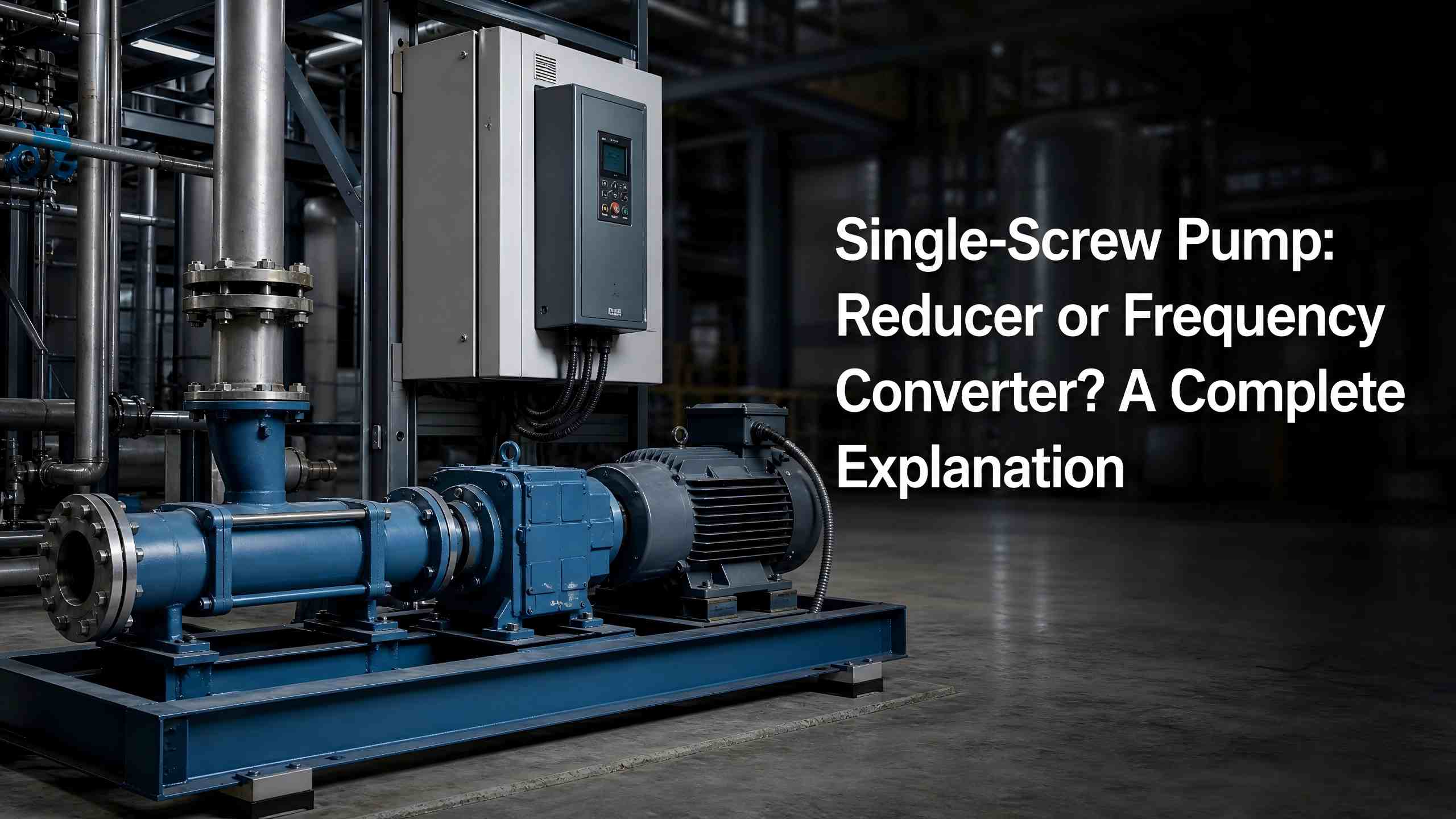
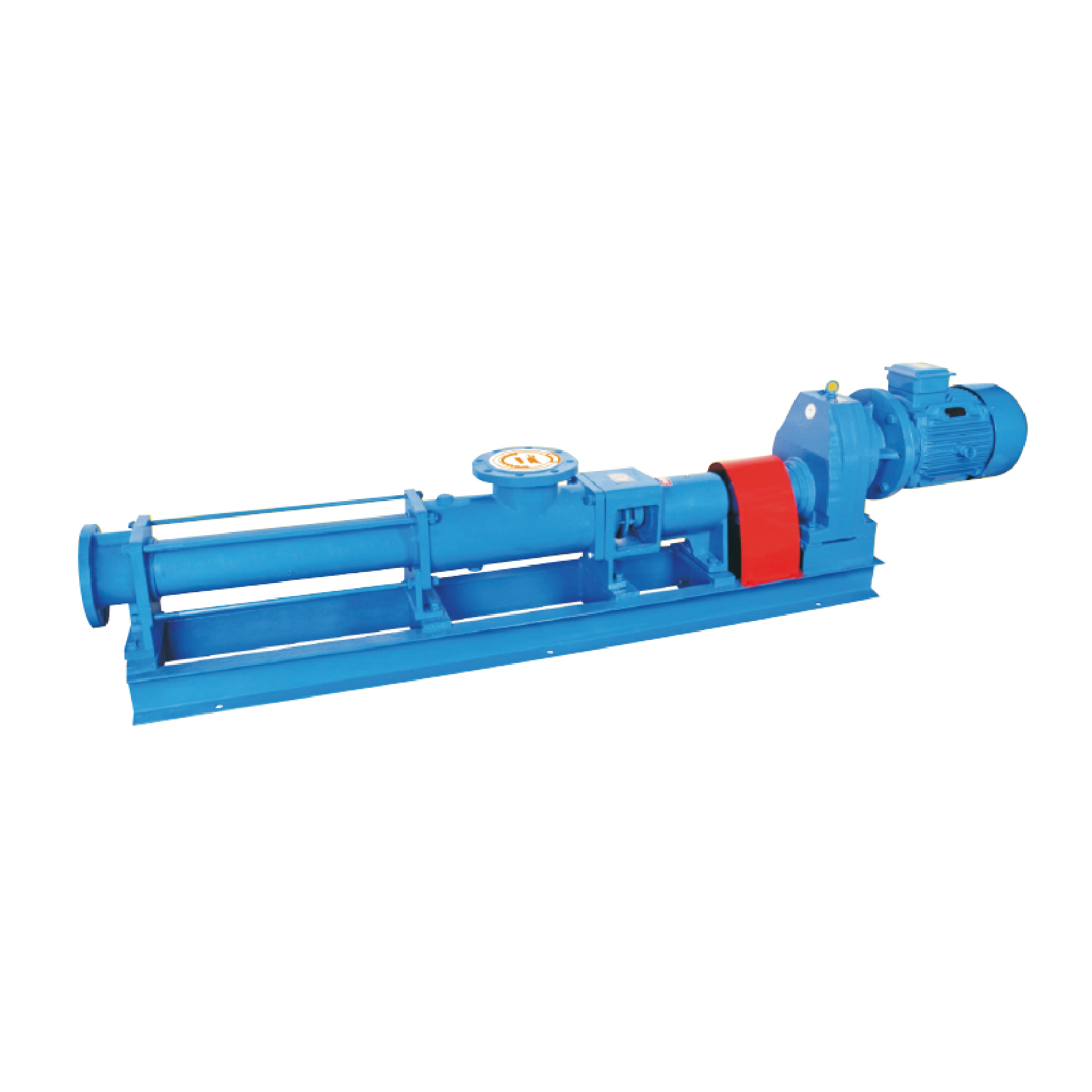
The single‑screw pump operates relying on the unique meshing structure of its stator and rotor. Featuring compact structure and excellent medium adaptability, it can stably convey various complex media such as high‑viscosity media, solid‑liquid mixtures, and gas‑liquid mixtures. It is widely used in industries including sewage treatment, chemical engineering and sludge transportation.
Due to its operational characteristics for handling special media, the single‑screw pump is inherently different from centrifugal pumps and must run at low rotating speeds. High‑speed operation will easily result in unstable medium delivery and accelerated equipment wear. Currently, reducers and frequency converters are two commonly‑adopted options in the industry to meet requirements for speed reduction and speed regulation. Nevertheless, they differ significantly in working principles, installation modes, operating characteristics and applicable working conditions. Improper type selection will directly affect system efficiency and operation‑maintenance costs. For this reason, Teffiko provides an in‑depth analysis of their core differences to help you quickly match on‑site working conditions and make accurate type‑selection decisions.
A reducer is a purely mechanical transmission device specially adapted to the low‑speed and high‑torque operational requirements of single‑screw pumps. It is mainly installed at the connecting position between the motor and the pump head. Its core function is not merely to reduce motor rotating speed, but also to amplify output torque while reducing speed.
In accordance with the principle of conservation of mechanical power, under constant power conditions, rotating speed is inversely proportional to torque: the lower the rotating speed, the higher the torque. Through its internal gear transmission structure, the reducer reduces the high rotating speed of the motor and substantially boosts the output power of the single‑screw pump. Meanwhile, it effectively lowers the inertia of equipment load movement for more stable pump operation.
The reducer is a fixed‑value speed‑regulation device. Once the gear speed ratio is determined, the operating rotating speed of the single‑screw pump remains fixed. Stable transmission is fully achieved via mechanical structures without electrical adjustment operations.
A frequency converter is an intelligent electrical control device matched with AC motors. Different from the mechanical speed‑regulation mode of reducers, it requires no modification to equipment transmission structures. It flexibly adjusts rotating speed by regulating the input voltage and frequency of the motor, and integrates multiple functions including speed reduction, speed regulation, energy saving and overload protection.
The frequency converter is installed externally on the variable‑frequency motor and has no direct contact with pump transmission structures. During operation, it can adjust the rotating speed of the single‑screw pump at will without fixed‑value restrictions, realizing stepless speed change. Equipped with built‑in voltage regulation, over‑current and overload protection functions, it can effectively prevent motors from over‑loaded operation and safeguard the complete pump set.
Reducer: Operates at fixed rotating speed. After installation and commissioning, its rotating speed stays permanently fixed and cannot be adjusted in real time. To change delivery flow rate or rotating speed, mechanical structures such as gears must be replaced by disassembly. It cannot adapt to dynamically‑changing working conditions. However, it delivers extremely high stability via mechanical transmission structures, free from risks of electrical faults and zero operational fluctuation.
Frequency converter: Operates with stepless variable speed. It supports arbitrary speed adjustment within the rated rotating‑speed range, and can adjust pump rotating speed in real time according to variations in medium viscosity and delivery volume. It features high speed‑regulation flexibility and adapts to fluctuating working conditions. Nevertheless, its operational stability is susceptible to voltage, ambient temperature, dust and humidity.
This represents the core difference for single‑screw pumps handling special media. Single‑screw pumps frequently convey sludge, viscous slurries and solid‑liquid mixed media, which impose extremely high requirements on starting torque and operating torque.
Reducer: It features natural advantages of low‑speed high‑torque output. It mechanically boosts torque through gear forces and delivers sufficient starting power. When handling heavy‑load media with high viscosity and solid‑particle content, it is less prone to stall or pump jamming, perfectly matching the core operational properties of single‑screw pumps.
Frequency converter: It has an obvious shortcoming in low‑speed torque. At ultra‑low rotating speeds, the motor suffers severe heat generation and sharp decline in output torque. Long‑term low‑speed heavy‑load operation may easily lead to insufficient power and poor medium delivery performance. It is not suitable for long‑term delivery of media with high solid content or ultra‑high viscosity.
Reducer: It has no energy‑saving function. The motor always runs at full power frequency. Even when on‑site delivery demand decreases, the pump still operates under full load. Excess flow has to be throttled by valves, resulting in substantial electric‑energy waste. It is only suitable for working conditions with constant parameters. Boasting a simple structure, it requires only lubricating‑oil replacement for routine maintenance, delivering low maintenance costs and long service life.
Frequency converter: Its core advantage lies in energy conservation and consumption reduction. It matches motor power to actual working conditions and adjusts rotating speed on demand to avoid invalid energy consumption. Industrial test data shows that when pump rotating speed drops by 20 %, power consumption can decrease by nearly 50 %. As a precision electronic device, however, it demands strict operating‑environment requirements. It is prone to faults under high‑temperature, humid and dusty conditions, incurring higher technical costs for subsequent maintenance.
Reducer: Installed between the motor and pump head as a core transmission component. It only undertakes mechanical speed reduction, torque amplification and flow stabilization, and has no electrical protection functions.
Frequency converter: Installed externally and independently without participating in mechanical transmission. It features built‑in protection functions for voltage regulation, over‑current, overload and phase loss, providing comprehensive protection for motors and pumps and lowering risks of equipment burnout from faults.
To satisfy special medium‑conveying demands of single‑screw pumps, the industry‑leading solution is to deploy reducers and frequency converters in combination, which perfectly offsets the drawbacks of standalone devices.
The reducer performs mechanical speed reduction and torque amplification to guarantee sufficient power and prevent pump jamming when the pump conveys high‑viscosity and solid‑liquid mixed media. The frequency converter delivers intelligent stepless speed regulation, energy‑saving consumption reduction and electrical safety protection. This combined scheme retains the core heavy‑load delivery advantages of single‑screw pumps while realizing flexible condition adaptation and low‑cost operation. It serves as the preferred option for complex working conditions in chemical, sewage and sludge‑treatment sectors.
The reducer acts as the mechanical power core of Teffiko single‑screw pumps, offering fixed speed reduction, low‑speed high‑torque output, stable operation and low‑maintenance performance. Adapted to heavy‑load and constant working conditions, it constitutes the fundamental supporting device for single‑screw pumps conveying special media. The frequency converter functions as the intelligent‑control core, providing stepless speed regulation, energy‑saving consumption reduction and electrical protection for variable and light‑load working conditions.
Instead of being mutually substitutable, the two devices are complementary. Prioritize reducers for stable‑condition heavy‑load conveyance; prioritize frequency converters for fluctuating‑condition applications requiring energy‑saving and intelligent operation. For complex heavy‑load and variable working conditions, adopt the combined “reducer + frequency converter” solution to maximize operating efficiency and service life of Teffiko single‑screw pumps.
For further type‑selection support and technical services, please visit Teffiko’s official website: [http://www.teffiko.com]