Athena Engineering S.r.l.
News

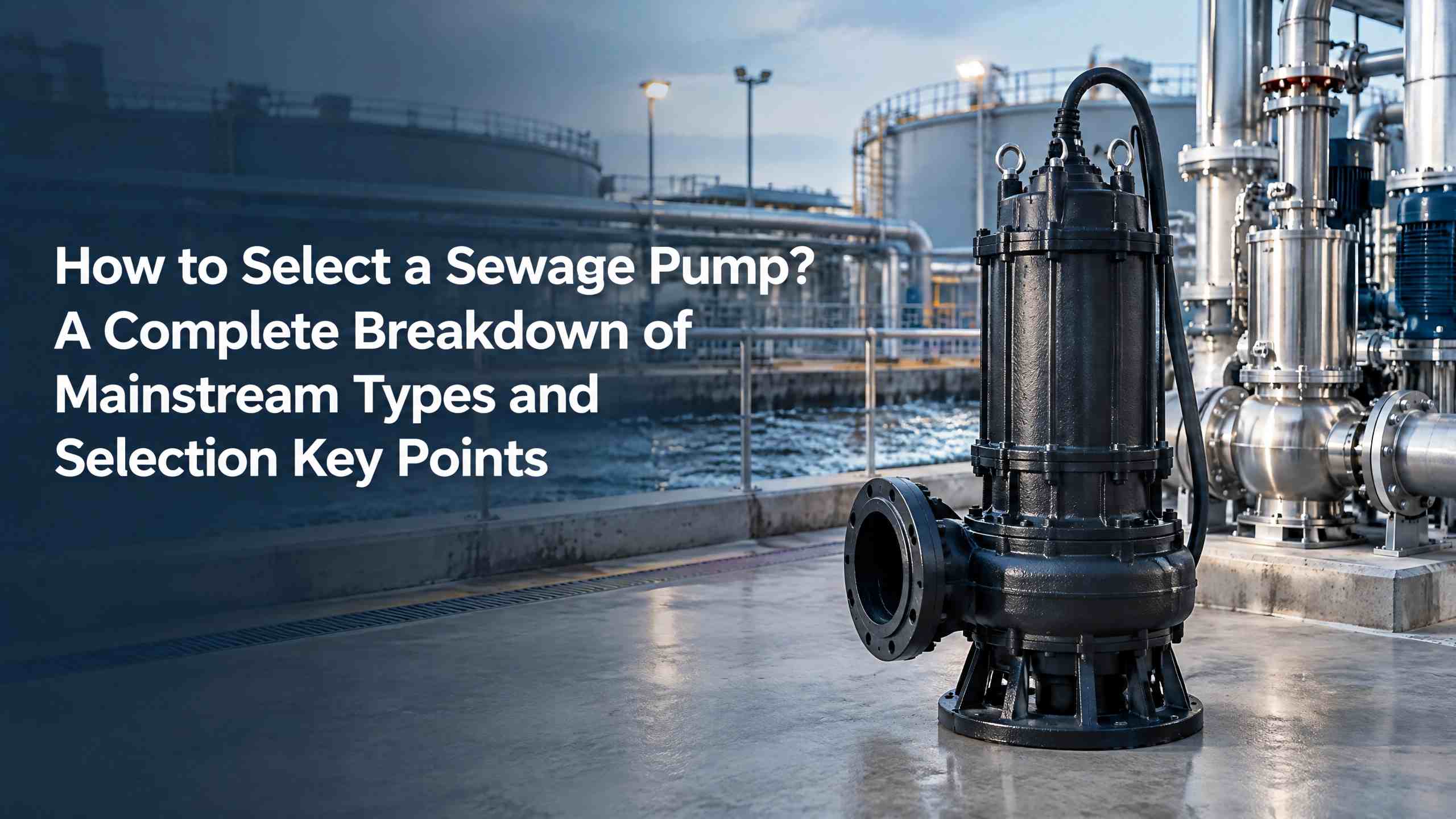
How to Select a Sewage Pump A Complete Breakdown of Mainstream Types and Selection Key Points

2026-09-15 0 Leave me a message

In sewage treatment and discharge systems, choosing an appropriate pump is critical. It not only ensures efficient system operation but also greatly reduces later‑stage maintenance costs and downtime risks. Faced with the wide variety of pumps available on the market, many users feel confused.


As an expert in fluid conveyance, Teffiko recommends that the key to pump selection lies in precisely matching the pump model to your specific working conditions and medium properties. Whether for municipal sewage, industrial sludge or rainwater discharge, the right pump will deliver twice the result with half the effort.


Below we provide a detailed analysis of several mainstream sewage pumps to help you quickly sort out your selection ideas.

Sewage Pump

1. Submersible Sewage Pump


If you are handling conventional municipal sewage or working in pump stations with limited space, a submersible sewage pump is usually the safest option.


  •  Working principle: Its motor and pump are integrated. During operation, the entire unit is submerged directly in sewage. This design delivers inherent cooling and eliminates tedious priming and venting procedures.
  •  Core advantages: Extremely compact structure, small footprint and remarkably easy installation.
  •  Application scenarios: Urban sewage pipe networks, sewage lift stations and other locations containing suspended solids. When purchasing, opt for vortex or single‑channel impeller designs. Such wide flow passages effectively prevent blockages caused by rags, plastic bags and other debris.


2. Self‑priming Pump


If the pump has to be installed above‑ground and you wish to avoid manual water filling and venting before every startup, a self‑priming pump is your ideal solution.


  •  Working principle: With its special volute design, it automatically creates a vacuum after initial priming to draw sewage from a distance, requiring no external priming equipment.
  •  Core advantages: Extremely simple operation. Once primed for the first time, subsequent startups are automatic, making it well‑suited for intermittent drainage.
  •  Application scenarios: Industrial wastewater treatment, domestic sewage discharge and other situations where submerging the pump in water is not feasible.


3. Type‑P Self‑priming Pump


Where sewage carries large volumes of solid particles or long fibres, ordinary self‑priming pumps may struggle, and this is where the Type‑P self‑priming pump comes into play.


  •  Working principle: It adopts impeller and sealing structures specially designed for difficult‑to‑convey media.
  •  Core advantages: Its unique hydrodynamic design delivers outstanding anti‑clogging performance. It effortlessly handles thick liquids containing large particles and long fibres while operating with lower energy consumption.
  •  Application scenarios: Working conditions with high anti‑clogging requirements and frequent pump jamming failures.


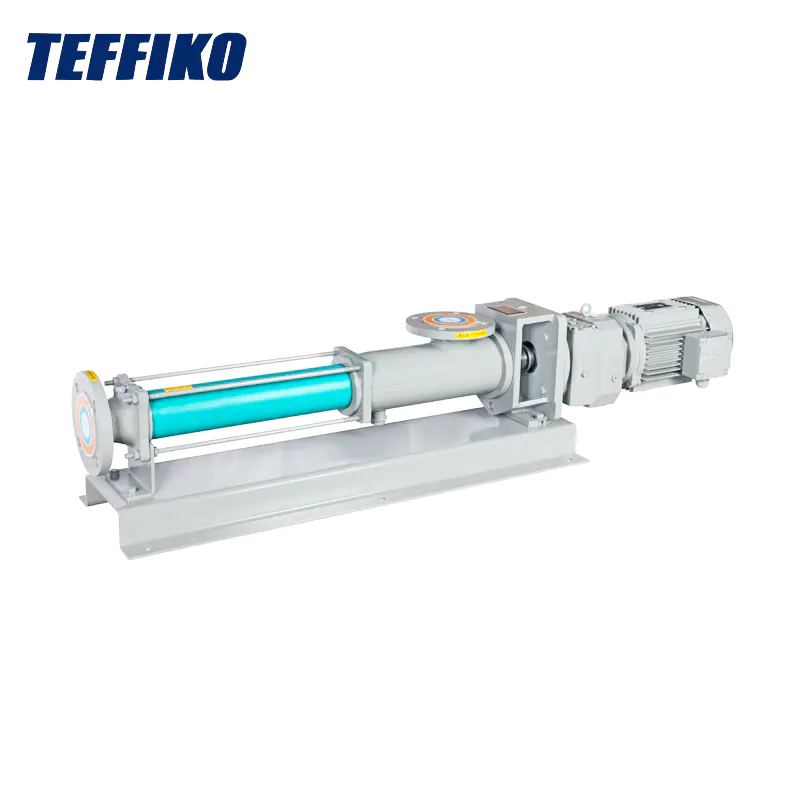
4. Single Screw Pump


For working conditions involving high‑viscosity sludge or dewatering treatment, a single screw pump is often the most suitable solution.


  •  Working principle: It provides stable, continuous conveyance without violent agitation of the medium as seen in centrifugal pumps.
  •  Core advantages: Specially built for high‑solid‑content, thick or even viscous materials that would readily clog other pump types.


5. Pneumatic Double Diaphragm Pump


For highly corrosive chemicals, explosion‑proof zones, or applications requiring safe dry‑running capability, the pneumatic double diaphragm pump (AODD pump) is the safest choice.


  •  Working principle: Driven by compressed air instead of electricity, it features inherent explosion‑proof properties.
  •  Core advantages: Built‑in self‑priming capability. It will not burn out its motor even when running dry with an empty pipeline. If the pipeline gets blocked, the pump automatically stops and resumes operation once blockages are cleared.


6. Heavy‑duty Slurry Pump


Where sewage contains large quantities of sand, gravel, mine tailings and other hard abrasive substances, a slurry pump is mandatory.


  •  Working principle: Constructed from heavy‑duty wear‑resistant materials such as high‑chromium alloy. It sacrifices partial efficiency for maximum service life.
  •  Application scenarios: Mines, construction dewatering, sand washing and other extremely abrasive working conditions.


Final Selection: Focus on These Three Core Parameters


To guarantee long‑term stable operation of your selected pump, make sure you calculate the following three key indicators before placing an order:


1. Flow rate and head: Calculate how much water you need to drain (flow rate), and how high or far you need to pump it (head). These directly determine the required motor power.

2. Medium properties: Carefully analyse the contents of the liquid. Is it clean water, sewage mixed with rags, thick sludge, or abrasive liquid carrying sand and gravel? The pH value, temperature and viscosity of the medium dictate the selection of pump body material and impeller type.

3. Installation environment: Is there space on‑site for submersible equipment? Or must the pump be installed above‑ground? Are there explosion‑proof or anti‑corrosion requirements on‑site?


By matching these details against the pump types listed above, you can select a durable and trouble‑free sewage discharge solution.


Teffiko is committed to providing customers with professional fluid conveyance solutions. Should you have any questions during pump selection, please feel free to contact us. Our technical specialists will provide one‑on‑one professional support.


Related News
Leave me a message
  • BACK TO ATHENA GROUP
  • X
    We use cookies to offer you a better browsing experience, analyze site traffic and personalize content. By using this site, you agree to our use of cookies.Privacy Policy
    RejectAccept